Business & Brands
Campa Cola Is Back — And This Time, It’s Playing to Win
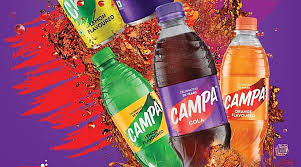
How Mukesh Ambani is using a beloved desi soda brand to take on Coca-Cola and Pepsi in India’s ₹37,000 crore cola market
You know that feeling when something you loved as a kid suddenly comes back, but this time it’s got serious money behind it and an actual plan? That’s exactly what’s happening with Campa Cola right now.
I grew up hearing stories about Campa Cola from relatives who swore it was the best cold drink India ever had — before Coca-Cola and Pepsi swept in during the 1990s and basically wiped every local brand off the map. And now, with Mukesh Ambani’s Reliance Industries pumping serious resources into relaunching it, Campa Cola isn’t just a nostalgia play. It’s shaping up to be one of the most ambitious brand comeback stories India has ever seen.
So let’s get into it — the history, the strategy, the market gaps, the challenges, and honestly, whether you should be rooting for this underdog or not.
Also read: How Jio Disrupted India’s Telecom Sector — A Case Study
A Quick History: What Even Is Campa Cola?
If you’re under 30, there’s a decent chance you’ve never actually tasted the original Campa Cola. Let me catch you up real quick.
Campa Cola was launched way back in the 1970s by Pure Drinks Group — a Delhi-based company that also bottled Coca-Cola’s original India operations. When Coca-Cola exited India in 1977 (thanks to FERA regulations that forced foreign companies to dilute their stakes), Campa Cola filled the void. And it wasn’t just surviving — it was thriving.
During the late ’70s and ’80s, Campa Cola was the soft drink of India. People loved it. There were even Campa Orange and Campa Lemon variants that were hits in their own right. The brand had real cultural weight.
Then came 1991 — economic liberalisation — and Coca-Cola and Pepsi marched back in. What followed was brutal. One by one, every Indian cola brand fell:
- The government’s Double Seven brand was pushed out of the market
- Parle’s beloved Gold Spot was acquired and quietly discontinued
- Rasna was forced to retreat from the carbonated segment entirely
- And Campa Cola itself slowly faded out
It was, honestly, a masterclass in how two well-funded American giants can use capital, marketing, and distribution to suffocate local competition. They didn’t just compete — they dominated. For 30 years, Coca-Cola and Pepsi controlled over 80% of India’s soft drink market.
Until now.
Why Reliance Bought Campa Cola — And Why It Makes Sense
In 2022, Reliance Retail quietly acquired the Campa Cola brand. The deal didn’t make massive headlines at first, but once people started connecting the dots, it became clear this was a serious long-term play.
Think about it from Reliance’s perspective. They’ve already disrupted telecom with Jio (offering dirt-cheap data that wiped out competitors). They’re doing the same in retail. The FMCG space — especially beverages — is their next frontier.
And the timing couldn’t be better. Here’s why:
The Indian Cola Market Has Enormous Room to Grow
India’s cola market is currently valued at around ₹37,000 crore and is expected to grow at roughly 5% annually through 2027. That sounds significant, but here’s the mind-blowing part: the per capita cola consumption in India is just 4 to 5 litres per person per year.
Compare that to China, where it’s significantly higher. Or the US, where it’s an astonishing 154 litres per person per year. India is massively underpenetrated. As incomes rise and urban populations expand, every market researcher agrees — Indians are going to drink a lot more cola in the coming decades. Campa Cola wants to capture a chunk of that growth before the market matures.
There Are Real Gaps in Flavours
Here’s something the data tells us but feels surprising: even with Coca-Cola, Pepsi, Limca, Sprite, Mountain Dew, Slice, Tropicana, and Gatorade all present in India — there are still flavour gaps that a nimble brand can exploit.
Don’t believe me? Look at Sting. PepsiCo launched Sting (an energy drink with a berry flavour) and it became so popular that today it outsells both Mountain Dew and regular Pepsi in many markets. Or look at Thums Up — a Coca-Cola brand — that actually outsells regular Coca-Cola in India because Indians have a genuine preference for a stronger, spicier cola taste.
The lesson here is clear: there’s always room for a brand that genuinely understands Indian palates and offers something distinctly local.
The Price Game: Where Campa Cola Has a Real Advantage
This is the part of the strategy that I find genuinely clever, and also where Reliance is doing something that no previous challenger could pull off.
Let me explain India’s consumer landscape first. Economists who study India often say the country is really three nations in one — divided not by geography but by income:
- India 1 — About 14 crore people earning roughly ₹1 lakh+ per month. These folks buy premium everything.
- India 2 — Around 30 crore people earning closer to ₹20,000 per month. Mid-range buyers, brand-conscious but price-aware.
- India 3 — The remaining 100 crore people earning around ₹7,000 per month or less. Every rupee matters enormously.
Now here’s the thing: Coca-Cola and Pepsi have historically been priced for India 1 and India 2. A standard 250ml Coca-Cola bottle costs around ₹20. Campa Cola’s equivalent? Around ₹10 for a 200ml bottle.
That’s not a minor discount. For India 3, that’s the difference between buying it and not buying it. During the 2023 Durga Puja festival, when Coca-Cola and Pepsi were selling 600ml bottles at ₹40, Campa Cola was selling 200ml at ₹10 and 500ml at ₹20. They weren’t just undercutting — they were capturing a completely different customer segment that was previously locked out of the category.
| Brand | Pack Size | Approx. Price (₹) | Target Segment |
|---|---|---|---|
| Coca-Cola | 250ml | ~₹20 | India 1 & 2 |
| Pepsi | 250ml | ~₹20 | India 1 & 2 |
| Campa Cola | 200ml | ~₹10 | India 2 & 3 |
| Campa Cola | 500ml | ~₹20 | India 2 & 3 |
The Distribution Weapon: Reliance’s Real Moat
Okay, so you might be thinking — “cheaper pricing sounds great, but lots of brands have tried that and failed.” And you’d be right. The reason earlier Indian cola brands couldn’t survive wasn’t just about price. It was about distribution.
In the FMCG world, distribution is quite literally the Brahmastra — the ultimate weapon. If your product isn’t on the shelf when the customer wants it, the price doesn’t matter. The flavour doesn’t matter. Nothing matters.
Here’s how the traditional distribution chain works for a beverage brand like Pepsi:
- Company sells to Super Stockist (~2% margin)
- Super Stockist sells to Distributor/Wholesaler (3–5% margin)
- Wholesaler sells to Retailer (3–5% margin)
- Retailer sells to Customer (8–10% margin)
Now layer in the 40% tax on aerated drinks, production costs, and marketing spend — and you start to see why building a competitive beverage brand from scratch is extraordinarily difficult. A small company trying to sell at half Pepsi’s price would have literally no room left for profit, marketing, or growth.
But Reliance isn’t a small company. Reliance Retail already has more stores than any retailer in India — spread across every major city and hundreds of smaller towns. And their logistics network can already reach remote areas where traditional distributors don’t go efficiently.
What this means for Campa Cola is massive: they’re using an existing, proven distribution infrastructure rather than building one from scratch. And they’re reportedly offering retailers 6 to 8% margins on Campa Cola — significantly more than what Coca-Cola and Pepsi offer. That gives shop owners a genuine financial reason to stock and promote Campa Cola over the incumbents.
The IPL Move: Borrowing Credibility the Smart Way
Reliance recently signed on as a presenting partner for IPL through Campa Cola — reportedly investing hundreds of crores in the sponsorship. Now, on the surface, that might seem like a lot of money to spend on advertising for a brand that’s supposed to be “affordable.”
But think about what they’re actually buying.
Coca-Cola and Pepsi have spent 30 years building brand recognition in India. Every kid who grew up in the ’90s and 2000s has deep emotional connections to those brands tied to cricket matches, summer holidays, and Bollywood ads. You can’t undo that overnight.
But IPL is the one property in India that cuts across every income segment. India 1, India 2, and India 3 all watch IPL together. By associating Campa Cola with the biggest cricket league in the world, Reliance is trying to rebuild the brand’s cultural credibility at scale — fast. It’s expensive, but for a company whose FY24 profit was reportedly around ₹79,000 crore, it’s a calculated bet, not a desperate gamble.
A Little Story: The Time Colas Conquered India
Imagine it’s 1993. You’re at a small kirana store in any Indian city. Six months ago, this shop stocked Campa Cola, Gold Spot, and Limca. Today, those have been replaced by Pepsi and a just-relaunched Coca-Cola. The shopkeeper tells you, somewhat apologetically, “Woh toh ab nahi milta.”
That transition happened because Coca-Cola didn’t just enter India — they acquired existing brands, locked up distribution contracts, and flooded the market with promotional spend that no Indian brand could match. It wasn’t a fair fight. It never was.
Now picture the same kirana store in 2024. Campa Cola is sitting right next to Coca-Cola. It’s half the price, stocked through a Reliance distribution channel that’s efficient and reliable, and it’s being advertised on IPL. The shopkeeper is making better margins on it. The customer next door who never bought cold drinks because they were “too expensive” is now picking one up. Same story. Different ending?
The Beginner’s Guide to Understanding FMCG Competition
Beginner Guide: How Cola Brands Actually Compete
If you’re new to thinking about FMCG businesses, here’s a simple framework for understanding what really matters in the cola war:
- Product: Does it taste good? Is there a unique flavour that people want?
- Price: Is it accessible to the target customer? Is it sustainable for the business?
- Distribution: Can customers actually find it when they want it? This is the hardest part to build.
- Marketing: Do people know about it? Do they associate good feelings with the brand?
- Scale: Can you grow production without costs ballooning? This is where big players win over time.
Campa Cola has a decent answer for all five right now — mostly because it’s backed by Reliance. Whether that holds as it scales is the real question.
Pro Tips: What Brands Can Learn from Campa Cola’s Comeback
Pro Tips: Lessons from the Campa Cola Strategy
- Revive, don’t reinvent: Campa Cola works partly because the name carries 40 years of emotional memory. Brand equity from the past has real value if you revive it smartly.
- Win distribution before worrying about ads: Reliance locked in shelf space first. Advertising came after. Most brands do this backwards.
- Price for the underserved, not just the aspirational: India 3 is 100 crore people. Even a small market share there is a massive number in absolute terms.
- Use existing infrastructure: Campa Cola didn’t build a distribution network. It leveraged one that already existed. That’s how you compress years of effort into months.
- Patience is the real strategy: In Year 1, they’re losing money. That’s deliberate. The play is 5–10 years out, not next quarter.
Common Mistakes to Watch Out For
Common Mistakes: What Could Go Wrong for Campa Cola
It’s not all sunshine and bubbles. There are real risks here that even Reliance’s deep pockets can’t fully insulate against:
- Underestimating the incumbents’ retaliation: Coca-Cola and Pepsi have done this before — strategic discounting, exclusive shelf deals, and marketing blitzes. If they go all-out in a pricing war, Campa Cola’s margins get crushed.
- Assuming distribution = brand loyalty: You can get a product on shelves, but if customers don’t like the taste or feel loyal to the old brand, they won’t repurchase.
- Supply chain scaling issues: Managing FMCG supply chains across a country as complex as India — maintaining quality, freshness, cold chain — is genuinely hard. Stumbles here hurt reputation fast.
- Over-reliance on price alone: A brand built only on “it’s cheaper” is fragile. Once a competitor matches your price, your moat disappears. Campa Cola needs to build genuine affinity.
- Ignoring quality perception: Some consumers in India associate lower prices with lower quality. Changing that perception takes sustained marketing investment and consistent product quality.
Can Campa Cola Really Beat Coca-Cola and Pepsi?
Honestly? That’s the wrong question to ask — at least in the short term.
Coca-Cola India’s FY24 revenue was around ₹4,713 crore. Pepsi’s India operation generated roughly ₹54 crore in profit. These are enormous, entrenched operations with 30 years of brand building, distribution relationships, and customer loyalty baked in.
Campa Cola is unlikely to “beat” them in the traditional sense anytime soon. But that’s not the goal. The goal is to capture a meaningful share of the growing cola market — specifically the portions of India’s population that Coca-Cola and Pepsi have historically underserved due to price.
Think of it this way: India’s cola market grows by roughly ₹1,000 to ₹2,000 crore every year. Campa Cola doesn’t need to take customers away from Coke or Pepsi. It just needs to be the brand that captures the new customers entering the market as incomes rise and consumption habits change.
And for that goal? Reliance’s strategy — affordable pricing, strong distribution, nostalgia-backed branding, and aggressive presence in price-sensitive markets — actually makes a lot of sense.
There’s also the India-pride angle, which shouldn’t be underestimated. In a moment of rising “vocal for local” sentiment, many Indian consumers genuinely want to support homegrown brands. That emotional pull is real, and Campa Cola can lean into it in a way that Coke and Pepsi never could.
What the Data Actually Tells Us About Indian Consumers
Here’s a data point that puts everything in perspective. In 2023, here’s what some major footwear brands generated in India:
| Brand | India Revenue (Approx.) | Brand Origin |
|---|---|---|
| Adidas India | ₹2,573 crore | Germany |
| Nike India | ₹1,448 crore | USA |
| Bata India | ₹3,478 crore | Czech/India |
| Puma India | ₹3,274 crore | Germany |
| Campus Shoes | ~₹1,800 crore+ | India |
Campus Shoes. Most urban Indians in India 1 haven’t even heard of it. Yet it’s generating significant revenue because it serves India 2 and India 3 relentlessly well. The lesson Reliance is applying with Campa Cola is exactly this: volume at the bottom of the pyramid beats margins at the top.
The Road Ahead: What Makes or Breaks This
The next three to five years are going to be fascinating to watch. Here’s what I think will determine whether Campa Cola’s comeback is a genuine success story or a well-funded experiment that didn’t quite stick:
1. Flavour Innovation
India is a country that has a natural soft spot for regional flavours. Think shikanji, jeera, raw mango, kokum. There’s an entire world of Indian taste profiles that global cola brands have never seriously explored. If Campa Cola can nail even two or three locally loved flavours, they build differentiation that money can’t easily copy.
2. Consistent Quality at Scale
Relaunching a brand is easy. Maintaining quality consistently across millions of bottles sold through thousands of distribution points across 28 states is brutally hard. One bad batch going viral on social media can undo months of brand-building.
3. Building Genuine Consumer Loyalty
Right now, a lot of Campa Cola’s adoption is driven by price. That’s a valid entry strategy, but it’s not a moat. They need people to choose Campa Cola even when the price gap narrows — because they genuinely like the brand, not just because it’s cheaper. That takes time, consistent quality, and smart cultural storytelling.
4. The Profitability Timeline
Reliance is deliberately running Campa Cola at a loss right now — subsidising it through IPL spending, higher distributor margins, and below-market pricing. That’s fine when your parent company makes ₹79,000 crore in annual profit. But at some point, the brand needs a credible path to profitability. Investors and internal stakeholders will start asking those questions in a few years.
FAQs About Campa Cola’s Revival
Q1: Who owns Campa Cola now?
Campa Cola is currently owned by Reliance Retail Ventures Limited, which is part of Mukesh Ambani’s Reliance Industries. They acquired the brand in 2022 and relaunched it in 2023 with a focus on affordable pricing and mass-market distribution.
Q2: Why did Campa Cola fail the first time?
The original Campa Cola brand struggled heavily after Coca-Cola and Pepsi re-entered India in the early 1990s post-liberalisation. The American giants brought deep pockets, superior marketing budgets, aggressive distribution deals, and the ability to price competitively in ways that no Indian brand at the time could match or sustain.
Q3: Is Campa Cola cheaper than Coca-Cola?
Yes, significantly. A standard 200ml bottle of Campa Cola is priced at around ₹10, while a comparable 250ml Coca-Cola bottle typically costs around ₹20. This pricing strategy is a deliberate effort to target price-conscious consumers in India’s mass market — particularly what economists call “India 3.”
Q4: Does Campa Cola taste different from Coca-Cola?
Taste is subjective, but Campa Cola is generally described as slightly sweeter and less complex than Coca-Cola. Some longtime fans say it reminds them of the original 1980s taste; others find it lighter. The brand is also reportedly working on introducing new Indian-inspired flavours beyond the standard cola profile.
Q5: Can Campa Cola actually compete with Coca-Cola and Pepsi long-term?
It’s a legitimate fight this time — primarily because the distribution and financial backing (via Reliance) are unlike anything a previous Indian challenger had. Whether Campa Cola builds genuine brand loyalty beyond its price advantage remains to be seen, but the strategic foundation is considerably stronger than any previous Indian cola brand’s attempt at taking on the global giants.
Q6: Where can I find Campa Cola?
As of 2024, Campa Cola is available across Reliance Retail stores (including Smart Bazaar and JioMart), as well as a growing number of kirana stores, fuel stations, and event venues across India. Availability is expanding rapidly, especially in Tier 2 and Tier 3 cities.
Conclusion: The Real Lesson from the Campa Cola Story
Whether or not you’re personally a cola drinker, the Campa Cola revival is worth paying attention to — because it’s really a case study in how you challenge entrenched market leaders with a disciplined, patient, multi-pronged strategy.
Reliance isn’t trying to out-Coca-Cola Coca-Cola. They’re not competing on the same terms. They’re going after the 100 crore Indians who were priced out of the category, using a distribution infrastructure that took decades to build, a brand name that carries genuine heritage, and the financial staying power to absorb short-term losses in pursuit of long-term market position.
That’s not just a business story. It’s a playbook.
Here’s what you can take away from this, regardless of whether you’re a business student, an entrepreneur, or just someone curious about how markets work:
- Distribution is often more important than the product itself in FMCG
- Price-sensitive markets are massive — don’t ignore them just because margins are thinner
- Legacy brand names carry value that’s worth reviving when the conditions are right
- Building market share is a long game — profitability follows scale, not the other way around
- Nostalgia and national sentiment are real, intangible assets that can be strategically deployed
Is Campa Cola going to dethrone Coca-Cola in five years? Probably not. But is it going to carve out a meaningful, sustainable space in one of the world’s most exciting consumer markets? I’d bet on it.
Pop open a Campa Cola if you find one. And tell me — does it taste like a second chance, or just a good cold drink on a hot day? Either way, the story is just getting started.
Related: How Jio Changed Indian Telecom — And What That Means for Reliance’s Next Move
The Dark Reality of India’s IT Industry That Nobody Talks About

Where is the Center of the Universe? Is the Origin of the Big Bang Right Above Your Head?

The Science in the Vedas: The Story of Ancient Truths Proven by Modern Science