Cinema & Technology
India’s Last Real IMAX: Why Every Film Lover Must Visit Gujarat Science City
 =
=
Let Me Tell You About the Day I Genuinely Lost My Jaw
I’ve been to multiplexes all over India. PVRs, INOXes, the fancy recliner halls, the old single-screen theaters that smell like popcorn and nostalgia. I thought I knew what a big movie screen looked like. I was wrong.
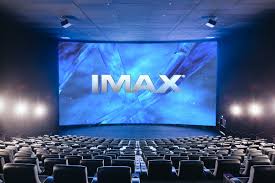
The moment I stepped inside the auditorium at Gujarat Science City in Ahmedabad, I stopped walking. I literally stopped mid-stride. Because what I was looking at wasn’t a screen. It was a wall. A wall that went floor-to-ceiling, left wall to right wall — eight floors tall and 96 feet wide. And this, my friend, is what a real IMAX looks like.
Not the “IMAX” on your nearest multiplex poster. Not the rebranded, slightly-larger-than-normal screen with a laser projector. I’m talking about the original, authentic, 15-perforation 70mm film IMAX that blew the minds of audiences in the late ’90s and early 2000s — and still does today.
If you care even a little bit about cinema, about what movies are actually supposed to look and feel like, you owe it to yourself to visit this place. And in this post, I’m going to tell you exactly why — and everything you need to know before you go.
Wait, What Even Is “Real IMAX“?
Okay, let’s back up for a second — because this part matters, and a lot of people get confused here.
When most Indians think of IMAX, they think of the IMAX logo on a multiplex. And yes, those screens are technically IMAX-certified. But here’s the thing: almost all of India’s roughly 30 IMAX screens use 2K digital xenon projectors. Some of the fancier ones have upgraded to 4K laser. That’s nice, sure. But it’s a completely different animal from what we’re talking about here.
A real IMAX — the kind at Gujarat Science City — uses actual photographic film. Specifically, 70mm film with 15 perforations per frame. For comparison, regular 35mm film has 4 perforations per frame. The amount of visual information captured on a single frame of IMAX film is staggering.
How staggering? Experts estimate it’s equivalent to roughly 18K digital resolution. Let that sink in. When you’re sitting in a 4K cinema feeling impressed, real IMAX film has about 4.5 times that resolution sitting in the projector. It’s not even a close comparison.
IMAX film runs at 24 frames per second, just like regular movies — but each frame is massive. The film itself is horizontal inside the camera, not vertical, which is how they achieve that incredible 1.43:1 aspect ratio that fills such a tall screen.
The aspect ratio thing is worth dwelling on too. Standard cinema is 1.85:1 or 2.39:1 (widescreen). Real IMAX film is 1.43:1 — almost square. Which is exactly why the screen at Gujarat Science City is nearly as tall as it is wide. When you watch a film shot natively on IMAX cameras, you’re seeing vastly more of the image than you’d see in a regular theater. Filmmakers like Christopher Nolan have made a point of shooting sequences specifically for this format.
The Theater Itself: A Closer Look
The Screen That Makes Everything Else Look Small
I don’t want to just throw numbers at you, but here the numbers genuinely help tell the story. The screen at Gujarat Science City is 96 feet wide and 67 feet tall. That’s eight stories. The tallest IMAX screen in India, and one of the biggest in the entire world.
When I stood in the back row, I still couldn’t comfortably take in the whole screen in one glance. My eyes had to travel. That’s the point. Real IMAX wasn’t designed to be watched — it was designed to be experienced. There’s a difference.
And the auditorium wraps around it accordingly. There are 647 seats arranged in a curved, stadium-style layout with a steep incline. The seating angle means sightlines are good from pretty much everywhere. You know how in some multiplexes the back rows feel miles away and weirdly elevated? Here, the steep angle keeps the screen close and dominant from almost every seat.
The Projection Setup: Pure Film Magic
Here’s where it gets really interesting for the technically-minded among you.
Gujarat Science City uses an IMAX GT (Giant Theater) 3D projector — a piece of engineering that’s genuinely fascinating to look at. The projector runs two film strips simultaneously for 3D: one for your left eye, one for your right.
Each strip passes through its own xenon lamp. One lamp alone runs at 2.5 lakh lumens. Both together? 5 lakh lumens. For reference, a typical multiplex projector runs at maybe 20,000–25,000 lumens. This thing is in a completely different league. Even with the brightness cut in half by the 3D polarized glasses, you’re still getting the equivalent brightness of a standard 2D screening — which is why the image never looks dim or washed out.
The process of loading these films is called “threading”, and it’s genuinely a craft. The film reels are kilometers long, and they travel a winding path through rollers and guides before reaching the lens. The projectionist — Bhavik Trivedi, who’s been doing this for years — handles this with the kind of calm expertise that only comes from doing something hundreds of times.
The films are stored and fed from a QTRU platter system. Interestingly, the supply reels unwind from the inside out (which looks bizarre and satisfying to watch), while the take-up reels rewind normally from the outside. Little things like this remind you you’re looking at a mechanical system with real personality.
The Sound System: Six Channels of Serious Volume
Don’t sleep on the audio here. This theater uses IMAX 6-channel sound — and the implementation is a little different from what you might expect.
Instead of having rows of small speakers along the side walls (like most multiplexes), the auditorium has two massive full-range surround speakers mounted at the rear of the seating area. These things are enormous, and they’re powerful enough that side wall speakers simply aren’t necessary. The audio wraps around you rather than coming at you from specific points.
Behind the screen, there are four more full-range speakers (Left, Right, Centre, Top Centre) plus subwoofers. The sound is managed by a Sonics Digital Theatre Audio Controller that plays uncompressed 6-channel digital audio in perfect sync with the film reels. There’s also a separate Sonics system just for controlling the projector itself.
The audio is uncompressed, which matters more than people realize. Most cinema sound systems use compressed formats. When you play uncompressed audio through speakers this size in a room this big, the difference is palpable. You don’t just hear the bass — you feel it in your chest.
The Experience: What It Actually Feels Like
I need to be honest with you: I wasn’t prepared for how good this was going to be.
I sat in the third row from the front for the first screening, and from there, the screen genuinely extended beyond my peripheral vision. I physically could not see all four corners at once. The field of view was enveloping in a way no cinema I’d ever been to had achieved. It felt less like watching a film and more like being adjacent to one.
The film playing was the 1998 short documentary T-Rex: Back to the Cretaceous. Not exactly a new release. But the image was so clear, so startlingly sharp, that modernity felt irrelevant. There were no pixels. There was no grain. Just image, massive and alive. 4K, by comparison, genuinely feels like a downgrade once you’ve seen this.
The 3D effect deserves its own paragraph. This isn’t the headache-inducing, slightly blurry 3D you’ve suffered through at a regular multiplex. Polarized dual-strip IMAX 3D gives you depth that feels physically real. The separation between foreground and background is so pronounced, so convincing, that my brain kept telling me there was actual space inside the screen. I’ve never experienced 3D like this anywhere else.
“I watched the second film from the fourth-last row, and while I could finally see the whole screen comfortably, something was missing. The immersion, the sense of being swallowed by the image — that was a front-seat thing. Go front. Always go front.”
How It Compares to Other Big Screens in India
| Venue | Screen Type | Technology | Aspect Ratio | Real IMAX Film? |
|---|---|---|---|---|
| Gujarat Science City, Ahmedabad | IMAX GT (96ft × 67ft) | 70mm Film, Dual-Strip 3D | 1.43:1 | ✅ Yes |
| Priya Cinema, Delhi | IMAX with Laser | 4K Laser Digital | 1.90:1 | ❌ No |
| Logix City Centre, Noida | IMAX Digital | 2K Xenon Digital | 1.90:1 | ❌ No |
| PXL, Mohali | PLF (Premium Large Format) | 4K Laser Digital | 1.78:1 | ❌ No |
| Most Indian IMAX Multiplexes | IMAX Digital | 2K Xenon Digital | 1.90:1 | ❌ No |
The comparison isn’t meant to trash other theaters — many of them offer a genuinely good experience. But if you’ve been told a multiplex IMAX is “real IMAX,” you’ve been sold something slightly different. The field of view alone at Gujarat Science City dwarfs everything else in the country.
A Bit of History Worth Knowing
This IMAX theater opened in 2002 and, remarkably, almost nothing has changed since then. The same projector, the same platter system, the same philosophy. Stepping inside the projection room feels like a museum exhibit within a museum — which is fitting, given the location.
At the time of writing, Gujarat Science City hosts one of the last remaining venues in the entire world that still projects dual-strip IMAX 3D film. Most theaters globally converted to digital years ago. This place held on, partly because of limited funding, partly because of the sheer infrastructure involved in switching — but the result is that it’s become a living piece of cinema history.
They screen short documentaries rather than commercial films, mostly because of content restrictions (it’s a science museum, after all) and the considerable cost of importing IMAX film prints. You won’t be watching Interstellar here. But you will watch something on a format that makes Interstellar‘s theater format look quaint by comparison.
Pro Tips for Your Visit
- Sit close, not far: The front third of the auditorium is where the magic happens. Yes, you’ll have to move your head a bit — do it anyway. The immersion is incomparable. The films are short (40–45 minutes), so neck strain is barely a concern.
- Go on a weekday if possible: School groups fill this place up fast. The auditorium has 647 seats, but during peak times and weekend visits, you might not get your preferred spot.
- Arrive early to see the projection room: Ask nicely, and staff may let you watch the threading process before the show. It’s worth every minute of your time.
- Don’t skip the second film: They often show two documentaries back-to-back. Watch both. Different content types (live-action vs. CGI-heavy) show the format’s strengths and weaknesses in interesting ways.
- Bring your own lens wipes: The 3D glasses can sometimes be a little smudged. Clean lenses make a huge difference in the polarized 3D experience.
- Keep your expectations calibrated: This isn’t a commercial cinema with reclining seats and gourmet popcorn. The seats are basic and not particularly comfortable. But the moment that projector kicks on, none of that matters.
Common Mistakes to Avoid
- Confusing digital IMAX with real IMAX: This is the big one. Just because a theater has the IMAX logo doesn’t mean it’s running film. If you’re planning to visit Gujarat Science City specifically for real IMAX film, know what you’re getting — it’s the genuine article, not the rebadged multiplex version.
- Sitting in the back to “see the whole screen”: I understand the instinct. But trust the format. The screen was designed to be overwhelming. Embrace it from closer in. Back rows give you a complete view but strip away 60% of the experience.
- Arriving without checking the screening schedule: Gujarat Science City doesn’t run films on a multiplex schedule. Check their official schedule before making the trip. Films cycle, and not every documentary is available every day.
- Ignoring the projection room visit opportunity: People rush past this. If there’s any chance to see the projector room while threading is happening — take it. You’ll understand the format on a completely different level.
- Expecting commercial blockbusters: It’s a science museum. The content is curated toward educational documentaries. Come with curiosity, not box office expectations.
Beginner’s Guide to Visiting Gujarat Science City IMAX
Never visited an IMAX before, or not sure what to expect? Here’s a simple step-by-step for first-timers.
Plan Your Visit
Gujarat Science City is located on the Science City Road in Ahmedabad. It’s open most days, but check their official website or call ahead for current IMAX screening times. Entry to the science city and separate IMAX tickets are usually purchased at the gate.
Understand the Format
You’ll be watching a short documentary — typically 40 to 45 minutes. It’ll be in 3D. You’ll receive large polarized IMAX glasses at the entrance to the auditorium. Don’t lose them; they’re not small.
Choose Your Seat Wisely
Aim for the center section, anywhere from row 5 to row 15 from the front. This gives you the maximum immersive field of view without being so close that the railing at the very front causes issues. The center aisle seats are ideal for head-on viewing.
Settle In and Let Go
When the lights go down, resist the urge to check your phone. I know that sounds obvious, but in a screen this big, even a small screen glow is distracting for others. You paid — or more accurately, you traveled — for this. Be present for it.
Explore the Rest of the Science City
Gujarat Science City is a genuinely impressive science museum with multiple zones. Make a full day of it. The IMAX is the highlight, but the rest of the campus is worth your afternoon.
Why This Place Might Not Exist Forever
There’s something a little melancholy about writing this, honestly.
IMAX film is dying. It’s been dying for over two decades. The infrastructure is expensive, the film stock is expensive to import, and the projectionists who know how to handle it are a shrinking community. Worldwide, theaters have been converting to digital one by one.
Gujarat Science City has held on — partly by circumstance, partly by necessity — but there’s no guarantee it stays this way. The entire industry trend is toward digital. It’s more convenient, cheaper to operate, and easier to distribute content. The arguments for film, while artistically compelling, don’t carry a lot of weight in a balance sheet.
When this place eventually converts — and it very likely will — the last remaining dual-strip IMAX 3D film venue in the world will be gone. Whatever you think about the digital vs. film debate, that’s a significant moment in the history of cinema projection. And it’ll happen quietly, without much fanfare.
So go now. Don’t put it off. This isn’t a “someday” kind of destination.
Frequently Asked Questions
In terms of resolution and authentic format? Absolutely and without contest. The 70mm film format delivers an estimated equivalent of 18K digital resolution on a screen that’s 96 feet wide and 67 feet tall — no digital IMAX in India comes anywhere close to that combination. The 3D implementation is also distinctly superior, using polarized dual-strip projection rather than digital alternating-frame methods. It’s a different category of experience.
Gujarat Science City shows short IMAX documentary films — typically in the 40–45 minute range. Titles like T-Rex: Back to the Cretaceous and Magnificent Desolation: Walking on the Moon are part of their rotating program. Because this is a science museum, the content is educational in nature. Commercial IMAX films like Interstellar or Oppenheimer aren’t shown here, partly due to content restrictions and partly due to the high cost of importing IMAX film prints.
Gujarat Science City is located on Science City Road in the Sola area of Ahmedabad, roughly 10–15 km from the city center depending on your starting point. You can get there by auto-rickshaw, taxi, or ride-sharing apps like Ola and Uber. It’s well-signed and most locals know it. Budget about 25–40 minutes from central Ahmedabad depending on traffic.
If you’re a genuine film enthusiast, or if you’ve ever been curious what the IMAX format was originally designed to deliver — yes, absolutely. There is literally nowhere else in Asia where you can see this. The fact that it still exists is remarkable. Combine it with a visit to Ahmedabad itself (which has plenty to offer) and it becomes an easy decision.
Yes — in fact, many screenings are specifically attended by school groups. The IMAX 3D experience can be intense for very young children (the 3D effect is unusually strong here), but older kids tend to love it. If you’re bringing children under 6, be prepared for the possibility that the immersive scale might be overwhelming. For most kids, though, this is a genuinely extraordinary experience.
IMAX laser digital typically offers 4K resolution using high-brightness laser light sources — a genuine upgrade over the older xenon digital systems. But it’s still a digital format, capturing and projecting a finite grid of pixels. Real IMAX 70mm film captures an analog image with a theoretical resolution far beyond any current digital standard — estimated at 18K equivalent. The practical difference on a massive screen is real: film grain can appear, but pixel grid patterns cannot, because there are none. The organic quality of the film image at this scale is unique.
Go. Seriously, Just Go.
India has one real IMAX theater. One place where actual photographic film — 70 millimeters wide, 15 perforations per frame — runs through a projector and throws an image 18 stories tall. One place where dual-strip polarized 3D works as it was originally intended. One place where the medium itself is part of the experience.
It opened in 2002. Very little has changed. It probably won’t stay this way forever.
So here’s my actionable advice: Plan a trip to Ahmedabad. Visit Gujarat Science City. Sit close. Watch the film. And pay attention to what your eyes are doing — because they’re going to be doing something they’ve very likely never done before.
Cinema doesn’t get more real than this.
Have you visited the real IMAX at Gujarat Science City? Share your experience in the comments — especially which row you sat in and which film you watched. And if you’re a first-timer, let us know what surprised you most.
← More Cinema Reviews | Related: India’s Best Premium Large Format Screens →
The Dark Reality of India’s IT Industry That Nobody Talks About

JavaScript Roadmap : The Complete Guide to Learn JavaScript from Zero to Job-Ready

Cloud Computing Explained: Introduction, History & Virtualization