Sacred Mysteries • Himalayan Wonders
Kailash Parvat : The Unsolved Mysteries of the World’s Most Sacred Mountain
A journey into the impossible — where science meets the divine and no one quite comes back the same.
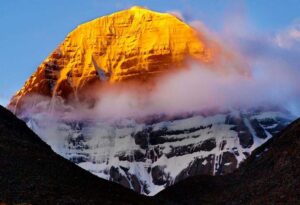
Let me be upfront with you — I’ve read a lot about mountains. I’ve gone down the rabbit hole on Everest, K2, Annapurna. But nothing, and I mean nothing, has kept me up scrolling and reading the way Kailash Parvat has. There’s something almost magnetic about this place. The more you learn, the more questions pile up.
We’re talking about a peak in Tibet that’s shorter than Everest by over 2,200 metres, yet it has defeated every serious mountaineer who’s ever attempted it. A place where your hair and nails reportedly grow at twice the normal speed. Where compasses stop working, helicopters turn back, and one of the world’s greatest climbers — a man who summited all 14 of the world’s eight-thousanders — flatly refused to even try.
So what is it about Kailash Parvat that keeps scientists, pilgrims, historians, and curious people like us so completely obsessed? Let’s dig in.
What Exactly Is Kailash Parvat?
Kailash Parvat stands at 6,718 metres above sea level in the Tibet Autonomous Region, currently controlled by China. It’s part of the Transhimalaya range, and it sits near the source of four of Asia’s most important rivers — the Indus, the Sutlej, the Brahmaputra, and the Karnali.
Geographically, it’s remarkable. But what truly sets it apart is the way it sits at the intersection of three of the world’s great religious traditions:
- Hinduism: Kailash Parvat is considered the earthly abode of Lord Shiva and Goddess Parvati. Pilgrims have been undertaking the parikrama (circumambulation) around it for thousands of years.
- Buddhism: Tibetan Buddhists call it Gang Rinpoche — the precious snow mountain — and believe it to be the home of Demchog, the deity of supreme bliss.
- Jainism: Known as Ashtapada, it’s considered the place where the first Tirthankara, Rishabhdeva, achieved liberation.
Four major world rivers, three major religions, and a mountain that nobody can climb. You can’t make this stuff up.
The Political History Nobody Talks About
Here’s something that gets glossed over in most spiritual discussions about Kailash Parvat: it used to be accessible from India. And then, in 1962, it wasn’t.
The Sino-Indian War of 1962 changed everything. China seized approximately 72,000 square miles of Indian territory — and with it, control over the Kailash Mansarovar region passed entirely to Beijing.
The exchange that followed in the Indian Parliament is both darkly funny and genuinely heartbreaking. When MP Mahamveer Tyagi challenged Prime Minister Nehru about the lost territory, Nehru reportedly replied that the land was barren and nothing grew there anyway. Tyagi’s response? He pointed to his own bald head and said something to the effect of — “Nothing grows here either. Should I cut it off?”
“Some places are sacred not because of what grows on them, but because of what they represent to the people who love them.”
Sardar Vallabhbhai Patel, who had always been more hawkish about protecting India’s territorial interests, had passed away in 1950. Many historians believe that if he’d lived longer, the calculus around Kailash Mansarovar might have been very different.
Why Can’t Anyone Climb Kailash Parvat?
This is the question that gets everybody, right? Mount Everest — the world’s highest peak — has been summited by over 7,000 people. Kailash Parvat is nearly 2,200 metres shorter. By pure logic, it should be far easier to climb.
And yet.
The only person historically said to have reached the summit is Milarepa, an 11th-century Tibetan Buddhist monk and yogi. And even that story is treated as a spiritual achievement rather than a conventional mountaineering feat — he left no recorded account of the physical climb.
The Russian Climber’s Experience
Russian mountaineer Sergei Sistiakov attempted to get close to the summit. He described what happened when he neared the peak: his heart began pounding uncontrollably, a wave of weakness came over him, and — most strangely — an overwhelming feeling that he simply should not go any further. The moment he turned back and descended, everything returned to normal.
He later said it didn’t feel like altitude sickness. It felt like a warning.
Reinhold Messner Said No
Reinhold Messner is one of the greatest mountaineers of all time — the first person to summit all 14 eight-thousanders, including Everest without supplemental oxygen. If anyone could climb Kailash Parvat, it’s this man.
When Chinese authorities offered him special permission to attempt the climb, he declined. Flatly. No explanation that fully satisfies the question was ever given.
Shortly after this, China officially banned all climbing on Kailash Parvat. The last attempted official ascent was by a Spanish team in 2001 — they couldn’t make it either.
The Time Distortion Phenomenon
Okay, this is where things get genuinely strange — and I don’t mean that in a dismissive way. I mean it in the “I had to put my phone down and just think for a minute” kind of way.
Multiple travellers and researchers who’ve spent time in the vicinity of Kailash Parvat have reported an unsettling phenomenon: their hair and nails grew at roughly twice the normal rate. What should take two weeks happened in two days.
Dr. Ernst Muldashev, a Russian ophthalmologist and researcher who led an expedition to the Kailash region in 1999, documented this extensively. He and his team felt they’d been there for only a few days. When they returned to civilization, several weeks had passed.
His team also reported hearing strange sounds from within the mountain — not wind, not ice — but something that sounded almost like whispering, followed by the muffled sound of stones moving deep inside the rock.
Scientists suggest that the unique geographical and magnetic environment of Kailash Parvat might affect human biology in ways we don’t yet understand. But even saying that out loud feels like we’re just describing the mystery with fancier words.
Kailash Parvat vs. Mount Everest — A Quick Comparison
| Feature | Kailash Parvat | Mount Everest |
|---|---|---|
| Height | 6,718 m | 8,849 m |
| Successful Summits | 0 (officially) | 7,000+ |
| Religious Significance | Hindu, Buddhist, Jain | None specifically |
| Climbing Status | Banned | Permitted (with permit) |
| Known Anomalies | Time distortion, magnetic irregularities, compass failure | None documented |
| Shape | Near-perfect pyramid | Irregular peak |
The Two Lakes at the Foot of Kailash Parvat
About 30 kilometres from the mountain lie two lakes that couldn’t be more different despite sitting practically next to each other. Their contrast is so dramatic that it feels almost theatrical — like the mountain arranged them as a teaching.
Mansarovar Lake — The Calm One
Lake Mansarovar is one of the highest freshwater lakes in the world. It’s perfectly circular — shaped almost like the sun. Even when temperatures drop well below zero, the water reportedly never freezes. And despite its high-altitude location, it almost never forms waves. Pilgrims say that standing beside it induces an immediate, profound stillness.
Rakshas Tal — The Restless One
Rakshas Tal, right next door, is saline, lifeless, and perpetually churning. No fish, no plants — the water is too alkaline to support life. The waves here are constant, as if something under the surface is never at rest.
According to legend, Rakshas Tal was formed by Ravana — the great demon king and devoted devotee of Lord Shiva — when he bathed there and meditated before making his way to Kailash Parvat. The mythology suggests his energy infused the water with a restless, demonic charge.
Whether you believe the legend or not, the contrast between these two lakes — one freshwater, calm, and life-giving; the other saline, turbulent, and barren — in the same geographical pocket is genuinely hard to explain through geology alone.
Beginner’s Guide: Planning a Kailash Mansarovar Yatra
If you’re thinking about making the pilgrimage to Kailash Parvat, here’s what you need to know before you go:
- Route options: The most common routes are via Lipulekh Pass (India–Tibet) or Nathu La Pass. The Lhasa overland route through Tibet is also popular.
- Best time to visit: May to September. Avoid winter months — the terrain becomes dangerously inaccessible.
- Permit requirements: You’ll need a Tibet Travel Permit, an Alien Travel Permit, and sometimes a Military Permit. These are managed through authorised tour operators.
- The parikrama: The sacred circumambulation (kora/parikrama) around the mountain is approximately 52 km and typically takes 3 days on foot. Tibetan Buddhists sometimes complete it in a single day through intense practice.
- Physical preparation: Start training 3–6 months in advance. Altitude acclimatisation is critical — the base of Kailash Parvat sits at around 4,600 m.
- Respect the site: Photography is generally permitted around the mountain and lakes, but be mindful of local customs and religious sensitivities.
The Sounds, the Lights, and the Yeti
If you thought we were done with the strange phenomena — we’re barely halfway there.
The Sound of Om
Pilgrims and researchers alike have described hearing a persistent sound near Kailash Parvat and Lake Mansarovar. Some describe it like an airplane in the distance. Others say it sounds exactly like a damaru — the two-headed drum associated with Lord Shiva. Still others say it resonates like a prolonged chanting of Om.
Scientists attribute it to the sound of ice melting and refreezing. Which, sure, is possible. But ice usually sounds like cracking or dripping — not like a ritual drumbeat.
The Lights
Multiple witnesses have reported seeing seven distinct coloured lights emanating from the mountain at night. NASA scientists, when this was brought to their attention, suggested it could be the result of the area’s intense magnetic fields interacting with the atmosphere. The same phenomenon that creates auroras, essentially, but localised.
The Yeti Question
And then there’s the Yeti — or Yeti, as he’s known in the Tibetan tradition. The Himalayan snowman. The abominable snowman. Call him what you like, but Tibetan and Nepali communities around Kailash Parvat have described encounters with an enormous, bipedal creature for centuries.
Roughly 30 scientists worldwide have gone on record saying such a creature could exist in the remote Himalayan valleys. None have produced definitive evidence. Some researchers theorise it could be a surviving lineage of Denisovans — an ancient human species we only discovered recently through DNA analysis. Others say it’s simply a large brown bear, seen in poor lighting.
The truth? Nobody knows. And honestly, in the context of Kailash Parvat, that feels fitting.
Kailash Parvat as the Axis Mundi — the Centre of the World
Here’s a concept that genuinely blew my mind when I first came across it. Across completely separate ancient cultures — Hindu, Buddhist, Greek, Norse, Aztec — there exists the concept of an Axis Mundi: a cosmic axis or world centre, the point where heaven and earth connect.
Multiple traditions independently identified Kailash Parvat as this point. The ancient Hindu texts call it Mount Meru — the axis around which the cosmos rotates. The mountain is said to represent the spine of the world, holding everything in balance.
Now add this remarkable set of numbers:
- Kailash Parvat is exactly 6,666 km from Stonehenge
- It’s exactly 6,666 km from the North Pole
- It’s exactly 13,332 km (double 6,666) from the South Pole
Coincidence? Mathematical fluke? Ancient knowledge embedded in sacred geography? You decide. I’ve been going back and forth on this for a while.
Pro Tips for Kailash Parvat Pilgrims
- Don’t skip acclimatisation days. Altitude sickness at 4,500 m+ is serious. Build in 2–3 days at intermediate altitude before arriving at the base.
- Carry a satellite phone or GPS device. Compasses have been reported to malfunction in certain areas near the mountain.
- Hire a local guide who knows the terrain. Not just for safety — a knowledgeable guide deepens the experience immeasurably.
- Pack for extreme temperature swings. Days can be warm and sunny; nights regularly drop below -10°C even in summer.
- Start your parikrama early each morning. Weather near Kailash Parvat tends to deteriorate in the afternoons.
- Travel light on the kora. Porters and yaks are available and affordable — there’s no virtue in carrying a 20 kg pack at 5,000 m.
The NASA Satellite Discovery and China’s Failed Helicopter Mission
In 2015, NASA turned satellite instruments toward Kailash Parvat as part of broader Himalayan research. What the satellite imagery captured was widely circulated: a massive shadow cast by the mountain that, in certain lighting conditions, appeared to show an enormous seated figure in a meditative pose.
The NASA scientists themselves were cautious — they noted that pareidolia (the human tendency to see meaningful shapes in random patterns) is always a factor. But the images were striking enough that they triggered significant discussion in scientific and spiritual communities alike.
China’s Helicopter Attempt
After years of failed conventional climbing attempts, China decided to try from the air. The plan: fly a helicopter directly over Kailash Parvat and gather comprehensive aerial data.
What happened next reads like something from a thriller novel. As the helicopter gained altitude toward the summit, the weather shifted dramatically. Clear skies gave way to clouds that seemed to materialize around the mountain specifically. Then a hailstorm. Then violent winds. The compass readings became erratic and unreliable.
The pilot had no choice but to abort. They came back safely, but the mission produced nothing useful — and Chinese authorities quietly added the helicopter restriction to the existing climbing ban.
There’s something almost stubborn about this mountain. Like it simply doesn’t want to be understood from the outside.
Shambhala — The Hidden City Beneath the Mountain
Of all the theories and legends surrounding Kailash Parvat, perhaps none is as persistently fascinating as Shambhala — the mythical hidden city said to exist somewhere in or beneath the mountain.
The concept appears in both Hindu texts (as a sacred land from which Kalki, the final avatar of Vishnu, will emerge at the end of the current age) and Tibetan Buddhist tradition (as a pure land visible only to those with sufficient spiritual purity).
Russian painter and explorer Nicholas Roerich spent years travelling through the Himalayas in the 1920s and 1930s specifically searching for evidence of Shambhala. He documented encounters and testimonies that he believed pointed to a genuine, hidden civilization near Kailash Parvat — one with advanced knowledge that predated recorded history.
Dr. Muldashev pushed this further in his research, suggesting that the pyramid-like structure of Kailash Parvat wasn’t natural — that it was constructed. Not by any known ancient civilization, but by something (or someone) operating with technology we haven’t recovered yet.
Shambhala, in Sanskrit, simply means “place of peace.” Whether it’s a literal place, a state of consciousness, or a story about human longing for something beyond the ordinary — it captures something true about why Kailash Parvat has this hold on us.
Common Mistakes Pilgrims and Visitors Make
- Underestimating altitude: Many people assume that because Kailash Parvat is shorter than Everest, it’s an easy trek. The base camp sits at roughly 4,600 m. That’s still extreme altitude.
- Skipping spiritual preparation: Long-time pilgrims say the parikrama is as much an inner journey as a physical one. Going purely as a tourist without some understanding of what you’re walking through diminishes the experience.
- Over-packing: You’ll be walking at altitude. Every unnecessary kilo is punishment. Pack smart.
- Not checking permit requirements in advance: Tibet permits change frequently based on political conditions. What was valid six months ago may not be today.
- Treating it as a conquest: Every serious mountaineer who’s approached Kailash Parvat with a “conquer the summit” mindset has either turned back or been turned back. The mountain seems to respond differently to those approaching with reverence versus ambition.
The Swastika Shadow and Other Divine Symbols
At certain times of day, as the sun moves behind Kailash Parvat, the mountain’s shadows create a remarkable pattern on its face — a shape that clearly resembles the swastika, the ancient Hindu symbol of auspiciousness and divine energy (not to be confused with its later appropriation by fascism).
The swastika is one of humanity’s oldest symbols — it appears in cultures from ancient India to pre-Columbian America, from ancient Greece to Neolithic China. Finding it in the natural shadows of a mountain revered across multiple traditions is either a beautiful coincidence or something more.
Add to this the mountain’s four faces, which align almost perfectly with the four cardinal directions. And the near-perfect pyramid shape, which has led Russian researchers to theorize it might be an artificial structure on a massive scale — the world’s largest pyramid, built not by Egyptians but by a civilization we have no record of.
Frequently Asked Questions About Kailash Parvat
Yes. Since 2001, the Chinese government (which controls the Tibet Autonomous Region) has officially banned all attempts to summit Kailash Parvat. This ban was implemented out of respect for the religious sentiments of Hindus, Buddhists, and Jains, for whom the mountain is considered too sacred to be climbed. Pilgrims are welcome to walk the parikrama around the mountain’s base, but ascent is forbidden.
In Hindu tradition, Kailash Parvat is the celestial home of Lord Shiva and Goddess Parvati. It’s considered the most sacred mountain on earth, representing the ultimate point of spiritual power and divine presence. The annual Kailash Mansarovar Yatra is one of the most important pilgrimages in Hinduism, and completing the parikrama is believed to cleanse a lifetime of sins.
This depends heavily on the current state of India-China diplomatic relations. The Kailash Mansarovar Yatra, organized by the Indian Ministry of External Affairs, was suspended in 2019 due to infrastructure issues and then again due to COVID-19. As of recent years, the status remains in flux. Your best bet is to check the latest advisories from the Indian Ministry of External Affairs directly before planning.
Peer-reviewed scientific evidence for the time distortion phenomenon is not currently established. However, multiple independent travellers and researchers — including Dr. Ernst Muldashev — have documented the accelerated hair and nail growth phenomenon. Scientists have proposed that the area’s unusual magnetic field intensity might affect cellular metabolism, but this remains an area of active speculation rather than confirmed research.
Shambhala is a mythical kingdom described in both Hindu and Tibetan Buddhist texts — a hidden land of peace and wisdom, sometimes described as an actual physical place and sometimes as a state of enlightened consciousness. Multiple traditions connect it geographically to the Kailash Parvat region. There’s no confirmed physical discovery of Shambhala, but its enduring presence across unconnected traditions has made it one of the most compelling unsolved mysteries in sacred geography.
This is genuinely puzzling. While scientists note that deep lakes at high altitude can have thermal layering that resists surface freezing, Mansarovar’s consistent behaviour across centuries — documented by travellers who had no reason to collaborate on a story — goes beyond what standard thermal dynamics would predict. The lake sits at roughly 4,590 m and winter temperatures regularly fall far below zero. It remains one of the many unexplained qualities of the Kailash Parvat region.
Closing Thoughts: Why Kailash Parvat Still Matters
Here’s what I keep coming back to after spending weeks going through everything we know — and everything we don’t — about Kailash Parvat:
This mountain has been visited, revered, researched, and attempted by some of the most analytically rigorous and physically capable people in history. And all of them — believers and sceptics alike — have come away with more questions than answers.
Maybe that’s exactly the point.
In a world that increasingly insists everything can be measured, quantified, and streamed in 4K, Kailash Parvat remains defiantly mysterious. It doesn’t bend to satellite cameras or Russian research teams or world-class mountaineers. It just stands there, pyramid-perfect, casting its swastika shadow across the snow, whispering in frequencies we haven’t learned to hear yet.
If you’re planning a visit to the Kailash Mansarovar region, here’s my practical advice:
- Start your permit process at least 6–12 months in advance
- Get physically fit well before you go — the parikrama is genuinely demanding
- Research the spiritual traditions so you know what you’re participating in
- Go with openness rather than expectation
- And if you feel, at some point on that walk around the mountain, like something enormous is quietly watching you — don’t be afraid. That’s apparently quite normal at Kailash Parvat.
If this deep dive sparked something in you, explore our other articles on sacred Himalayan destinations or check out the Archaeological Survey of India for more on India’s heritage sites. And if you’ve ever visited Kailash Parvat yourself — I genuinely want to hear your story.
BTech in 2026: The Honest Truth Nobody Tells You Before You Enroll

Online Market War Nobody Told You About : E-Commerce vs Quick Commerce