Tech & Gadgets
Why Wired Earphones Are Making a Massive Comeback in 2026 (And Should You Switch Back?)
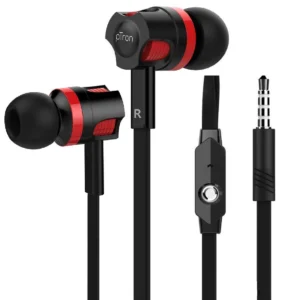
Something strange is happening in the world of audio — and if you’ve been paying attention to social media lately, you’ve probably already noticed it. People are ditching their TWS earbuds. Not because they broke. Not because they ran out of battery. But by choice. Wired earphones are showing up everywhere — on subway platforms, in cafés, around the necks of celebrities, in fashion magazine shoots — and the internet is having a full-on moment about it.
I’ll be honest with you: when I first saw this trend picking up, I laughed. I’ve been through the whole journey — cassette players, Walkmans, iPods, the great wired-to-wireless revolution. I remember when removing the 3.5mm jack felt like a personal attack. And now here we are in 2026, with Gen Z genuinely excited about the thing Millennials were forced to abandon.
But the more I looked into it, the more I realised this isn’t just nostalgia or a passing fashion moment. There are real, practical, financial, and even health-related reasons why wired earphones are winning people back. So let’s actually get into it — properly.
The Wireless Revolution Nobody Asked For (But Everyone Accepted)
Cast your mind back to the era before truly wireless stereo (TWS) earbuds dominated the market. Wired earphones were universal — cheap, reliable, and honestly, they sounded great. Then Apple yanked the 3.5mm jack out of the iPhone 7 in 2016. The internet erupted. People were furious.
But within about two years? Everyone had AirPods. Or a knockoff version of them. The transition happened so fast it was almost suspicious. Brands saw what Apple did and fell in line — Samsung, Google, OnePlus, Xiaomi — one by one, the headphone jack quietly disappeared from flagship after flagship.
And with it came an explosion of TWS earbuds at every price point. ₹500 TWS. ₹2000 TWS. ₹20,000 TWS. Gaming TWS. Neckband variants. Spatial audio. Active noise cancellation. The innovation was real, the marketing was exceptional, and within a few years, wearing wired earphones in public felt almost… embarrassing. Like you’d forgotten to upgrade.
But here’s the thing about fast revolutions: they often leave problems in their wake that only become visible later. And that’s exactly what’s happening now.
Why People Are Going Back to Wired Earphones: The 3 Real Reasons
Reason 1: The Battery Problem Nobody Talks About Enough
Here’s something that surprised me when I first heard it: roughly 30% of TWS earphones — based on bulk testing done by tech review channels — stop working within a year. Not because of a design flaw in the speakers. Because the batteries die. And in cheap to mid-range TWS earbuds, you can’t replace them.
Think about what that actually means. You spend ₹1,500 on a pair of wireless earbuds. Fourteen months later, one earbud holds charge for 45 minutes, the other lasts two hours. Six months after that, you’re charging them every time you want to use them for more than 20 minutes. And eventually — they just don’t turn on anymore.
After about 500 charge cycles, it’s common for budget TWS earbuds to drop to around 20% of their original battery capacity. That’s five times less battery life from a product that already had a limited lifespan. The case battery adds another layer of complexity — and another battery that’s silently degrading every time you open and close the lid.
Your ₹1,000 wired earphone, by contrast, will work exactly the same in year three as it did on day one. No charging, no battery anxiety, no degradation. You plug it in and it plays. Every single time.
Reason 2: Connectivity Issues Are Still Real in 2026
Bluetooth has come a long way. I won’t pretend otherwise. But “a long way” doesn’t mean “problem-free.” Anyone who uses TWS earbuds daily knows the specific frustrations:
- One earbud connects. The other takes 15 seconds to figure itself out.
- You’re on a call and the earbud disconnects the moment you step too far from your phone.
- You hit play on your phone and the music comes out of the speaker — because the earbuds are connected but not… actually connected.
- The left earbud dies faster than the right one. Or vice versa. Somehow.
- Pairing with a new device means forgetting the old one and going through the dance all over again.
And let’s talk about latency. Bluetooth earphones — even good ones — introduce a delay of anywhere from 150 to 300 milliseconds between audio and video. For watching YouTube that’s manageable. For gaming? It’s genuinely painful. For watching a movie on a plane? You’re going to notice the lips don’t match.
Wired earphones: zero latency. Zero pairing friction. Zero connectivity issues. You plug in, it works. That’s it. In a world where everything is getting more complicated, that simplicity has genuine value.
Reason 3: Sound Quality Per Rupee Is No Contest
This is the one that really gets audio enthusiasts fired up — and they’re completely right to be.
When you’re building a TWS earbud, you’re cramming a lot of hardware into a very small space: two independent Bluetooth antennas, two separate batteries, the charging case (with its own battery and circuitry), buttons, microphones, and ANC components if it’s a premium model. That’s a lot of components fighting for budget.
When you’re building a wired earphone? Two speakers. Two wires. One headphone jack. That’s basically it.
So at the same price point — say ₹1,000 — virtually all of the budget in a wired earphone goes into the quality of the speaker drivers. A manufacturer can afford to put in larger, better-tuned drivers, and sometimes even four speakers (two per side) for better stereo separation.
The result: a ₹1,000 wired earphone will typically give you audio quality that you’d need to spend ₹7,000 to ₹8,000 on a TWS to match. That’s not an exaggeration. That’s just physics and manufacturing economics.
The Day a Team Member Couldn’t Hear Properly for Four Days
A colleague of mine — Pranesh — was on a long shoot day, monitoring camera audio through a single earphone at very high volume. The other ear stayed uncovered. He thought he was being clever: one ear working, one ear free for real-world sound.
By the end of the shoot, the ear that had been monitoring was in pain. A persistent dull ringing. Three days passed and he still couldn’t hear normally from that side. It took nearly a week for things to return to baseline.
Was this TWS versus wired? Not exactly — it was a volume issue that could happen with any earphone. But it drove home a point: we’re remarkably cavalier about a sense that, once damaged, doesn’t repair itself. Hearing loss from loud earphone use is cumulative, progressive, and permanent. And the closer the speaker sits to your eardrum — as with in-ear monitors — the more this matters.
The Health Angle: EMF, Radiation, and Hearing Loss — What’s Actually True?
Okay, this is where the internet gets messy and I want to be straight with you. There are two separate concerns people raise about wireless earphones and health — and they deserve to be treated separately, because one is well-established and one is still being studied.
The Hearing Loss Concern (Very Real, Very Proven)
This one isn’t up for debate. Prolonged exposure to audio at high volumes damages the hair cells in your cochlea — the tiny sensory cells that convert sound into electrical signals for your brain. Those cells don’t regenerate. Once they’re gone, they’re gone.
The World Health Organisation’s safe listening guidelines are worth knowing:
- Keep volume at or below 60% of maximum
- Limit continuous listening to 60 minutes at a stretch
- Take a break of at least a few minutes before continuing
This applies to wired and wireless earphones equally. The proximity of the speaker to your eardrum matters more than the connection type. In-ear monitors sit directly at the entrance of your ear canal — which means even moderate volumes can be more intense than over-ear headphones at the same setting.
The EMF / Radiation Concern (More Complicated)
Bluetooth devices emit non-ionizing electromagnetic radiation — EMF. So does your WiFi router. Your microwave. Your phone. Your smart watch. We are genuinely surrounded by EMF in 2026 in a way that humans have never experienced before at any point in evolutionary history.
Here’s the honest state of the science: there is no currently peer-reviewed, replicated evidence directly linking Bluetooth EMF to cancer. Full stop. That link doesn’t exist in the literature at a level that justifies alarm.
What is reported — anecdotally and in some smaller studies — are things like: headaches with prolonged use, disrupted sleep when devices are kept close to the head, and a general sense of mental fatigue. A lot of people — including some fairly high-profile figures in the wellness and productivity world — have noticed that sleeping with devices off and away from the bed improves sleep quality noticeably.
Wired vs Wireless Earphones: The Full Comparison
| Feature | Wired Earphones | Wireless TWS Earbuds |
|---|---|---|
| Audio quality (budget range) | Excellent — budget goes to speakers | Compromised — budget split across components |
| Audio latency | Zero — instantaneous | 150–300ms Bluetooth delay |
| Battery dependency | None — plug in and play | Requires regular charging; degrades over time |
| Lifespan | 3–5+ years with normal use | 1–2 years before noticeable battery degradation |
| Connectivity reliability | 100% — zero pairing issues | Variable — drops, lag, pairing friction |
| EMF emission | Minimal (passive conductor) | Ongoing Bluetooth transmission near skull |
| Risk of losing one earbud | Very low (tethered) | High (small, untethered, easy to drop) |
| Price-to-performance ratio | Outstanding at every budget level | Good only at mid-to-high price points |
| Freedom of movement | Limited by cable length | Complete freedom |
| Phone theft detection | Immediate — music stops | Delayed by Bluetooth range (~20–50m) |
| 3.5mm jack required | Yes (or USB-C adapter) | No |
| Fashion / aesthetic factor (2026) | Trending — retro-cool vibe | Standard / expected |
The Gen Z Factor: Nostalgia, Aesthetic, and Anti-Mainstream Energy
Here’s the social dimension that pure tech analysis misses: wired earphones have become a genuine fashion statement for a generation that never really had them as their daily tool.
Gen Z’s first earphone was wireless. Their first phone might not have had a headphone jack. For them, wired earphones don’t represent the past — they represent something they’ve never fully experienced. Something different. Something that stands out precisely because everyone around them is wearing TWS buds.
Fashion magazines are featuring wired earphones in editorial shoots. Celebrities — Shahid Kapoor, Robert Pattinson, Tiger Shroff — have been spotted using them casually, not for any promotional reason, just as a personal preference. On Reddit, users are sharing posts about choosing budget phones specifically because they have a headphone jack, because the overall value proposition made more sense to them than buying a flagship and then also spending on quality TWS earbuds.
There’s also something quietly rebellious about it. In a world where every tech company is trying to sell you a subscription, a case, a charging pad, a new firmware update — a simple pair of wired earphones asks nothing of you. No app. No pairing. No charging. No ecosystem lock-in. You plug in and you listen. It’s almost radical in its simplicity.
A Beginner’s Guide to Choosing the Right Wired Earphones
If you’re coming back to wired — or buying your first proper pair — the market has actually evolved quite a bit. Here’s how to navigate it without getting overwhelmed.
Step 1: Know Your Connection Type
Your phone matters here. Most Android phones released in the last three years have dropped the 3.5mm jack in favour of USB-C. Check what port your phone has before buying.
- 3.5mm jack earphones: Universal, widely available, work with anything that still has the port (many budget and mid-range Android phones, most laptops, desktops)
- USB-C earphones: Growing category — newer design options, work directly with modern smartphones without an adapter
- 3.5mm with USB-C adapter: Works well enough, but adds a point of failure and something to lose
Step 2: Decide on In-Ear vs. On-Ear
In-ear (IEM-style) earphones sit inside the ear canal. They provide natural passive noise isolation — great for commuting, but you need to be careful with volume since they sit close to the eardrum. On-ear or earbud style (like the classic Apple EarPods) sit at the opening of the ear without inserting into the canal — less isolating but gentler on your hearing at the same volume settings.
Step 3: Set a Realistic Budget
- Under ₹500: Surprisingly decent for calls and casual listening. Don’t expect audiophile bass, but daily use? Fine.
- ₹500–₹1,500: This is the sweet spot. Multiple driver configurations, better build quality, microphone improvements. This range embarrasses most budget TWS earbuds on audio quality.
- ₹1,500–₹5,000: Enthusiast territory. Balanced armature drivers, audiophile-grade tuning, cable quality. If you care about music, this range is extraordinary value.
- ₹5,000 and above: Professional IEM territory. High-fidelity monitoring, studio reference sound. If you’re producing music or have very specific audio preferences, this is worth exploring.
Step 4: Check the Cable Quality Before Buying
The cable is usually how a wired earphone dies. Look for braided or textile-wrapped cables rather than bare rubber, stress-relief reinforcement at the jack and the earpiece junction, and a flat cable design (less prone to tangling than round cables). A few extra minutes of inspection before buying saves you a lot of frustration later.
Pro Tips for Getting the Most Out of Wired Earphones
Common Mistakes When Using Wired Earphones
The Phone Jack Dilemma: What If Your Phone Doesn’t Have One?
This is the practical elephant in the room. A lot of people want to use wired earphones but are stuck with a phone that has only a USB-C port — because 3.5mm jacks have been disappearing from flagships since 2016.
Here’s what I’d actually recommend, depending on your situation:
- If you’re buying a new phone: Actively prioritise models that still include a 3.5mm jack. In the mid-range and budget segment especially — Poco, Redmi, Samsung’s A-series, Nokia — there are plenty of good options that still have the port. Some Reddit users have shared that they’ve specifically chosen a slightly lower-spec phone over a premium one just to retain the headphone jack. That’s a completely legitimate decision if you care about audio quality and value.
- If you’re staying with your current jack-less phone: Invest in a quality USB-C DAC adapter. It’s a one-time purchase, and it genuinely works well. Keep a spare — they’re small and easy to misplace.
- If you use a laptop or desktop regularly: Wired earphones are a no-brainer for desk use. Almost every laptop still has a 3.5mm port. This is where wired earphones shine with zero compromises.
Frequently Asked Questions About Wired Earphones
1. Are wired earphones actually better than wireless for sound quality?
At equivalent price points, yes — often significantly so. Because wired earphones have fewer internal components competing for manufacturing budget, more of the cost goes into the speaker drivers themselves. A ₹1,000 wired earphone will typically deliver audio quality that you’d need to spend ₹6,000–₹8,000 on a TWS to match. For professional audio monitoring, wired earphones and in-ear monitors remain the standard precisely for this reason — zero latency and maximum signal fidelity.
2. Do wireless earphones cause cancer or serious health issues?
Based on current scientific evidence, no. There is no peer-reviewed, replicated research establishing a direct link between Bluetooth EMF and cancer. Bluetooth operates at very low power levels — significantly lower than your phone’s cellular antenna, which you hold against your head during calls. That said, some people do report headaches and disrupted sleep associated with prolonged wireless device use near the head. Using wired earphones reduces your EMF exposure in that particular context, even if the risk level from wireless is currently considered low. The most evidence-backed health concern with any earphone is hearing damage from excessive volume — which applies to both wired and wireless equally.
3. Why are so many young people suddenly using wired earphones again?
It’s a mix of factors — practicality, economics, and genuine aesthetic preference. Economically: quality wired earphones cost far less than quality TWS, and Gen Z is generally more budget-conscious. Practically: no battery anxiety, no pairing frustration, better audio quality per rupee. Aesthetically: in a world where everyone has white AirPod-style earbuds, a colourful or metallic wired earphone is visually distinctive and has developed a genuine “retro-cool” cachet on social platforms. For a generation that grew up with wireless as the default, wired is actually the novel experience.
4. What’s the best way to keep wired earphones from tangling?
Three things make the biggest difference: cable type, storage habit, and coiling technique. Flat cables tangle far less than round ones — if tangle-resistance is a priority, specifically look for flat cable designs. Always store your earphones in a small pouch or case rather than loose in a bag. And when you coil them, use the over-under technique (alternating the direction of each loop) rather than a simple circular wrap — this prevents the internal conductor from developing memory twists that make the cable spring back into knots.
5. My phone doesn’t have a 3.5mm jack. Can I still use wired earphones effectively?
Absolutely. USB-C earphones are a growing and genuinely good category — several reputable audio brands now make USB-C native wired earphones that sound excellent. Alternatively, a quality USB-C to 3.5mm DAC adapter (not a generic ₹50 passive adapter, but a proper digital-to-analogue converter) will let you use any standard wired earphone with a USB-C phone. Brands like FiiO, Hidizs, and Meizu make reliable options in the ₹800–₹3,000 range that actually improve audio quality over the phone’s built-in audio chipset.
6. Is it worth keeping both wired and wireless earphones?
Genuinely, yes — if your budget allows. They serve different use cases well. Wired earphones win for: desk use, gaming (zero latency), high-fidelity music listening, long commutes where you can’t afford battery anxiety, and calls where audio quality matters. Wireless TWS earbuds win for: workouts (no cable to catch on equipment), cooking (hands-free movement), short outdoor use where convenience matters most. Many people — including confirmed audio enthusiasts — keep a quality wired pair for “serious” listening and a decent TWS for active situations.
Ready to Give Wired Earphones Another Shot?
Check out our full comparison guide to find the best wired earphone at every budget level.
Conclusion: The Wire Is Back — Here’s What to Do About It
Here’s my honest take after thinking through all of this: the wired earphone comeback isn’t a gimmick, it isn’t just nostalgia, and it definitely isn’t going away any time soon. It’s driven by real limitations of wireless technology, real economic logic, real audio quality differences, and a genuine cultural shift in how a new generation of users relates to their tech.
If you’re budget-conscious — and most of us are — a ₹1,000 wired earphone is simply a smarter buy than a ₹1,000 TWS. Full stop. The audio will be better. The reliability will be better. It’ll work in three years. It won’t abandon you mid-commute because one earbud decided it was done for the day.
If you’re an audio enthusiast, you probably already know that the best value in personal audio has always lived in the wired IEM world. Nothing’s changed there.
If you’re someone who genuinely loves the freedom of wireless and has money to spend on decent TWS — fair enough. No one’s saying you should throw your AirPods in the bin. But maybe keep a good wired pair around for the occasions when they’re the better tool for the job.
The wire isn’t a downgrade. It never really was. We just forgot that for a while.
Campa Cola Is Back — And This Time, It’s Playing to Win

Startups Indian Keep Running at a Loss — The Brutal Truth Nobody Tells You