Programming & Career
How to Start Your Coding Journey in 2026: A Practical Guide for Beginners
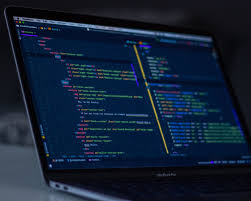
Whether you are in your first year of college or just starting out, this guide will help you pick the right programming learning path, stay consistent, and build a career in tech — without confusion, without overwhelm.
Why 2026 Is a Great Time to Start Coding
If you have been thinking about starting your coding journey in 2026 but keep putting it off, here is the honest truth: the best time to start was yesterday, and the second-best time is today. The tech industry is growing, the demand for skilled developers and data scientists is stronger than ever, and the resources available for beginners have never been this good or this free.
This guide is for two kinds of people. The first group includes students who want to prepare specifically for campus or off-campus placements and internships. The second group includes those who are driven by curiosity — people who have seen exciting apps, websites, or AI tools and want to build something of their own. Either way, if you are just getting started, this post is for you.
The single most important thing is not which language you pick, not which course you follow — it is that you actually start, and that you do not stop in the first two months.
The Three Major Programming Learning Paths for Beginners
When it comes to placement-oriented programming preparation, almost every student falls into one of three learning tracks. Understanding which one fits your goals is the first step toward a focused, effective preparation strategy.
Path 1 — C++ or Java + DSA
Learn the fundamentals of a compiled language, then build strong Data Structures and Algorithms skills. This is the primary path for product-based company placements.
🎯 Product Companies
Path 2 — Web & App Development
Start with HTML, CSS, and JavaScript, then pick a full-stack framework. Build real projects. This is the most direct route to software development jobs in the open market.
🌐 Dev Jobs
Path 3 — Python + AI / ML
Learn Python quickly (7–10 days), then move into machine learning, deep learning, and AI. Targets data science and AIML roles which are among the fastest growing in tech.
🤖 AI/ML Roles
The good news? None of these paths is a dead end. The best engineers — those who land top packages at FAANG-level and top Indian startups — eventually learn all three. But they do it one at a time, not all at once.
How to Choose the Right Path for You
If you are a first or second-year student with plenty of time, start with any path that genuinely interests you. You have enough time to explore all three before your final placements. But if you are a third or fourth-year student with limited time, you need to make a focused choice:
Choose Path 1 (DSA) if you want to crack product-based companies like Google, Amazon, Microsoft, Flipkart, PhonePe, or Razorpay. The majority of these companies filter candidates using DSA-based coding rounds, and there is no shortcut around it.
Choose Path 2 (Development) if you want to target off-campus opportunities and build practical skills that the job market rewards immediately. Development roles make up the largest segment of available tech jobs.
Choose Path 3 (Python + AI/ML) if you are drawn toward data science, machine learning, or AI research roles. Python is the easiest language to start with, and the AI/ML field has enormous growth potential in 2026 and beyond.
Realistic Time Estimates for Each Learning Path
One of the biggest reasons beginners feel lost is that they underestimate how long things take. Here is an honest breakdown:
Just the basics: variables, loops, functions, OOP fundamentals. This is enough to begin solving DSA problems.
Minimum 300 to 400 problems. Top students solve 700 to 1000+. This investment directly decides which companies you can target.
Covers frontend, backend, databases (SQL, MongoDB), and Git. Project-building is non-negotiable here.
Python is genuinely beginner-friendly. You can get to usable syntax faster than any other language.
Supervised learning, deep learning, CNNs, RNNs, transformers, LLMs, and working with APIs like OpenAI. Requires consistent project-building alongside theory.
These are not completion timelines — they are learning timelines. Once you finish, you continue practicing and refining. Especially for DSA, revision and continued practice is essential as long as you are interviewing.
5 Essential Rules for Succeeding on Your Coding Journey
Knowing what to learn is only half the battle. How you approach the learning process determines whether you make it to the other side or drop off after week three. These five rules come from observing what separates students who land great placements from those who are still stuck at “Hello World” in their fourth year.
-
1
Do Not Quit
The first month of coding feels exciting, then suddenly difficult. Most people quit right there. The irony is that quitting forces you to restart, which means wasting the exact effort you already put in. Commit to not quitting for the first 100 days. Take the 100 Days Coding Challenge — no single day where you do not write at least some code or learn something new. This one habit changes everything.
-
2
No Gaps Longer Than Three Days
Coding is a skill that requires active memory. If you take more than three days off, you start forgetting concepts. Rebuilding momentum after a break is much harder than maintaining it. Even during exams, spend 30 minutes watching a lecture, solve one problem, or review your notes. Consistency beats intensity every single time.
-
3
Practice Over Theory — Always
You cannot learn to cook by watching someone else cook. You cannot learn to drive by sitting in the passenger seat. Coding works exactly the same way. Reading about recursion is not the same as debugging your own recursive function at midnight. Build things. Break things. Fix them. For DSA, solve hundreds of problems. For development, ship projects. For AI/ML, build models. Practical learning is not optional — it is the whole point.
-
4
Think in a 5-Year Window, Not Just Placements
Students who only think about cracking their next interview tend to memorize answers and move on. Students who think about a 5-year career understand concepts deeply, take notes for long-term revision, and build skills that transfer. The tech industry pays top packages to great problem-solvers, not to people who memorize syntax. Develop a problem-solving mindset — every bug you fix is a lesson that makes you a better engineer.
-
5
Surround Yourself with the Right People
The people you spend time with shape your habits more than any course ever will. If your friend group is coding, building projects, and chasing goals, you naturally rise with them. If that environment does not exist in your college, that is okay — build it online. Follow active developers, join Discord communities, participate in hackathons and open-source programs. But never let a lack of community become your excuse. The hardest work — the actual studying, the debugging, the interview prep — you will do alone. Believe in your own capability to get there.
“Regret will not come from choosing the wrong learning path. Regret will come from spending years switching between paths and never actually coding. The biggest mistake is not starting.”
— Common insight across every successful engineering placement story
A Note for Third and Fourth-Year Students
If you are reading this in your third or fourth year of college and you have barely started, take a breath. You have more time than you think. Third year still gives you roughly two years before graduation. Fourth year gives you at least one. Students have cracked Google, Microsoft, and top Indian startups starting from scratch in their final year — not because it was easy, but because they became extremely focused and consistent.
The realization that “just attending college is not enough” hits many students too late. But whenever it hits you, that moment is your actual starting point. Do not spend energy regretting lost time. Spend it coding.
What matters most is this: clarity plus action, starting today. Look up the specific roles you want to target. Find out what skills those companies test for. Pick the learning path that matches those requirements. Then start — with a 30-minute lecture if that is all you have today.
Free Resources to Start Your Learning
You do not need to spend money to get access to world-class programming education in 2026. A student at any college in any city in India has access to the same resources as someone at IIT if they have an internet connection. Some of the best free resources include:
For C++ and Java + DSA: Dedicated playlist series covering both the programming language and full DSA, available on YouTube channels like Apna College. These go from beginner syntax all the way through advanced algorithms and competitive programming.
For Web Development: One-shot videos and full playlists covering HTML, CSS, JavaScript, SQL databases, MongoDB, and GitHub — everything from scratch to building full-stack projects.
For Python and AI/ML: Both one-shot format and full playlist series covering Python basics, then machine learning algorithms, deep learning, and working with modern LLM APIs.
The key is not to collect resources. The key is to pick one and go deep.
Final Thoughts: Your Coding Journey Starts with One Decision
The single action that separates people who build successful tech careers from those who stay stuck is simply this: they started, and they did not stop.
It does not matter if you are from a tier-one college or a tier-four college. It does not matter if you are from a big city or a small town. It does not matter if you are a first-year student or a final-year student who has wasted time. What matters is whether you are willing to put in the consistent daily effort over the next one, two, or five years to build something real.
Bugs will come. Confusing topics will come. Days where nothing works will come. And on every single one of those days, the students who push through are the ones who end up at the companies they dreamed of — not because they were smarter, but because they refused to quit.
So today, not tomorrow — open your laptop, pull up a beginner lecture on whatever path interests you most, and write your first line of code. That is how every great software engineer’s story began.
Ready to Begin Your Coding Journey?
Pick your learning path and start today — free resources are waiting for you on YouTube.
How to Use ChatGPT in 2026 –The Complete Guide
Where is the Center of the Universe? Is the Origin of the Big Bang Right Above Your Head?