How to Stop Overthinking
and Think Deeper
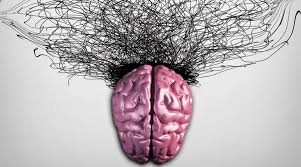
Your mind is a powerhouse — but overthinking may be overpowering you. Here are 6 proven tools to redirect it.
Let’s play a quick game. Raise both hands — and lower a finger every time a situation below matches something from your real life.
The Overthinking Test
Tap each one that applies to you. Be honest.
- ☝️Wasted time on a tiny decision, afraid of making the wrong choice
- ☝️Spent 10+ minutes deciding what to wear on a normal morning
- ☝️Mentally rehearsed a conversation multiple times before having it
- ☝️Worried about something that happened days, weeks, or years ago
- ☝️Spent 10+ minutes at a restaurant deciding what to order
- ☝️Typed a message, hovered over send, then deleted it — multiple times
- ☝️Mentally prepared for an argument that never actually happened
- ☝️Spent more time editing an email than writing it
- ☝️Deeply thought about how one action would affect a friend you haven’t spoken to in years
- ☝️Spent so long deciding what to watch that you watched nothing at all
of people aged 25–35 struggle with chronic overthinking
of people aged 45–55 are regular overthinkers
If you related to most of those situations — you are an expert at thinking. Your brain is a powerhouse. But that same powerhouse may be working against you.
The good news? Overthinking isn’t your enemy — negative overthinking is. And with the right tools, you can convert it into something deeply powerful: deep thinking.
The Evolutionary Root of Overthinking
To understand overthinking, we need to go way back. Thousands of years ago, Homo sapiens were physically one of the weakest species on the planet. We couldn’t swim efficiently, couldn’t fly, couldn’t outrun most predators. The one superpower that separated us? Our ability to think.
Our thinking evolved for a single purpose: survival. To stay alive, our brains were programmed to ask: what is the worst that could happen? Constantly scanning for threats helped our ancestors avoid predators, form groups, build weapons, and eventually create civilizations.
“The world has changed. Our brains haven’t.”
The core paradox of modern overthinking
We no longer live in jungles. No lion is going to appear at the grocery store. Yet the same survival-wired brain that once protected us from real physical threats is now scanning for other dangers — social threats, career fears, emotional risks. Since there’s no actual lion to run from, the brain invents new fears to obsess over. That’s overthinking.
Why You Specifically Overthink
1. Childhood Trauma
Many people develop overthinking as a coping mechanism in childhood. If you grew up in an unstable home — financial stress, a volatile parent, unpredictable circumstances — your young brain learned to constantly anticipate the worst to feel prepared. That habit of hyper-vigilance doesn’t disappear. It follows you into adulthood, now firing at restaurant menus and email replies.
2. Uncertainty and the Unknown
Our brains hate not knowing. “What will happen in the interview?” “Will the exam result be good?” “How will people treat me at that event?” When outcomes are unclear, the brain goes into overdrive trying to predict every possible scenario. That endless simulation is overthinking triggered by uncertainty.
3. Lack of Self-Confidence
Many people have skills, ideas, and real potential — but don’t act because they don’t feel ready. “I’m not perfect enough yet.” This paralysis by perfectionism is overthinking wearing the costume of preparation.
4. People-Pleasing
If you constantly worry about what others think — “Will they get upset?” “Will I make a bad impression?” — overthinking becomes nearly inevitable. People-pleasers overthink because they’re constantly trying to manage perceptions they cannot control.
5. Avoidance of Discomfort
Sometimes, thinking about doing something feels easier than actually doing it. We can mentally simulate success and failure from the safety of our minds. This is overthinking used as a comfort mechanism — experiencing life without the risk of actually living it.
Thinking vs. Overthinking: How to Tell the Difference
Here are 3 clear factors to help you identify which one you’re doing at any moment:
Overthinking
- Takes more time than the decision deserves
- Pulls you away from action
- Lives in “what if…” with no answer
- Focuses on negative outcomes
- Loops without resolution
Deep Thinking
- Time investment matches importance
- Leads you toward action
- “What if… then I’ll…” pairs problem with solution
- Considers multiple outcomes
- Ends with a decision or plan
The classic test: imagine you’re standing at the edge of a swimming pool. You think briefly about depth, safety — then jump. That’s thinking. But if you stand there wondering about the water temperature, how you’ll look when you splash, whether people are watching, whether to jump or not… and you never jump? That’s overthinking.
6 Tools to Convert Overthinking Into Deep Thinking
From immediate hacks to long-term lifestyle shifts — these tools have helped thousands of people redirect their mental energy.
The 90-10 Rule
90% of your self-worth must come from within. Only 10% should come from other people’s opinions. Most overthinkers flip this ratio — giving 60%, 70%, even 90% of their self-evaluation power to the outside world. When preparing for a speech, spend 90% thinking about how you can serve your audience and only 10% thinking about what people will think of you. You cannot control external opinions — but you can control your preparation.
The Decision Habit
Overthinking doesn’t start with big decisions — it trains on small ones. The habit of over-analyzing what to eat, what to wear, and what to reply creates a mental groove that eventually affects major life choices. Start practicing quick decisions on small, low-stakes choices. Give yourself a 30-second timer. Yes, you’ll sometimes make a suboptimal call. But you’ll build a brain that’s confident in deciding quickly. Build your decision muscle on the small ones so it’s ready when it counts.
The Scratch Sheet (Thinking Time)
Your brain needs to process — it has a built-in itch. Instead of fighting it, schedule it. Create a “Thinking Time” note on your phone. Whenever you catch yourself spiraling, write the thought down: “Will think about this at 7pm.” Your brain releases it because you’ve acknowledged it. When you sit down at your thinking time, you’ll often find those worries have dissolved on their own. For the ones that remain, you can now think about them calmly and productively.
Reframe — Change the Lens
Your brain has a lens. That lens can focus on problems or on possibilities. The same situation, seen from a different angle, produces completely different emotions. Replace “What if things don’t go my way?” with “What if things go exactly as I hope?” A mistake isn’t a failure — it’s data. When you catch a negative spiral, don’t try to stop it. Redirect it. Reframing doesn’t mean lying to yourself. It means choosing to focus on the part of the picture that’s actually useful right now.
Build Awareness — Let the Mud Settle
Imagine a glass of muddy water. You could boil it, filter it — or simply let it sit. Given time and stillness, the mud settles and the water clears on its own. Your mind works the same way. Awareness is that stillness. Think of it like a traffic officer at a chaotic intersection — before managing traffic, they must first understand the flow. Every successful person has some awareness practice: meditation, daily journaling, reflective walks. Even 10 minutes a day of observing your own thoughts builds the clarity to distinguish productive thinking from spiral thinking.
Make Peace With Uncertainty
Think of a cricket match. If the result were decided by the coin toss, would anyone watch? The thrill — the entire reason we love the game — comes from not knowing what happens next. The same is true for life. If everything were predetermined, there would be no growth, no breakthroughs, no chance to surprise yourself. The uncertainty you fear is the same force that makes extraordinary outcomes possible. When you catch yourself overthinking an unknown outcome, try: “Something will come of this — either the result I want, or a lesson I need.” Both have value. Neither is wasted.
The Buddha and the Soldier
A stern soldier came across Buddha meditating and rudely demanded: “Tell me the difference between heaven and hell!”
Buddha looked at him slowly and said coldly: “Why would I waste my time on someone as worthless and repulsive as you?”
The soldier’s face flushed with rage. He drew his sword. Buddha smiled quietly and said: “That… is hell.”
The soldier froze. In an instant, he realized how completely his anger had taken over — how he had been about to commit an act he could never undo, controlled by a single moment of emotion. Tears filled his eyes. He bowed in gratitude.
Buddha smiled again: “And that — is heaven.”
The mind that carries you to hell is the same mind that leads you to heaven. The only difference is awareness, choice, and practice.
You Don’t Have to Stop Thinking. Just Think Better.
Overthinking isn’t a character flaw. It’s a misdirected superpower — the same cognitive ability that built civilizations, now running in overdrive on the wrong inputs.
The goal is never to think less. The goal is to think well.
Use the 90-10 rule to protect your self-worth. Build the decision habit on small daily choices. Create a Scratch Sheet to schedule your worries. Reframe your negatives into possibilities. Practice awareness. And above all — make peace with the uncertainty that makes life worth living.
Your mind is not the problem. Untrained thinking is. Train it. Redirect it. Watch it become one of the most powerful tools you’ll ever own.