Mythology & Ancient Wisdom
Shambhala, Mahabharat & the Coming of Kalki : The Ancient Story That Refuses to Stay Hidden
From Ashwathama’s curse to the sacred forest city in the Himalayas — this is what the texts actually say
Mahabharata
Kalki Avatar
Ashwathama
Sanatan Dharma
Hindu Mythology
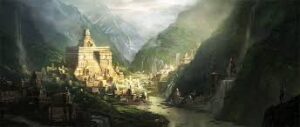
Let me ask you something. Have you ever sat with a story — a really old one — and felt that strange tingle of recognition? Like it wasn’t just mythology, but some kind of deeply buried memory trying to surface? That’s exactly how I feel every time I go deep into the Shambhala Mahabharat connection.
The Kalki movie threw this ancient narrative back into mainstream conversation. Suddenly everyone was Googling Ashwathama, asking about Shambhala’s location, wondering whether Karan really is Bhairava, and trying to figure out when exactly Lord Kalki is supposed to arrive. But the discussion barely scratched the surface of what’s actually written in our ancient texts.
Today, I want to go deeper. Way deeper. This isn’t a movie review or a fan theory roundup — it’s a genuine exploration of the mythological, spiritual, and even quasi-historical threads that tie the Mahabharata era to the coming of Kalki. So whether you came here after watching the film or you’ve been curious about Shambhala for years, you’re in the right place. Let’s get into it.
What this article covers: The ancient origins of Shambhala across religions, the Mahabharata’s direct link to Kalki’s birth, Ashwathama’s curse and what it actually means, the warriors reborn (Karan, Arjun, and their divine weapons), and why Jagannath Puri is considered the site of the final battle. Plus FAQs, pro tips, and a beginner’s breakdown.
What Is Shambhala? And Why Does the Mahabharata Point There?
Here’s the thing about Shambhala that most people get wrong. They think it’s purely a Buddhist concept — some Tibetan myth about a paradise hidden in the mountains. But the truth is much richer, and its roots in Sanatan Dharma are profound.
In the context of the Shambhala Mahabharat connection, this hidden kingdom sits at the crossroads of multiple ancient traditions. The Kalki Purana — a Sanskrit text specifically dedicated to the tenth avatar of Vishnu — places Shambhala as the birthplace of Kalki. Not just any village. A sacred, otherworldly settlement in the heart of the Himalayas, where the most spiritually elevated souls reside, waiting for the right moment in cosmic time.
But where exactly is it? That’s the million-dollar question. And it’s been a million-dollar question for centuries.
Shambhala: The Land of a Thousand Names
This is one of those fascinating details that actually deepens your trust in the tradition rather than undermining it. Shambhala appears across so many cultures and religions — sometimes with slightly different names, but always with recognisably similar descriptions:
- Sanatan Dharma / Hinduism: The birthplace of Kalki Avatar. A realm of perfect knowledge and light, connected to the solar dynasty.
- Tibetan Buddhism: A hidden kingdom from which the prophesied Rigden kings will emerge to defeat the forces of darkness in a final battle.
- Chinese tradition: Referred to as a hidden mountain paradise with similar characteristics — spiritual perfection, invisibility to the unworthy.
- Persian (Zoroastrian) tradition: Echoes of Ahura Mazda — the “one who created this universe” — and a final saviour figure align strikingly with the Kalki narrative.
- Christian tradition: The concept of the “Second Coming” of Christ maps onto the same archetypal structure.
What strikes me about this cross-cultural convergence isn’t that one tradition borrowed from another. It’s that all these separate streams of human spiritual thought independently arrived at the same image: a hidden sacred realm, a sleeping warrior-saviour, and a final age of darkness before a great renewal.
Is Shambhala a Physical Place or Another Dimension?
Honestly? The ancient texts don’t give you a clean answer — and I think that’s intentional. Some describe it as a physical valley somewhere in the Himalayas, shielded from ordinary perception. Others describe it as existing in a “higher dimension,” accessible only to those who’ve completely purified their minds and transcended the limitations of ordinary existence.
What we do know is this: the Himalayas remain one of the least fully explored mountain systems on earth. Vast stretches of these peaks, valleys, and plateaus have never been properly mapped or surveyed. From American explorers to, infamously, German Nazi expeditions in the 1930s and 40s — everyone has come looking for Shambhala. Nobody has officially found it. And maybe that’s exactly as it should be.
The Mahabharata Thread: Where It All Begins
To understand why Shambhala and the Mahabharata are connected, you need to go back to the very last days of the Kurukshetra war. More specifically, to the moment a grieving, furious son made a decision that would echo across millennia.
Ashwathama’s Brahmastra and Lord Krishna’s Curse
Guru Drona’s son Ashwathama was no ordinary warrior. He was, according to the Shiva Purana, a partial manifestation of Lord Shiva himself — which is why the three-line Trikundra Tilak on his forehead is such a significant visual marker. That detail in the Kalki film wasn’t random art direction. It was a direct textual reference.
Ashwathama was one of only two warriors — the other being Arjun — who had complete mastery of the Brahmastra, the most destructive weapon in all of cosmic warfare. But there’s a crucial difference: Arjun could invoke the Brahmastra, and he could also recall it. Ashwathama couldn’t. Once released, his Brahmastra was unstoppable.
On the final night of the Mahabharata war, driven by grief and rage over his father Drona’s death, Ashwathama committed an act that crossed every moral boundary. He attacked the sleeping Pandava camp, killing Draupadi’s five sons. And then, when cornered, he fired his Brahmastra at the womb of Uttara — who was pregnant with what would become Parikshit, the last heir of the Kuru dynasty.
Lord Krishna intervened to save Parikshit in the womb. But what followed was one of the most significant curses in all of Hindu scripture. Krishna looked at Ashwathama and told him something that essentially spans the rest of time.
The Curse That Connects to Kalki
Krishna’s curse on Ashwathama was layered and extraordinary. He would live. But he would wander the earth in suffering — his gem removed, wounds on his body that would never heal. He would find no human contact, no comfort, no rest. He would be shunned by all.
But here’s the piece that directly connects the Shambhala Mahabharat narrative: Ashwathama’s suffering isn’t permanent. According to various Puranas, his curse ends when Lord Kalki appears. He is meant to serve Kalki. His long penance — thousands of years of wandering — is itself a kind of preparation. When the darkest age reaches its peak, this ancient warrior, this fragment of Lord Shiva, will re-emerge to serve the final avatar.
In the movie, when we see Ashwathama begin meditating after his curse — weakened, wounded, waiting — it’s a fairly accurate echo of what the texts describe. And the detail about his height being greater than normal men is drawn directly from the Skanda Purana, which says that as the ages pass from Satya Yuga to Kali Yuga, human height progressively diminishes. Ashwathama, being from the Dwapar Yuga, would naturally be taller than Kali Yuga humans.
| Character | Mahabharata Identity | Kalki Era Role | Source Text |
|---|---|---|---|
| Ashwathama | Son of Guru Drona, Shiva’s partial form | Kalki’s guide and warrior | Shiva Purana, Kalki Purana |
| Karan / Bhairava | Suryaputra Karan, Surya Dev’s son | Reborn as the opposing force | Mahabharata, Kalki Purana |
| Arjun’s Gandiva | Brahmadev’s bow, given via Varuna Dev | Reappears in the final war | Mahabharata, Aranya Parva |
| Kali (Supreme Yaskin) | The dark age personified | Primary antagonist of Kalki | Kalki Purana, Bhagavata Purana |
| Jagannath Puri | Sacred land of Lord Vishnu | Site of the final battle | Kalki Purana |
Shambhala & the Mahabharat: The Kalki Connection Decoded
Let’s talk about what the Kalki Purana actually says about Kalki’s birth, because this is where the Shambhala Mahabharat link becomes very specific.
According to the text, Kalki will be born to a Brahmin family — his father Vishnuyas and his mother Sumati — in the village of Shambhala. The birth will occur on the 12th day of the Vaisakha month (which falls between April and May). At that moment, the planets will be in a unique alignment that can be observed only once in approximately 6,000 years — described as the darkest cosmic configuration in that entire span of time.
The movie’s reference to “Khadag Ashwini Nakshatra” — Khadag meaning a sword made of fire — is a poetic rendering of the Ashwini Nakshatra, which in traditional astrology is associated with the Mesh (Aries) sign, typically seen in March–April. It’s represented by a horse, which is also Kalki’s divine mount. The connection is elegant: the star sign of the horse, the birth month near the horse constellation, and the warrior who rides a white horse to end the Kali Yuga.
What Shambhala Actually Looks Like in the Texts
The descriptions in various Puranas paint a vivid picture. The most sacred tree in Shambhala — the Ashwatha tree (which we’d recognise as the Peepal tree, the same species under which the Buddha attained enlightenment) — is where Kalki will be born. Under this tree. In a moment of cosmic alignment.
Shambhala is described as a place where:
- The residents have transcended the limitations of ordinary human consciousness.
- Time moves differently — what is years outside may be moments within.
- The knowledge of all four Yugas is preserved intact.
- Only the spiritually pure can perceive or enter the location.
- The last king, Rudra Chakrin (the “Rudra Chakran” mentioned at the film’s opening), guards the knowledge until Kalki’s birth.
The Weapons That Span Two Eras: Gandiva and Vijay Dhanush
One of the most intellectually satisfying parts of the Shambhala-Mahabharat narrative is how it handles divine weapons. These aren’t just plot devices — they’re cosmic artefacts that carry the memory of previous yugas into the next conflict.
Arjun’s Gandiva
The Gandiva bow was created by Brahmadev (Brahma). It passed through Varuna Dev’s hands before being given to Arjun. It wasn’t just a weapon — it could hold off a hundred thousand warriors single-handedly. It came with the Akshay Tarkash, a quiver whose arrows would never run out.
In Mahabharata’s Aranya Parva, Arjun receives this weapon alongside a divine chariot bearing Lord Shiva’s flag and protected by Shri Hanuman. The image of that chariot — guided by Shri Krishna, protected by Hanuman, armed with the Gandiva — is one of Mahabharata’s most iconic.
Karan’s Vijay Dhanush
But Karan had something equally extraordinary. The Vijay Dhanush — the bow Lord Shiva himself used to destroy Tripurasura, and the weapon Parashurama gave to his most devoted student. In any battle where Vijay Dhanush is present, the wielder cannot lose. Full stop.
This is why there’s a narrative logic to the eternal opposition between Arjun and Karan. It wasn’t just two men fighting. It was the bow of Brahmadev against the bow of Mahadev. The creative principle against the transformative-destructive principle. Indra Dev’s champion against Surya Dev’s son. This cosmic opposition, the texts suggest, is recurring — and it will play out again in the Kalki era.
Jagannath Puri: Where the Final Chapter Is Written
Here’s the detail that I think genuinely surprised even devoted students of the Puranas when the Kalki film’s mid-credits scene landed. The name “Jagannath” wasn’t dropped casually. According to the Kalki Purana, the final confrontation between Kalki and the demon Kali will happen at Jagannath Puri.
And there’s a deeper layer. The “project” or divine substance referenced in the film — the mysterious serum — is suggested by some interpretations to represent the Brahmapadarth: the most sacred divine substance said to reside within the idol of Jagannath at Puri.
For those who don’t know: the Jagannath idol at Puri contains a mysterious object known as the Brahmapadarth — described in temple tradition as Lord Krishna’s still-beating heart. When the old idol is replaced (a ritual called Navakalevara, which happens roughly every 12–19 years), this object is transferred in absolute darkness, by blindfolded priests, from the old idol to the new one. Nobody knows what it actually is. The priests who transfer it reportedly die within months. It has never been photographed or described by an eyewitness.
If the Kalki narrative draws on this tradition, it’s suggesting that the divine energy at the centre of that mystery is connected to Kalki’s emergence. That the heart of Krishna — which technically never stopped — is waiting for its final avatar.
Pro Tips for Exploring the Shambhala-Mahabharata Connection
- Start with primary texts, not summaries: The Kalki Purana is actually not a very long text. Several reliable English translations are available. Reading even the first few chapters directly gives you a much richer picture than any secondhand account.
- Cross-reference the Bhagavata Purana: The 12th Skandha of the Bhagavata Purana contains some of the most detailed descriptions of Kali Yuga’s progression and Kalki’s appearance. It gives context the Kalki Purana alone doesn’t.
- Don’t conflate Tibetan Shambhala with Hindu Shambhala: They share a root concept but have diverged significantly. The Tibetan Rigden king tradition and the Hindu Kalki tradition are parallel, not identical.
- Understand the Yuga cycle timeline: The current Kali Yuga began, according to traditional reckoning, in 3102 BCE (after the Mahabharata war). It’s scheduled to last 432,000 years. We’re only about 5,000 years in. Kalki’s arrival, by traditional calculation, is still far in the future — which makes the “signs” narratives culturally interesting rather than literally prophetic.
- Approach Ashwathama sightings with discernment: Reports of Ashwathama being seen in various parts of India circulate regularly. Whether literal or metaphorical, they reflect a living mythological consciousness — treat them as such rather than dismissing or literally accepting them.
Common Mistakes People Make When Reading These Texts
- Taking movie interpretations as canonical: Films — even well-researched ones — take creative liberties. The Bhairava-Karan parallel in the Kalki movie is a creative interpretation, not a direct textual statement. Always trace claims back to source texts.
- Assuming Shambhala is a single tradition: Saying “Shambhala is a Buddhist concept” or “Shambhala is a Hindu concept” both miss the bigger picture. It’s a pan-cultural archetype with multiple streams of development.
- Confusing Kali (the demon) with Goddess Kali: These are entirely different beings. Kali the demon represents the corrupting force of the Kali Yuga. Goddess Kali is a fierce form of Goddess Durga/Shakti. They share a name and a connection to destruction, but their spiritual roles are opposite.
- Dismissing the science references as “just mythology”: Ancient Indian texts embed significant astronomical and mathematical knowledge. The Ashwini Nakshatra references, the planetary alignment for Kalki’s birth, the Yuga cycle calculations — these are woven into real astronomical frameworks worth studying seriously.
- Missing the emotional core: These stories aren’t just cosmological puzzles. The story of Ashwathama — a devoted son, a brilliant warrior, condemned to wander in suffering for thousands of years because of one desperate act — is one of the most heartbreaking in all world literature. Don’t get so caught up in the metaphysics that you miss the humanity.
Beginner’s Guide: Key Concepts You Need Before Diving In
New to Hindu mythology and feeling a little overwhelmed? Here’s a quick orientation to the main ideas in this discussion:
- Dashavatar: The ten principal avatars (incarnations) of Lord Vishnu. They are: Matsya, Kurma, Varaha, Narasimha, Vamana, Parashurama, Rama, Krishna, Buddha, and Kalki. Kalki is the tenth and final, yet to come.
- Kali Yuga: The fourth and current age in the Hindu cosmic cycle. It’s characterised by moral decline, spiritual darkness, and material obsession. Think of it as the cosmic “dark night” before the dawn of the next Satya Yuga.
- Purana: Sanskrit for “ancient.” The Puranas are a genre of Hindu texts containing cosmology, mythology, genealogy, and religious instructions. There are 18 major Puranas. The Kalki Purana and Shiva Purana are most relevant here.
- Brahmastra: The most powerful weapon in Vedic warfare, invoked through concentrated mental power. It can only be recalled by someone with equivalent or greater spiritual power. It’s essentially the “nuclear option” of ancient cosmic warfare.
- Nakshatra: One of the 27 lunar mansions in Vedic astrology, representing the position of the moon on a given day. Ashwini is the first Nakshatra, associated with healing, new beginnings, and is symbolised by a horse.
- Shambhala (basic definition): A hidden, sacred realm in the Himalayas where the highest spiritual knowledge is preserved. In the Kalki Purana, it’s the birthplace of Lord Kalki. Accessible only to those of great spiritual purity.
The Rumi Quote and the Universal Warrior: Different Names, Same Coming
One of the most quietly profound moments at the opening of the Kalki film is when Rumi’s poetry is invoked alongside four names: Ahura Mazda, Second Coming, Dashavatar’s last incarnation, and Rudra Chakran.
This isn’t syncretism for the sake of inclusivity. It’s pointing at something the ancient texts themselves suggest: the archetype of the warrior who ends an age of darkness and restores dharma is so fundamental to human spiritual consciousness that it independently emerged in every major tradition.
Ahura Mazda — the supreme creative intelligence of Zoroastrianism, associated with light and truth over darkness and deception — is a direct parallel to the Surya-connected Kalki narrative. The Second Coming of Christ in Christian eschatology follows the same pattern: a period of great tribulation, a figure of divine power returning to restore justice, a final battle between good and evil. The Tibetan Rigden king emerging from Shambhala maps directly onto the Kalki narrative.
What does this tell us? I think it tells us that across every civilization that has left serious records of its spiritual thought, human beings have sensed that history isn’t just linear. That cycles exist. That darkness has a limit. And that something — someone — is coming to mark that limit.
Sanatan Dharma’s Cosmic Calendar: Are We Really in Kali Yuga?
Here’s where I want to ground this discussion in something a bit more concrete, because the Shambhala Mahabharat narrative only makes full sense within the framework of the Yuga cycle.
According to traditional Vedic calculations, the current Kali Yuga began on January 23, 3102 BCE — the day of Lord Krishna’s departure from the earthly realm, which tradition places at the end of the Mahabharata war’s aftermath. The full Kali Yuga spans 432,000 years. We are currently approximately 5,126 years into it.
That means — by traditional reckoning — we’re in the very early stages of the Kali Yuga. Kalki’s arrival, and with it the birth in Shambhala described in the Kalki Purana, is technically thousands of years away by standard calculation. This is why some scholars interpret the Kalki narrative as cosmic prophecy on a timescale humans aren’t really built to emotionally process.
Others, pointing to how dramatically the world has changed just in the past few centuries, argue that we’re in an accelerated phase of the Kali Yuga’s decline. Whatever your interpretation, the framework itself — a cosmic cycle with darkness preceding renewal — is one of the most elegant models for understanding history ever articulated.
FAQs: Shambhala, Mahabharata & Kalki
Is Shambhala mentioned in the Mahabharata directly?
Shambhala isn’t prominently named in the core Mahabharata text itself, but the connection between the Mahabharata era and Kalki’s birth in Shambhala is established in the Kalki Purana and other Puranic texts. The Mahabharata war and its aftermath — particularly Ashwathama’s curse — are the events that directly set the stage for the Kalki era. So while Shambhala isn’t named in Vyasa’s Mahabharata, the two stories are deeply linked through the connecting thread of Ashwathama’s eternal wandering and eventual redemption.
Is Ashwathama still alive today? Are there any real sightings?
This is genuinely one of the most fascinating questions in living Hindu mythology. The texts state clearly that Ashwathama’s curse makes him immortal but suffering — wandering without human contact, his wounds never healing. Over the centuries, numerous accounts have emerged from various parts of India — particularly in Madhya Pradesh and Rajasthan — of a very tall man with wounds on his forehead appearing at remote temples before dawn and disappearing. Whether these are taken literally or as collective mythological memory, they reflect how deeply alive this story remains in Indian consciousness. No account has ever been scientifically verified.
When exactly is Kalki Avatar supposed to be born?
The Kalki Purana states that Kalki will be born on the 12th day of the Vaisakha month (April–May) when the planets are in a specific alignment seen once in 6,000 years. Some astrologers connect this to Ashwini Nakshatra, which typically falls in March–April. By the standard Kali Yuga timeline (which lasts 432,000 years total), Kalki’s arrival is still a very long way off. However, some scholars who interpret the Yuga cycle differently (notably Yukteswar’s shorter cycle calculations) place the arrival much sooner. There is no consensus on an exact date.
What is the significance of the Ashwatha tree in Shambhala?
The Ashwatha tree — the sacred Peepal (Ficus religiosa) — holds a unique place across Hindu and Buddhist traditions. In the Bhagavad Gita, Lord Krishna describes himself as the Ashwatha among trees. The Buddha attained enlightenment under an Ashwatha (Bodhi) tree. In Shambhala, it’s described as the most sacred tree of the realm, under whose canopy Lord Kalki will be born. The tree symbolises eternal life, the connection between worlds, and the axis around which cosmic time rotates. Its presence in Shambhala reinforces the idea that Kalki’s birth is a cosmic, not merely worldly, event.
Why will the final battle happen at Jagannath Puri?
According to the Kalki Purana, the final confrontation between Kalki and the demon Kali will take place at Jagannath Puri. Puri is considered one of the four sacred dhams in Hinduism (along with Badrinath, Dwarka, and Rameshwaram) and is seen as the earthly residence of Lord Vishnu in his Jagannath form. The text suggests that the divine energy concentrated at this site — where Krishna’s presence (in the form of Jagannath) has been continuously worshipped for centuries — makes it the natural location for the final assertion of dharma over adharma. The connection to the mysterious Brahmapadarth within the idol adds another layer to this sacred geography.
Is Karan reborn as Bhairava in the Kalki era?
This is a creative interpretation rather than a direct Puranic statement, but it has real textual underpinning. The eternal opposition between Arjun (Indra’s son) and Karan (Surya’s son) — and the cosmic tension between their weapons Gandiva and Vijay Dhanush — is a recurring theme in discussions of the Kalki era. Bhairava is traditionally considered a form of Lord Shiva and is the protector of Kashi. The film’s Bhairava character is born in a basket (like Karan) and has a body shield (like Karan’s Kavacha and Kundala). Whether this represents a direct reincarnation or a parallel archetype is a question the texts leave deliberately open — and it’s part of what makes the narrative so compelling to explore.
Wrapping It Up : The Story That’s Still Being Written
What I love most about the Shambhala Mahabharat connection is that it refuses to be a closed book. Every question you answer opens three more. Every text you read points to another text. And underneath all the mythology, the cosmic calculations, and the fan theories, there’s a genuinely profound human truth at the core of it all.
The idea that even the darkest age has a limit. That a long penance eventually ends. That the weapons of righteousness outlast the empires that tried to destroy them.
If you want to go deeper into this world, here’s what I’d suggest:
- Read the Kalki Purana in translation — it’s shorter than you’d expect and surprisingly specific.
- Study the 12th Skandha of the Bhagavata Purana for the full Kali Yuga context.
- Explore the Skanda Purana’s sections on Ashwathama for the height and curse details.
- Look into the Navakalevara ritual at Jagannath Puri — the mystery of the Brahmapadarth deserves its own deep dive.
- And the next time you look at the Himalayas — in person or in a photograph — let yourself wonder. Because Shambhala, whatever form it takes, has never stopped calling to the part of us that still believes the best is yet to come.
Related Articles: Ashwathama: The Immortal Warrior of Mahabharata — Full Story | Jagannath Puri Mysteries: The Brahmapadarth Secret | The Kali Yuga Timeline: What the Vedic Calendar Actually Predicts
External Resources: Kalki Purana — Wisdom Library | Hindu Sacred Texts Archive
Force Your Brain to Crave Hard Work — And Finally Stop Being Lazy
Meet OpenClaw : The Self-Hosted AI Assistant That Never Clocks Out
Google Antigravity: The Free AI Agent Quietly Revolutionizing Social Media Content Creation