Heritage & History
Surya Mandir Konark : The Floating Idol, the Magnetic Magnet & 120 Years of Sealed Secrets
Why India’s most mysterious temple still refuses to give up all its answers
Odisha Heritage
Ancient India
UNESCO World Heritage
Indian Architecture
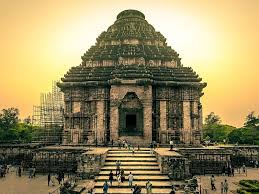
Picture this. You’re standing on the sun-baked coast of Odisha. A 13th-century stone chariot — the size of a small mountain — looms in front of you. Every wheel is a working sundial. The walls are covered in carvings so intricate they make your head spin. And somewhere inside, sealed behind walls of sand for over 120 years, is a chamber that British officials decided the world wasn’t ready to see.
That’s the Surya Mandir Konark for you. It’s not just a temple. It’s a mystery wrapped in ancient engineering, wrapped in stories that feel almost too extraordinary to be real — and yet the stone evidence is right there, defying time and logic in equal measure.
I’ve been obsessed with this place for years, and honestly, the more I dig into it, the more questions I find. Today, I want to walk you through everything — the history, the jaw-dropping science, the tragedy, and what’s happening with those sealed doors right now in 2025. Grab a chai, because this is going to be a long one.
What Even Is the Surya Mandir Konark?
Before we get into the conspiracy-worthy stuff, let’s set the stage properly. The Konark Sun Temple — or Konark Surya Mandir as it’s known locally — sits on the coast of Odisha (formerly Orissa), about 35 km from Puri. It was built in the 13th century during the reign of King Narasimha Deva I of the Eastern Ganga dynasty.
The name itself is poetic: Kona means corner or direction, and Arka means the sun. So Konark literally translates to “sun of the corner” or “corner of the sun.” The entire structure is designed in the shape of a colossal chariot — with twelve pairs of stone wheels (that’s 24 wheels in total) and seven stone horses pulling it forward, all dedicated to Surya, the Sun God.
It’s a UNESCO World Heritage Site. It’s been called one of the seven wonders of India. Portuguese sailors were so terrified of it that they named it the Black Pagoda. And it’s been sitting there with its most important chamber sealed and filled with sand since 1903.
Quick facts about Surya Mandir Konark:
- Location: Konark, Puri district, Odisha
- Built: Approximately 1238–1264 CE
- Commissioned by: King Narasimha Deva I (Eastern Ganga Dynasty)
- Chief Architect: Bishu Maharana
- UNESCO Heritage Status: Since 1984
- Sanctum sealed since: 1903 (by British Lt. Governor J.A. Bourdillon)
The Mythological Origin: A Son’s 12-Year Penance
Now, historians trace the current temple to the 13th century, but the sacred traditions of this site go back way further. According to texts like the Samba Purana and the Bhavishya Purana, the origin story begins with Samba — son of Lord Krishna and his wife Jambavati.
Samba was known throughout Aryavarta for his extraordinary good looks and charm. Unfortunately, that beauty came packaged with an enormous ego. He had a nasty habit of mocking sages and elders — which, as anyone who’s read even a sliver of Hindu mythology knows, never ends well.
Devarshi Narada, tired of Samba’s behavior, devised a lesson. He led Samba to a lake where Krishna’s other queens were bathing. Krishna saw his son there and, furious at what he interpreted as an unforgivable transgression, cursed Samba with leprosy. Within moments, Samba’s golden body was covered in painful sores and disfigurements.
When Krishna learned of Narada’s trick, it was too late. A curse once given can’t simply be taken back. But Krishna pointed Samba toward Surya Dev — the Sun God — the only deity known to cure all skin diseases and ailments.
In gratitude, Samba built the first Surya temple at this very spot. According to local lore, during his final ritual bath in the Chandrabhaga River, he found a miraculous idol of the Sun God floating in the current — and that’s the idol he installed. Over centuries, the site grew in sacred importance. What we see today as Konark is historically considered the fourth and grandest iteration of a temple on this site.
The Man Behind the Marvel: King Narasimha Deva I
By the 13th century, the coastal region around Konark was a buzzing nexus of sea trade, military ambitions, and religious patronage. The Eastern Ganga dynasty — the same family that built the Jagannath Temple in Puri — held sway here, and their most ambitious king was Narasimha Deva I (also written as Langula Narasimha Deva).
According to historical records, including the important Kendu Copperplate Inscription, construction of the present temple began around 1238 CE and was completed by around 1264 CE. That’s 26 years of continuous effort, reportedly using the kingdom’s entire tax revenue for twelve years and a workforce of over 1,200 master craftsmen.
What drove this extraordinary investment? The motivations were deeply layered:
- Religious devotion: His mother, Queen Kasturi Devi, urged him to build a temple for Surya Dev that would rival — or surpass — the Jagannath Temple in grandeur.
- Political statement: Narasimha Deva I had defeated several powerful foreign invaders during his reign. The temple was intended as a victory monument for the ages.
- Dynastic legacy: The Ganga kings had always been great temple builders. This was his defining contribution to that tradition.
Even the Mughal court took notice. Emperor Akbar’s court historian Abu’l-Fazl, in his celebrated chronicle Ain-i-Akbari, described the temple after visiting Odisha and wrote that imagining its beauty and the cost of its construction was next to impossible. And this was in the 16th century — after the temple had already faced damage.
The Tragedy of Dharmapada: A Boy Who Gave Everything
Of all the stories connected to the Surya Mandir Konark, this one hits the hardest. It’s the kind of story that doesn’t leave you.
Construction was in its final phase. The main structure was complete, but there was one insurmountable problem: the kalasha — the capstone that needed to be placed on the temple’s peak. This wasn’t an ordinary stone. Sources describe it as a 52-tonne magnetic stone, the centrepiece of the entire magnetic field system that held Surya Dev’s idol suspended in mid-air.
The 1,200 master craftsmen had tried everything. Day after day, attempt after attempt — failure. Then King Narasimha Deva’s patience snapped. He delivered a chilling ultimatum: if the kalasha is not in place by sunrise, every single craftsman — all 1,200 of them — would be executed.
That night, a 12-year-old boy named Dharmapada arrived at the construction site. He was the son of chief architect Bishu Maharana, but he’d grown up without ever seeing his father’s face — Bishu had been away building this temple since before the boy could form memories.
Dharmapada had inherited his father’s gift. Somehow, in ways that no adult craftsman could figure out, this child understood the precise geometry of the diamagnetic field — how the three magnetic elements needed to be balanced. He asked his father’s permission, and in the darkness of night, he climbed to the peak of the great temple and placed the kalasha perfectly.
When dawn broke and the sun’s first rays touched the capstone, the gathered craftsmen stood in stunned silence. The impossible had been done by a child.
But then fear spread through the camp. When the king discovered that a 12-year-old had succeeded where 1,200 masters had failed, surely he’d see the craftsmen as incompetent and punish them all anyway. To protect his father’s honour and the lives of all those workers, Dharmapada made the most heartbreaking choice imaginable.
He jumped from the temple peak into the Chandrabhaga River below.
The Engineering Secrets That Still Baffle Scientists
Let’s talk about what actually made this temple so extraordinary from a scientific standpoint. Because it’s one thing to call something “advanced” — it’s another to actually break down the mechanics.
The Sundial Wheels: Time Told in Stone
Those famous wheels on the chariot’s base aren’t decorative. Each of the 24 wheels functions as a precision sundial. Here’s how it works:
- Each wheel has 16 spokes — eight major spokes and eight minor spokes.
- The gap between each major spoke represents 3 hours, giving a complete 24-hour cycle.
- The minor spokes subdivide time further, with each individual spoke marking intervals of roughly 3 minutes.
- The wheel is read counter-clockwise (anticlockwise).
- If you place your finger at the hub and observe the shadow of the spoke, you can read the current time with remarkable accuracy.
The 24 wheels represent the 12 months of the year in pairs. The seven horses pulling the chariot represent the seven days of the week — and the seven visible colours of sunlight, a fact that Isaac Newton “discovered” with his prism experiments in 1666. The temple was built in the 1200s. You do the math.
The Iron Lock System: No Cement Needed
Here’s something that should break your brain a little. This temple was built without a single drop of cement. The craftsmen used massive sandstone blocks joined by an iron interlocking system — thick iron plates and clamps fitted into grooves cut into the stones with such precision that they locked together under their own weight and tension.
This wasn’t just structurally brilliant. The accumulated iron in those walls served a secondary purpose: it helped create the magnetic field that, combined with the 52-tonne magnetic capstone, was designed to hold Surya Dev’s statue suspended in mid-air through what we’d now recognise as diamagnetic levitation.
The Floating Idol: Ancient Magnetic Levitation
Ancient texts and oral traditions consistently describe Surya Dev’s statue — made of ashta-dhatu (an alloy of eight metals) — floating without any visible support inside the garbhagriha (inner sanctum). No pillar. No platform. Just hovering in space.
The mechanism, as understood today, involved three magnetic elements in precise geometric alignment:
- The 52-tonne magnetic stone at the temple’s peak (the capstone Dharmapada installed).
- The iron-infused walls acting as a distributed magnetic field generator.
- The ashta-dhatu statue positioned at the exact geometric midpoint between the capstone and the iron floor matrix — equidistant from both, locked in diamagnetic equilibrium.
This is the technology that young Dharmapada understood instinctively. And it worked — until it didn’t.
| Feature | Ancient Design | Modern Scientific Term |
|---|---|---|
| Floating statue | Three-magnet equilibrium system | Diamagnetic levitation |
| Stone wheel time-reading | Shadow & spoke geometry | Precision sundial |
| Stone joining without cement | Iron plate interlocking grooves | Mechanical interlocking system |
| 7 horses, 7 colours of light | Vedic knowledge of solar spectrum | Light dispersion (Newton, 1666) |
| Compass disruption at sea | 52-tonne magnetic capstone | Electromagnetic interference |
The Black Pagoda and the Terror at Sea
Portuguese sailors in the 16th and 17th centuries didn’t call it “Konark.” They called it Black Pagoda — and not because of its colour. The name reflected pure, unadulterated fear.
Every time their ships passed the coastline near Konark, their navigation compasses went haywire. The needles spun wildly, unpredictably, giving useless readings. Ships that relied on those compasses for direction found themselves drifting off course. Some drifted straight into coastal rocks and sank.
The 52-tonne magnetic capstone was creating an electromagnetic field powerful enough to be felt for several kilometres out at sea. Sailors’ diaries and sea logs from this period record multiple incidents of ships losing their bearings near Konark’s coast.
Eventually, according to historical accounts, Portuguese sailors took drastic action. They raided the temple and physically removed the magnetic capstone. Their reasoning? Get rid of the source of the problem, and their ships would be safe.
They got their compass needles back. But in doing so, they destroyed the temple.
The moment that central stone was removed, the entire structural balance of the temple — which had been calibrated around that magnetic anchor — began to fail. The iron interlocking system lost its tension. The stones began to shift. The magnificent structure that had stood firm for 300 years started crumbling from within.
The Decline, the Desertion, and the Sand
As the structure weakened and the threat of further attacks loomed, the temple’s priests made a brave decision. They removed Surya Dev’s main idol from the sanctum and hid it — buried under sand for protection — rather than let it fall into the hands of invaders or be damaged by a collapsing building.
Without the main idol, devotees stopped coming. Without devotees, there was no income for maintenance. Without maintenance, the temple fell faster. By the end of the 18th century, the once-magnificent Surya Mandir Konark had been swallowed by dense jungle. People in the surrounding area avoided it at night. Superstitions accumulated around it. The Golden Age was definitively over.
The primary idol eventually found its way to Puri, where it was installed in the Indra Temple within the Jagannath Temple complex. (There’s still active debate today about whether the Surya idol in the National Museum in New Delhi is actually Konark’s original.)
Then came the British, and specifically one Scottish historian named James Fergusson who rediscovered the temple in 1837, documented it through meticulous drawings, and essentially brought it back to world attention. But the more consequential British intervention came in 1903.
1903: The Day They Sealed the Secrets
In 1903, Bengal’s Lieutenant Governor J.A. Bourdillon arrived at Konark with a team of experts. What they saw inside the Jagmohan — the assembly hall — apparently alarmed them deeply. The structure was unstable. Stones were at risk of collapsing.
His solution was radical: seal all four entrances of the Jagmohan permanently with stone walls, and fill the entire hollow interior with millions of tonnes of sand and gravel.
On the surface, this sounds like conservation. And structurally, there’s logic to it — filling a chamber with sand distributes the weight of the walls and prevents internal collapse. But the questions that have haunted historians ever since are obvious: Why not excavate and restore? Why the permanent sealing? What exactly did the inspection team see inside that made burial seem like the only option?
For 123 years, no human being — no scientist, no archaeologist, no historian — has crossed the threshold of that inner chamber. The Surya Mandir Konark has been literally holding its breath for over a century.
2025: The Sealed Doors Begin to Speak
Here’s where things get genuinely exciting for anyone following this story. In 2022, the Indian government and the Archaeological Survey of India (ASI) announced a formal plan to study the feasibility of removing the sand and reopening the sealed sanctum.
The project is moving carefully — and for good reason. Nobody knows exactly how the structure will behave once that sand is removed. The sand has been load-bearing for 120 years. Take it out too quickly, and the whole thing could come down.
In December 2025, ASI made a significant move. They began core drilling — drilling small cylindrical holes through the sealed walls to understand the wall’s thickness, strength, and the current condition of the sand inside. According to ASI’s Superintending Archaeologist D.B. Gananayak, this data will determine the structural strengthening steps needed before any sand removal can begin.
The Telegraph reported that ASI has partnered with IIT Madras for a detailed structural assessment — essentially using modern engineering science to figure out what 13th-century engineering buried inside can safely withstand. Early drilling results revealed something interesting: the sand that was once believed to fill the chamber all the way to the top has settled, and currently sits approximately 13.5 metres below where it was originally filled.
Nobody knows what that settling has done to the internal structure. Nobody knows what’s still intact inside. But for the first time in over a century, we’re actually looking.
Pro Tips: Planning Your Visit to Konark
- Best time to visit: October to March. The coastal humidity and heat in summer can be brutal, and the temple is largely open-air.
- Don’t miss the wheels: Spend serious time at each wheel on the south side — these are the best-preserved sundials. Bring a watch and test it yourself. It genuinely works.
- Go early: The temple opens at 6 AM. Early morning light on the carved sandstone is extraordinary, and you’ll beat the crowds by at least 2 hours.
- Hire a certified guide: The depth of symbolism in the carvings — astronomy, mathematics, the Kama Sutra panels, battle scenes — is almost impossible to appreciate without context. Budget about ₹300–500 for a knowledgeable local guide.
- Visit the ASI Museum nearby: Several original sculptures that were removed for preservation are displayed here, including some remarkable panels you won’t see on the main structure.
- Combine with Puri: Konark is 35 km from Puri. A dawn visit to Konark followed by an afternoon at the Jagannath Temple is one of Odisha’s great heritage day-trips.
Common Mistakes Visitors Make at Konark
- Skipping the back of the temple: Most tourists crowd the front entrance and miss the extraordinary detail on the rear and side walls. Walk the full perimeter.
- Ignoring the horse sculptures: The seven horses at the front are not just decoration — each horse represents a day of the week. They deserve closer inspection.
- Rushing through: People often allocate 45 minutes. Budget at least 2–3 hours if you want to actually engage with what you’re seeing.
- Visiting without any prior context: The carvings tell complex stories from Hindu cosmology, history, and science. Reading even a basic overview before you go transforms the experience.
- Assuming the “Black Pagoda” name is about colour: It’s a magnetic story, not an aesthetic one. Don’t repeat this misconception to other visitors!
Beginner’s Guide: Understanding the Konark Sun Temple
Never been to Konark and not sure where to start? Here’s what you actually need to know:
- It’s a chariot temple: The entire structure is designed as Surya Dev’s solar chariot. The main tower (vimaana) was where the deity’s idol sat. The prayer hall (jagmohan) is where devotees gathered. And the natamandira is the dance hall.
- The main tower has collapsed: What you see as the primary structure today is actually the jagmohan — the assembly hall. The original main tower fell, probably somewhere between the 15th and 18th century.
- The idol is gone: The original floating Surya Dev idol was removed centuries ago and is believed to be in Puri. The sealed sanctum now contains only sand.
- The wheels are functional: This bears repeating because people find it hard to believe. Stand near the south-facing wheels on a sunny day with a functioning watch. Test a spoke’s shadow. You’ll get the time.
- Entry is around ₹40 for Indians, more for foreign tourists: It’s one of the most underpriced heritage experiences in the world.
Why Konark Matters Beyond Tourism
It would be easy to treat Konark as just another heritage site to tick off a bucket list. But I think that undersells what’s actually here.
This temple was, as some historians describe it, a living encyclopaedia. The carvings on its walls document astronomical knowledge, mathematics, medical understanding, music theory, erotic art (yes, that too — deliberately included as a representation of human life in its entirety), military history, and philosophical thought. Every panel was a classroom lesson for a society where most people couldn’t read.
The engineering embedded in the structure demonstrates mastery of geometry, material science, and electromagnetic principles that Western science wouldn’t formalise for another 400–600 years. Whether you approach this with nationalist pride or pure scientific curiosity, the implications are fascinating.
And the sealed chamber? It represents something rare in modern times — a genuine unsolved mystery in plain sight. Not in a jungle. Not at the bottom of the ocean. Right there on a well-mapped stretch of the Odishan coast, accessible by road, surrounded by cafés and tour buses, and yet fundamentally, stubbornly unknown.
Whatever ASI and IIT Madras find when those walls finally open — whether it’s structural information, hidden carvings, remnants of the magnetic system, or something nobody has even thought to expect — it’s going to be significant.
Frequently Asked Questions About Surya Mandir Konark
Why is Konark called the Black Pagoda?
The name “Black Pagoda” was coined by Portuguese sailors in the 16th–17th centuries. It had nothing to do with the temple’s colour. The 52-tonne magnetic capstone on the temple’s peak was so powerful that it disrupted the magnetic compasses on ships passing near the Odishan coast, causing navigational disasters. The “black” referred to the ominous, dangerous reputation the temple had among sea traders. It was a lighthouse of fear rather than guidance, and sailors gave it this dark nickname to warn each other away from that stretch of coastline.
Is Konark’s sundial wheel actually accurate?
Yes — and surprisingly so. Each wheel has 16 spokes (8 major, 8 minor), and the shadow cast by the spokes can be used to read the time of day with an accuracy of approximately 3 minutes. The wheels are designed to be read anticlockwise, with each gap between major spokes representing 3 hours. Visitors who test this with a watch during a sunny day consistently find it works. The level of astronomical precision embedded in the design — especially given that it was executed in the 13th century without modern instruments — remains a subject of serious scholarly fascination.
Why was the Konark temple sealed with sand in 1903?
In 1903, Bengal’s Lieutenant Governor J.A. Bourdillon ordered the four doorways of the Jagmohan (assembly hall) permanently sealed with stone walls, and the interior completely filled with sand and gravel. The official justification was structural conservation — the building was deteriorating and at risk of collapsing. By filling the hollow interior with sand, the walls would be supported under compression. However, historians have long questioned whether there were additional motivations, as the scale of the intervention — permanently burying rather than restoring — was extreme. The sealed interior has not been accessed by anyone since 1903.
Who was Dharmapada and did he really sacrifice himself?
Dharmapada was the 12-year-old son of Bishu Maharana, the chief architect of the Konark temple. According to historical oral traditions and chronicles including the Madala Panji, he solved the problem of installing the magnetic capstone (kalasha) on the temple’s peak overnight, something 1,200 master craftsmen had failed to do over many months. Fearing that the king would punish the craftsmen for being outperformed by a child, Dharmapada jumped from the temple peak into the Chandrabhaga River, sacrificing his life to protect his father’s honour and the craftsmen’s lives. While the story is deeply embedded in regional tradition, it cannot be archaeologically verified. But it’s considered historical memory by Odishan scholars.
What is the current status of ASI’s work at Konark in 2025?
As of December 2025, ASI has commenced core drilling operations on the sealed Jagmohan walls to determine wall thickness, structural integrity, and the current condition of the sand fill inside. This work is being done in collaboration with IIT Madras, which is conducting a comprehensive structural assessment. Early results indicate the sand inside has settled to approximately 13.5 metres below its original fill level. The data gathered will determine whether and how sand evacuation can be safely undertaken. Full access to the inner chamber remains sealed pending this analysis, but this marks the most significant step toward potentially opening the chamber since 1903.
Can tourists visit the inside of the Konark temple?
You can visit the Konark temple complex freely, and there’s a significant amount to explore from the outside — the wheels, the horse sculptures, the exterior carvings, and the natamandira (dance hall). However, the inner sanctum (garbhagriha) has been sealed since 1903 and is not accessible to the public. The Jagmohan’s interior — filled with sand since 1903 — is also inaccessible. There’s an ASI museum nearby that houses many original sculptures. The site is open from 6 AM to 6 PM, and entry fees are nominal for Indian citizens.
Final Thoughts: Go, Wonder, and Don’t Stop Asking Questions
The Surya Mandir Konark isn’t just a temple. It’s a 13th-century act of defiance against limitation — against what a human civilisation was “supposed” to be able to know or build or imagine at that point in history.
If you take nothing else from this article, take these three things:
- Visit in person if you possibly can. No description, photograph, or documentary does it justice.
- Read the wheels. Don’t just admire them — actually test the sundial. Let ancient engineering prove itself to you directly.
- Follow the ASI and IIT Madras research as it develops. What they find inside that sealed chamber could genuinely rewrite our understanding of medieval Indian engineering.
The sealed doors of Konark have been shut for 123 years. They’re about to start opening. Whatever comes next, it’s going to be worth paying attention to.
Related Articles: The Jagannath Temple Puri: Mysteries Beneath the Dome | Kalinga Architecture: Understanding Odisha’s Temple Tradition | ASI Heritage Conservation Projects 2025
External Resources: UNESCO World Heritage — Konark Sun Temple | Archaeological Survey of India Official Site
Government Internships in India : How to Land One, Get Paid, and Actually Build Your Career

Tech Career in : Which Role Should You Actually Pick as a Fresher?

Apple MacBook Neo Review: Is Apple’s Most Affordable MacBook Actually Worth It?