Mind · Growth · Productivity
Force Your Brain to Crave Hard Work — And Finally Stop Being Lazy
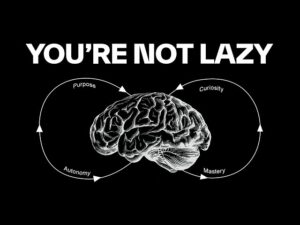
The surprising science behind why you’re not lazy — and a powerful story that shows you exactly how to rewire your mind for relentless effort.
Here’s a question I want you to sit with for a second: What if you’re not actually lazy?
Seriously. Before you dismiss it — what if the problem isn’t willpower, discipline, or even your mindset? What if the real issue is that your brain simply hasn’t been given a reason to crave effort yet?
I’ve talked to dozens of people who feel stuck in this loop. They wake up motivated, they scroll through quotes, they make to-do lists — and still, by 10 AM, they’re back on YouTube wondering where the day went. Sound familiar? The good news is there’s a way to force your brain to crave effort so deeply that hard work starts to feel less like a punishment and more like something you actually look forward to.
Today I want to walk you through the science behind this, some practical methods that actually work, and a story from a remarkable novel called The Ultimate Gift — a story that captures this transformation better than any motivational poster ever could.
“The moment you find meaning in the pain, the pain stops being punishment. It becomes fuel.”
Why Your Brain Resists Hard Work (It’s Not What You Think)
Let’s start with some uncomfortable honesty. Your brain isn’t wired to work hard by default. In fact, it’s wired to do the exact opposite — to conserve energy, seek comfort, and avoid any task that feels unnecessarily painful. That’s not a character flaw. That’s evolution doing its job.
The problem is that we’re living in 2025 with a brain that was designed for 50,000 BC. Back then, conserving energy was a survival skill. Now, it’s the thing keeping you from finishing that course, launching that business, or just getting off the couch.
Here’s what’s actually happening when you try to sit down and work:
- Your brain scans for the reward-to-effort ratio — is this worth the energy?
- If the payoff feels distant or abstract (like “success someday”), your brain votes no.
- If the discomfort is immediate (like the discomfort of starting), your brain votes no again.
- And so you scroll, snack, or find something easier — not because you’re weak, but because your brain is doing exactly what it was trained to do.
The solution isn’t to “try harder.” The solution is to change what your brain associates with effort. To rewire your reward system so that hard work — the process itself — starts to feel good.
The Story That Changed How I Think About Laziness
The Ultimate Gift — A Story Worth Knowing
There’s a novel called The Ultimate Gift, and honestly, I wish someone had made me read it ten years ago. The story follows a young man named Jason — a classic trust fund kid who has everything handed to him and genuinely doesn’t understand the value of any of it. When his wealthy grandfather Howard Reed dies, Jason expects to inherit millions.
Instead, his grandfather leaves him a box of DVDs, some letters, and a series of increasingly uncomfortable challenges — each one designed to teach him something money can never buy. And what happens to Jason over the course of those challenges is, in my opinion, one of the most honest depictions of how a human being actually changes.
When we first meet Jason, he’s everything you’d expect: arrogant, aimless, smoking cigarettes at his grandfather’s funeral, and already mentally spending the inheritance. He’s not a bad person exactly — he’s just completely hollow. He has no purpose, no real friends, and no idea who he is without someone else’s money propping him up.
His grandfather’s lawyer, Mr. Hamilton, gives him the choice to take on twelve tests — each designed to give him a “gift” that can’t be measured in dollars. Jason initially refuses. His grandfather irritated him, the tests felt like a game, and he had better things to do. But when Hamilton cuts off his trust fund — freezing his accounts, repossessing his car, clearing out his apartment — Jason is suddenly broke, friendless, and sleeping on a park bench.
And that’s when the real story begins.
The Gift of Hard Work — And Why It Hurt So Good
The first challenge sends Jason to Texas, where a weathered old man who happens to own an enormous ranch is waiting for him. Jason shows up expecting luxury — he gets a 5 AM wake-up call and a field full of fence posts to plant.
He refuses at first. He spends the first day trying to get cell signal, complaining, and doing nothing. The old man doesn’t lecture him. He just keeps coming back and putting him back in that field.
By day three, Jason starts working. Not because he wants to — but because he has no other option. The first few days are pure misery. His hands blister. His back aches. He plants the posts crooked, gets them ripped out by the old man, and starts over. Again and again.
And then something shifts. Around the end of the first week, Jason notices something strange: he’s actually enjoying this. The exhaustion feels different from the emptiness he felt lounging around his penthouse. The soreness means something. He starts taking pride in straight fence lines. He works for a full month and, by the end, he’s more alive than he’s ever felt in his entire comfortable life.
When the challenge ends and he asks where his gift is, the old man smiles and says: “You already received it. The gift of hard work.”
Jason is furious — at first. But somewhere deep down, he knows the man is right.
Why Jason’s Story Is Actually Your Story
Before you say “that’s just a novel” — let me push back on that. The specific mechanics of what happened to Jason in Texas are grounded in real psychology. Let me break it down.
| Jason’s Experience | What’s Happening in the Brain |
|---|---|
| Forced into uncomfortable physical work with no escape | Dopamine baseline resets — less stimulation-seeking, more reward from real effort |
| No phone signal, no distractions | Default Mode Network quiets — brain learns to sit with discomfort without fleeing |
| Immediate feedback (bad fence posts get ripped out) | Clear cause-and-effect trains the brain to care about quality and output |
| A month of sustained effort leads to visible results | Effort-reward loop is established — brain starts expecting reward from work |
| Meaning emerges from the process itself | Intrinsic motivation activates — the most durable form of drive |
The reason Jason starts enjoying the work isn’t magic. It’s neuroscience. When you repeatedly do something hard and survive it — when you push through the discomfort and come out the other side — your brain updates its prediction: “This is actually survivable. And there’s something good on the other side.”
That’s the moment you force your brain to crave effort instead of run from it.
The 3 Lessons That Will Actually Change You
The story of Jason gives us three lessons that, honestly, no self-help book could lay out more cleanly. These aren’t abstract ideas — they’re the actual psychological shifts you need to make if you want hard work to feel natural.
Lesson 1: Find Meaning in the Pain
Pain without meaning feels like punishment. Pain with meaning feels like progress. The difference is entirely in the interpretation.
Lesson 2: Invest in Real Relationships
Jason had money but no real people around him. The moment he gained genuine connection — with Emily, with Alexia — his energy completely changed.
Lesson 3: Live with a Purpose Bigger Than Yourself
Jason stopped being lazy the day he decided to work for others’ dreams, not just his own comfort. Purpose is the most powerful productivity hack that exists.
How to Actually Force Your Brain to Crave Hard Work: Practical Steps
Okay, enough story. Let’s talk about what you actually do on a Tuesday morning when you don’t feel like it. Here’s the practical framework.
Step 1: Audit What You’re Currently Running From
Most people avoid hard work not because they’re lazy but because the work feels meaningless, overwhelming, or connected to fear. Take five minutes and honestly ask yourself: What is the specific task I keep avoiding, and what emotion comes up when I think about it?
Is it boredom? Fear of failure? Uncertainty about where to start? Name the actual emotion. Because what you resist, you can’t fix.
Step 2: Attach a Meaning That’s Bigger Than Your Comfort
Jason initially worked for money. That was a shallow meaning — it got him started, but it wasn’t enough to sustain him. What actually transformed him was working for something beyond himself. His motivation stopped being “what do I get?” and started being “who can I help?”
Your work needs a “why” that makes you feel something when you think about it. Not a logical “why” — an emotional one. Write it down. Put it somewhere you’ll see it when you want to quit.
Step 3: Start Before You Feel Ready
This is the one no one wants to hear. Motivation follows action — it doesn’t precede it. Jason didn’t feel ready to plant fence posts. He didn’t want to do it. But once he started — once his hands were actually in the dirt — the motivation showed up.
The science on this is clear: action generates momentum, and momentum generates motivation. The feeling of wanting to work comes after you’ve already started working, not before.
Step 4: Remove the Escape Routes
One of the most important things about Jason’s time in Texas was the absence of distractions. No phone signal. No escape hatch. Just the work and himself.
You don’t have to move to a ranch. But you do need to build an environment where escape is harder than effort. Phone in another room. Website blockers turned on. A dedicated space where your brain knows: this is where work happens.
Step 5: Track Small Wins Obsessively
The moment Jason’s fence posts started coming out straight — that moment of visible progress — something clicked. Your brain needs evidence that effort produces results. If you’re doing invisible work with no feedback loop, your brain will eventually refuse to cooperate.
Track your work. Count the words written, the calls made, the pages read, the hours logged. Make the progress visible. Let your brain see the fence posts going in straight.
Beginner’s Guide: Your First Week of Brain Rewiring
If all of this sounds overwhelming, let’s simplify it. Here’s exactly what to do in your first seven days to start shifting how your brain relates to effort.
- Day 1 — Name your avoidance: Write down the one task you’ve been dodging longest. Just name it. Don’t do it yet.
- Day 2 — Find your meaning: Write one paragraph about why completing that task matters — not to your resume, but to your actual life and the people in it.
- Day 3 — Do 10 minutes, no more: Set a timer. Work on the task for exactly 10 minutes. Stop when the timer goes off (yes, even if you want to continue).
- Day 4 — Remove one distraction: Identify the biggest escape route in your environment and block it for tomorrow morning.
- Day 5 — Work 25 minutes, track it: Use a Pomodoro timer. Log the session. Write one sentence about how it felt when you were done.
- Day 6 — Rest intentionally: Take a real rest day. No guilt. This trains your brain that rest is earned, not escaped into.
- Day 7 — Review and extend: Look at what you actually did this week. Extend your sessions by 5 minutes next week. Repeat.
That’s it. Seven days. The goal isn’t to become a productivity machine by Sunday. The goal is to give your brain enough positive evidence to start updating its beliefs about what effort feels like.
Pro Tips: What Actually Works When You’re Stuck
Pair a task you hate with something you enjoy. Save your favorite podcast only for walks or gym sessions. Reserve your favorite tea only for deep work sessions. Your brain starts associating effort with pleasure.
When something is hard, instead of thinking “I can’t do this,” try “This is hard because I’m doing something that matters.” The reframe isn’t false — it’s accurate. Difficulty signals growth.
Never stop in the middle of a hard part. Always push through to the next natural stopping point — a sentence finished, a task completed, a problem solved. Your brain will remember how the session ended, not how it started.
Instead of “I’m trying to be more productive,” shift to “I’m someone who does the hard thing first.” Identity-based habits are stickier than goal-based ones because they change who you believe you are, not just what you want to achieve.
Jason worked hardest when he was doing it for Emily — a child fighting cancer who reminded him what actually mattered. Find your version of Emily. A person, a community, a cause. Work for them on days when you can’t work for yourself.
Common Mistakes That Keep People Stuck
Motivation is a result of action, not a prerequisite for it. Waiting to feel ready is the single most reliable way to never start. You won’t feel like it. Do it anyway. The feeling follows.
Jason didn’t fix his entire life in week one. He planted fence posts. That’s it. One task, one month, one shift. Trying to overhaul your sleep, diet, productivity, and relationships simultaneously almost always leads to total collapse.
Scrolling for two hours isn’t rest — it’s avoidance dressed up as relaxation. Real rest means doing something that genuinely restores you: sleeping, walking, cooking, spending time with people you love. Passive consumption drains more than it replenishes.
If you never see the results of your effort, your brain gives up. Track your output. Show yourself evidence that the work is building toward something. Even a simple streak calendar on your wall creates powerful accountability.
Jason could work through the pain once he had a reason to. Without a reason — a real, emotional, gut-level reason — willpower alone doesn’t hold. If your “why” doesn’t make you feel something, it won’t carry you when things get hard. And things always get hard.
The Real Lesson Hidden Inside Jason’s Journey
As the story of The Ultimate Gift unfolds, Jason goes through more challenges: losing all his fake friends when the money disappears, spending time with Emily — a young girl quietly battling cancer — learning what generosity really means, and eventually finding a purpose so big it makes his old comfort zone look embarrassingly small.
When his grandfather’s lawyer finally hands him a check for $100 million, Jason doesn’t celebrate by buying things. He plans hospitals. He thinks about families who can’t afford to stay near sick loved ones. He starts working — not because he has to, not because someone is watching — but because he can’t not work now. The drive is completely internal.
That transformation — from a man who needed everything handed to him, to a man who couldn’t stop building — that’s what it looks like when you’ve truly learned to force your brain to crave purposeful effort.
The grandfather’s final letter says something that stuck with me: “The gifts I gave you are worth more than any fortune. Because what you learned will outlast any amount of money I could have left behind.”
And he was right. Discipline, genuine friendship, the habit of giving, and a life lived with purpose — these are the gifts that compound over time in a way that inherited money never does.
FAQs: Your Real Questions, Answered Honestly
Q1. Is laziness actually a brain problem, or just a lack of discipline?
It’s neither — at least not in the way most people frame it. Laziness is almost always a symptom of misaligned motivation. When your brain doesn’t see a compelling reason to act, it defaults to conservation mode. The fix isn’t more discipline (willpower is finite and unreliable). The fix is finding genuine meaning in what you’re doing. When that clicks, the effort becomes much easier to sustain because you’re no longer fighting your biology — you’re working with it.
Q2. How long does it take to rewire your brain to actually enjoy hard work?
Research on habit formation suggests anywhere from 21 to 66 days for a new behavior to start feeling automatic — but that range is wide because it depends entirely on how consistently you practice and how meaningful the work feels. Jason spent a month on that ranch. That wasn’t arbitrary. Most people who report genuinely falling in love with their work describe a shift happening somewhere between three and six weeks of consistent effort. The key word is consistent — even imperfect action every day beats occasional bursts of intense motivation.
Q3. What if I genuinely don’t know what my “purpose” is?
This is one of the most honest questions you can ask, and the answer might surprise you: you don’t need to know it before you start. Jason didn’t know his purpose when he got on that plane to Texas. He discovered it through the process of working, struggling, meeting Emily, and losing things that mattered. Purpose isn’t a revelation that arrives before effort — it’s usually something you stumble into while you’re moving. Start with something — anything — that feels useful, helpful, or interesting. Purpose often shows up uninvited once you’re already in motion.
Q4. What’s the difference between being busy and actually working hard?
This one trips up a lot of people. Being busy means filling your hours with activity — emails, meetings, tasks that feel productive but don’t move anything important forward. Hard work, in the truest sense, means doing the thing that’s difficult, uncomfortable, and meaningful. Jason wasn’t “busy” in Texas. He was doing one specific, physically hard, mentally boring task — and it changed him. If you end the day exhausted but can’t name a single thing you actually built or moved forward, you were busy, not productive. Learn to tell the difference.
Q5. I’ve tried motivation before and it never lasts. What makes this approach different?
Traditional motivation is top-down — someone inspires you, you feel a rush, you take action, the rush fades, you stop. What we’re talking about here is bottom-up: you act first (even without feeling motivated), you see small results, those results generate genuine internal drive, and that drive sustains the next round of action. It’s a cycle you build rather than a feeling you borrow. The difference between Jason inspired by a YouTube video and Jason after a month of fence-posting is the difference between borrowed energy and built energy. One runs out. The other compounds.
Q6. What books actually help build a hard work mindset?
A few that I’d genuinely recommend — not just the usual suspects. The Ultimate Gift by Jim Stovall (obviously) is worth reading in full. The Art of Work by Jeff Goins digs into how to find work that feels meaningful rather than forced. Deep Work by Cal Newport is the practical manual for building real focus in a distracted world. And if you want the neuroscience behind all of this, The Molecule of More by Daniel Z. Lieberman explains the dopamine system in a way that actually changes how you see motivation. Start with one. Check out our full reading list here.
Ready to Start Building the Brain You Actually Want?
The gap between who you are and who you want to be isn’t filled with motivation or inspiration. It’s filled with repetition, meaning, and the decision to start before you feel ready.
Jason didn’t wake up one morning a changed man. He planted fence posts badly, got them ripped out, planted them again, and slowly — without noticing — became someone different. That option is available to you too. Today. Right now, actually.
Start small. Find one thing that matters. Do it badly until you do it well. And let the brain rewiring do the rest.
← Read Next: How to Build Discipline When You Have Zero Motivation · The Science of Deep Work: A Beginner’s Guide →
The Bottom Line
You’re not lazy. You’ve just been trying to run a sports car on the wrong fuel. The fuel your brain actually runs on isn’t comfort, entertainment, or even raw willpower — it’s meaning. Give your effort a reason that matters, create an environment that makes escape harder than work, track the evidence that you’re making progress, and show up consistently even when you don’t feel like it.
If a hollow, aimless trust fund kid like Jason could become someone who builds hospitals for families in need — all because he was forced to plant fence posts in Texas for a month — then whatever version of growth you’re chasing is absolutely within reach.
The fence posts are waiting. Go plant them.
Found this helpful? Share it with someone who needs to read it. And if you’ve got questions or your own story about rewiring your relationship with hard work, drop it in the comments below — I genuinely read every single one.
Further reading: The Ultimate Gift by Jim Stovall (Official Site) · How to Stop Procrastinating for Good · Building a Morning Routine That Actually Sticks
NotebookLM Complete Guide : Master Google’s AI Research Tool Like a Pro in 2026

How to Learn Artificial Intelligence From Scratch and Supercharge Your Career

21 Best AI Tools in 2026 That Will Save You Time, Money & Beat Your Competition