Nikola Tesla : The Forgotten Genius Who Literally Powered Your World
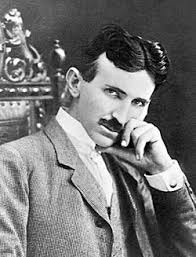
Let me ask you something. Right now, as you’re reading this — are you on Wi-Fi? Is a fan spinning somewhere in your room? Did you charge your phone wirelessly recently? If the answer to any of these is yes, then there’s someone you owe a massive, overdue thank-you to. And no, it’s not the name you learned in school.
His name was Nikola Tesla — and he might just be the most important scientist who ever lived, yet somehow ended up the least celebrated. The man invented systems and technologies that we use every single day, and yet he died alone in a hotel room, broke, largely forgotten by the very world he helped build.
This isn’t just a history lesson. It’s honestly one of the most jaw-dropping, infuriating, and ultimately inspiring stories in all of science. So grab a coffee, get comfortable — because this one’s worth your full attention.

Two Kinds of Scientists : Where Tesla Fits In
Before we dive into Tesla’s story, it helps to understand the world he was born into. Historically, scientists have generally fallen into two broad camps.
The first group — think Newton, Galileo — were driven purely by curiosity. They weren’t trying to build companies or make money. Newton saw an apple fall and spent years figuring out why. Galileo looked at the sky and said, “Wait, something about this doesn’t add up.” These were people who just needed to know how things worked.
But here’s the thing — even they weren’t entirely free. Power has always shaped what science gets to say. Galileo famously got placed under house arrest for the rest of his life simply for suggesting that the Earth revolves around the Sun, not the other way around. That went against what the Church taught, and the Church was power. Science didn’t matter. Power did.
The second group of scientists came along with the Industrial Revolution. This era wasn’t about curiosity for curiosity’s sake — it was about utility. About money. Investors were now the power players, and they funded science that could generate returns. Build a light bulb, invent a steam engine, design an aeroplane — those things had commercial value. Abstract, “useless” discoveries? Good luck getting anyone to write you a cheque.
Nikola Tesla was born squarely into this second era. And that, ironically, is one big reason why things went so badly for him in the end.
Edison vs. Nikola Tesla : The War of Currents Nobody Taught You About
Thomas Edison: Entrepreneur First, Scientist Second
Here’s something that might ruffle some feathers: Thomas Edison didn’t really invent the light bulb. Not exactly. Light bulbs already existed. What Edison did was design a bulb that could last long enough to be practical, and — more importantly — he built the entire commercial infrastructure around it. Wires, meters, fuses, distribution systems. He turned electricity from a cool scientific curiosity into a money-making machine.
Edison was, above all else, a businessman. A brilliant one. He understood how to take science and turn it into profit, and that made him the most famous name in electricity during the late 1800s.
But his electrical system ran on DC — Direct Current. And that would become his greatest vulnerability.
Enter Nikola Tesla — The Man Who Saw What Others Couldn’t
Tesla had been working at one of Edison’s European branches. Even then, people around him could tell he was something special. His branch manager wrote a letter to Edison that essentially said: “I know two geniuses in this world. One is you. The other is this man — Nikola Tesla.”
Tesla carried that letter to America, walked into Edison’s office, and was immediately put to work. His first assignment? Improve Edison’s DC motor. Nikola Tesla worked for months, put everything into it, and delivered a significantly better design.
And Edison’s response? “You don’t understand American humor.” He laughed it off. No $50,000 reward. No recognition. Just a dismissive joke.
Tesla quit on the spot. And that decision — born out of genuine anger and wounded pride — ended up changing the entire course of modern civilization.

AC vs. DC: Why It Actually Matters
Okay, I know electrical theory can make your eyes glaze over, so let me explain this in the most human way possible.
Think of DC electricity like water flowing slowly through a very wide pipe. It’s okay for short distances — your inverter battery at home runs on DC. But stretch that pipe over 5 kilometres, and by the time the water reaches the other end, there’s barely anything left. Leaks, friction, loss — it just doesn’t travel well.
AC electricity — Alternating Current — is more like water being blasted through a narrow pipe at very high pressure. It travels efficiently over enormous distances with minimal loss. That buzzing sound you hear from those massive high-tension towers running past your neighbourhood? That’s AC current moving at incredible speed.
Edison had built his entire empire on DC. Tesla looked at this and said, essentially, “Why are we doing it the hard way?”
He knew AC was the future. Cleaner, more efficient, capable of travelling hundreds of kilometres without significant loss. But pushing this idea meant directly challenging the most powerful man in American science and business.
Tesla did it anyway.
The Chicago World’s Fair: Tesla’s Defining Moment
In 1893, Chicago hosted a massive World’s Fair — a grand celebration of human achievement and progress. Organisers needed electricity to light the whole thing up, and they put it out to tender.
Two bids came in. One from Edison’s company, General Electric. The other from Nikola Tesla, working with a company called Westinghouse.
Tesla and Westinghouse came in significantly cheaper. They won the contract. And on the night of the fair, Tesla lit up 100,000 electric bulbs simultaneously. People who were there said it was like watching the sun rise at midnight. The entire fair was bathed in this extraordinary, brilliant light.
The world finally sat up and paid attention to AC electricity.
Two years later, in 1895, Tesla and Westinghouse built the world’s first AC power station at Niagara Falls. The electricity it generated was successfully transmitted to the city of Buffalo — 35 kilometres away. Something completely impossible with DC technology.
This was Nikola Tesla’s clean, decisive victory over Edison. The future of electricity had been decided. AC won. And that’s precisely why, to this day, every single electrical outlet in your home runs on alternating current.
Nikola Tesla and the Invention of Wireless Communication
Here’s where things get really fascinating — and also really frustrating.
While Nikola Tesla was deep in his electrical work, he was also developing something that the world wouldn’t fully appreciate for decades. He’d observed that just as light travels in waves, and sound travels in waves, there were other invisible waves moving through space all the time. Electromagnetic waves. Radio waves.
In a now-legendary demonstration at Madison Square Garden , Nikola Tesla brought out a small boat in a pool of water. No wires attached. No visible mechanism. He stood back and used a handheld device to control the boat’s movements — turning it left, right, making it stop and start.
The crowd was baffled. Some thought there was a trained monkey hidden inside the boat. Others assumed it was some kind of trick. Nobody could quite believe what they were seeing.
What they were watching was the world’s first remote-controlled vehicle, powered by radio waves. Nikola Tesla had invented wireless communication, and he was showing it off in real time.
He quietly patented this technology. The patents came through around 1900–1903. He didn’t make a huge noise about it — he simply secured his claim and moved on to bigger dreams.

Then Came Marconi — and the Theft Nobody Talks About
In 1901, an Italian inventor named Guglielmo Marconi sent a wireless radio signal across the Atlantic Ocean. He transmitted the letter “S” in Morse code from England to Newfoundland. It was considered a revolutionary achievement. In 1909, Marconi received the Nobel Prize for it.
There was just one problem: the fundamental technology he used had already been patented by Nikola Tesla.
Tesla raised objections. He had the paperwork. He had the earlier demonstrations. He had the prior art. But here’s the thing about fighting legal battles — you need money, influence, and powerful allies. Nikola Tesla had none of those things at this point.
Marconi, on the other hand, had the backing of Thomas Edison and the entire establishment of wealthy, connected businessmen who had every reason to see Nikola Tesla lose.
In 1904, Nikola Tesla’s radio patents were quietly cancelled and reassigned. Marconi got the Nobel. Nikola Tesla got nothing.
(For what it’s worth — the US Supreme Court eventually ruled in 1943, after both men had died, that Tesla’s patents were valid and that Marconi had indeed used Tesla’s prior work. Justice, technically. Just about 40 years too late.)
The Wardenclyffe Tower : Nikola Tesla’s Greatest Dream — and Greatest Loss
If the AC current victory was Tesla’s highest point, the Wardenclyffe Tower project was where things began to fall apart for good.
Nikola Tesla had an extraordinary idea. He believed that the Earth itself was a conductor, and the atmosphere above it acted as a kind of giant capacitor. If you could harness this natural system — amplify it with a powerful tower — you could transmit electricity wirelessly across vast distances. No power lines needed. No infrastructure. Just energy, freely available to anyone who needed it.
Same tower, same system — it could also carry communications. Voice, messages, data. A single structure that could power cities and connect the world.
He pitched this to J.P. Morgan, the most powerful financier of the era. Morgan was intrigued and agreed to fund the project. Construction on the Wardenclyffe Tower began on Long Island, New York.
But then Morgan asked the question that ended everything.
“Where will you put the meter?”
It sounds like a simple business question. But what it really meant was: how do we charge people for this? How do we make money from it?
And Nikola Tesla’s honest answer was that he didn’t plan to charge anyone. Just like air and water, electricity should be free. A gift of science to humanity.
Morgan immediately pulled the funding. Then he made sure no other major investor would back Nikola Tesla either. The logic was simple and brutal: if Nikola Tesla succeeded, he’d destroy the business model of every energy company in existence. You can’t meter free electricity. You can’t profit from it. And capitalism, as Morgan understood it, had no room for that.
The Wardenclyffe Tower was eventually demolished. During World War One, its steel was salvaged and used to build weapons.
Nikola Tesla’s Later Years: Alone, Broke, but Still Dreaming
After Wardenclyffe, Tesla retreated into relative obscurity. He lived out his final years in a New York hotel room, sustained largely by a small stipend from Westinghouse — the very company whose contract he’d torn up decades earlier, because he didn’t want them to go bankrupt on his account.
He was known to feed pigeons in local parks. He reportedly grew deeply attached to one particular pigeon and was heartbroken when it died. He continued to theorise and claim he was working on extraordinary things — including a “death ray,” a directed energy weapon that could, from one location, disable enemy aircraft or tanks at a distance. The kind of technology that would make traditional warfare obsolete.
Nobody took him very seriously anymore. The establishment had moved on. The man who had once lit up 100,000 bulbs and transmitted electricity 35 kilometres was now considered an eccentric old man talking to his birds.
He died in January 1943. Alone. Room 3327 of the New Yorker Hotel.
And yet — his ideas lived on. Every one of them.
Nikola Tesla’s Legacy: Everything He Gave Us (That We Forgot to Credit Him For)
Let’s take a moment to actually list what Nikola Tesla gave the modern world, because it’s staggering:
- AC electricity — the power running through every home and building on the planet
- The AC induction motor — used in virtually every appliance you own
- Radio wave transmission — the foundation of all wireless communication, including Wi-Fi
- Remote control technology — from your TV remote to drone navigation
- Wireless power transmission — the principle behind wireless phone charging
- Fluorescent lighting — he demonstrated it decades before it went commercial
- The Nikola Tesla coil — still used in radio and television technology
- Rotating magnetic field — the bedrock of modern electrical engineering
The next time you use Wi-Fi, charge your phone wirelessly, switch on a ceiling fan, or simply turn on a light — that’s Nikola Tesla’s work in action.

Beginner’s Guide: Understanding Tesla’s Key Contributions
If you’re new to Tesla’s story and feeling a little overwhelmed, here’s a simple breakdown of his three most important contributions:
1. AC Electricity (Alternating Current)
Before Nikola Tesla, electricity couldn’t travel far. Edison’s DC system lost power rapidly over distance. Nikola Tesla’s AC system solved this, making it possible to generate electricity in one place and deliver it to homes and businesses kilometres away. This is literally why cities can have centralised power plants.
2. Radio Waves and Wireless Communication
Nikola Tesla discovered that invisible electromagnetic waves could carry information through the air without any wires. This became the foundation of radio, then television, then mobile phones, and today — Wi-Fi and Bluetooth.
3. Wireless Power Transmission
Nikola Tesla believed electricity could be transmitted through the air just like radio signals. He was right. We now use this principle in wireless charging pads for smartphones. His more ambitious vision — free electricity for entire cities — was never realised, but the core concept was scientifically sound.
Pro Tips: What Tesla’s Story Teaches Us About Innovation
Tesla’s life isn’t just inspiring — it’s genuinely instructive. Here are some real lessons worth taking away:
- Document everything. Tesla patented his radio work early. That patent saved his legacy — even if it didn’t save him financially in his lifetime. Always protect your intellectual work.
- Pure genius isn’t enough. Tesla was arguably smarter than Edison in pure scientific terms. But Edison understood business, communication, and people. Both matter. You need your ideas AND the ability to sell them.
- Know who you’re pitching to. When Tesla pitched free electricity to J.P. Morgan — a man whose entire fortune depended on monetisable infrastructure — it was never going to end well. Understanding your audience is everything.
- Build alliances. Tesla’s biggest weakness was that he burned bridges (sometimes rightly so), but rarely built lasting coalitions. Marconi had Edison. Tesla had… principles. Principles don’t win patent disputes.
- Think long-term. Tesla’s ideas were 50–100 years ahead of their time. If you have a vision that the world isn’t ready for yet, find ways to stay funded and alive long enough to see it through. Sustainability matters.
Common Mistakes People Make When Thinking About Tesla
Mistake 1: Thinking Tesla Lost to Edison
Tesla absolutely won the technical battle. AC electricity defeated DC. Your home runs on Tesla’s system, not Edison’s. What Tesla lost was the financial and PR war — a very different thing.
Mistake 2: Assuming Tesla Invented Radio Alone and That’s It
Tesla’s radio work was just the beginning. The same principles that gave us AM radio also gave us FM radio, television, mobile networks, Wi-Fi, and Bluetooth. His foundational patent covered far more than most people realise.
Mistake 3: Romanticising His Poverty
Tesla’s financial struggles weren’t noble or beautiful — they were a genuine injustice. He gave up a contract worth billions (in today’s money) out of generosity to Westinghouse. He had legitimate patents stolen and cancelled. His poverty wasn’t a choice; it was engineered by people with power and incentives to keep him down.
Mistake 4: Thinking His “Crazy” Later Ideas Were Just Madness
The death ray. Wireless global power. These sound like sci-fi nonsense. But directed energy weapons are now a real military technology. Wireless electricity transmission is real and commercially available. Tesla wasn’t losing his mind — he was just several decades ahead of his time.
Mistake 5: Crediting Edison with Tesla’s Work
This one’s the biggest. The AC motor? Tesla. The system that powers your entire home? Tesla. The foundational wireless technology? Tesla. Edison commercialised and popularised electrical technology brilliantly — but the core science came from Tesla and others he employed or competed with.
A Quick Comparison: Edison vs. Tesla
| Aspect | Thomas Edison | Nikola Tesla |
|---|---|---|
| Primary Role | Entrepreneur / Inventor | Pure Scientist / Inventor |
| Electrical System | DC (Direct Current) | AC (Alternating Current) |
| Business Acumen | Exceptional | Poor |
| Major Backer | J.P. Morgan (initially) | Westinghouse (briefly) |
| Public Legacy | Celebrated in his time | Largely forgotten for decades |
| Nobel Prize | None | None (nominated, declined) |
| End of Life | Wealthy and recognised | Alone, in debt, in a hotel |
Why We Still Don’t Talk About Tesla Enough
Here’s a question worth sitting with: why isn’t Nikola Tesla as famous as Einstein or Edison? Why do most school textbooks give him two paragraphs at best?
Part of it is that the people who controlled the narrative — Edison, J.P. Morgan, and their networks — had every incentive to minimise Tesla’s story. A man who wanted to give electricity away for free was dangerous to an entire economic system built on selling it.
Part of it is that Tesla himself wasn’t good at self-promotion. He didn’t court journalists. He didn’t have a PR strategy. He had ideas, experiments, and patents. That’s it.
And part of it, honestly, is that history tends to celebrate the people who successfully commercialised ideas, not the ones who originated them. Edison built companies. Tesla built concepts. Companies get written about. Concepts get quietly borrowed.
The good news is that in recent decades, Tesla’s reputation has been dramatically rehabilitated. Elon Musk named his electric car company after him — which is both a tribute and a little ironic, given that Tesla cars actually run on DC motors (though they use AC systems for charging). Museums, documentaries, and researchers have worked hard to restore his name to its rightful place in scientific history.
FAQs About Nikola Tesla
Q1: Did Nikola Tesla actually invent Wi-Fi?
Not Wi-Fi specifically — that technology as we know it was developed in the late 20th century. But Tesla laid the foundational groundwork for all wireless communication through his early radio wave patents and experiments. Wi-Fi operates on electromagnetic wave principles that Tesla was the first to patent and demonstrate. So while he didn’t build the router in your home, the physics it runs on owes a massive debt to his work.
Q2: Why didn’t Tesla ever win the Nobel Prize?
There are reports that Tesla and Edison were both considered for the Nobel Prize in Physics in 1915, but neither won it that year. One widely circulated story suggests that Tesla refused to share it with Edison — though this has never been conclusively verified. What’s certain is that Tesla was nominated and never awarded. Given the political and financial forces working against him, this isn’t entirely surprising. It remains one of the most glaring oversights in Nobel history.
Q3: What happened to the Wardenclyffe Tower?
Construction on the Wardenclyffe Tower on Long Island began around 1901–1902, funded initially by J.P. Morgan. When Morgan withdrew funding (after Tesla revealed his plan to provide free electricity to everyone), the project stalled. Tesla continued to try to revive it for years. During World War One, the tower was demolished and its materials repurposed for the war effort. The site still exists in Shoreham, New York, and is now a museum dedicated to Tesla’s life and work.
Q4: Is it true that Tesla’s patents were stolen?
Yes, in effect. His most significant radio patents, filed around 1900, were cancelled in 1904 — conveniently just in time to allow Marconi’s competing patents to stand. The US Supreme Court restored Tesla’s priority in 1943, ruling that Marconi had used Tesla’s patented methods. But by then, both men were dead, and Tesla had been denied the credit — and the financial rewards — for decades.
Q5: Did Tesla really want electricity to be free for everyone?
Yes. This was genuinely one of his core beliefs. Tesla felt that electricity, like sunlight or fresh air, was a natural resource that humanity should have access to without payment. This was, obviously, a commercial nightmare for anyone who’d invested money in building electrical infrastructure. It’s one of the main reasons J.P. Morgan pulled his funding and ensured no other major investor would back Tesla’s Wardenclyffe project.
Q6: What is a Tesla coil, and do we still use it today?
A Tesla coil is a resonant transformer circuit that produces high-voltage, high-frequency alternating current. Tesla invented it in 1891. Modified versions of Tesla coil technology are still used today in radio transmission equipment, some medical devices, and various electronics. You’ve also probably seen dramatic demonstrations of them producing visible electrical arcs — those spectacular lightning-like sparks at science museums.
Conclusion: The Man Who Built Our World, and Didn’t Get to See the Credit
Here’s the thing about Nikola Tesla that sticks with me the most: he was right about almost everything. The AC system that powers your home. The wireless technology that connects your devices. The wireless charging that keeps your phone alive. The idea that energy could be transmitted through the air. All of it — right. Scientifically sound. Theoretically solid.
He wasn’t a failed dreamer. He was a successful visionary who got buried by the machinery of money and power.
If you walk away from this article with anything, let it be this:
- Genius without strategy is fragile. Tesla needed better allies and better business instincts to protect his work.
- History is written by those with power and resources — not necessarily by those who deserve the credit.
- The ideas that are most threatening to existing power structures are often the most important ones.
- Tesla’s story is a reminder to look beneath the official narrative — whether in science, history, or anything else.
The next time you connect to Wi-Fi, turn on a light, or drop your phone on a wireless charger — take a second. Think about a Serbian-American scientist who worked himself into the ground, gave away a fortune out of kindness, got cheated out of credit for his greatest inventions, and died alone in a New York hotel room.
His name was Nikola Tesla. And in the most literal sense possible — he powered the world you’re living in right now.
Want to explore more stories about the scientists and inventors history forgot? Check out our related article on unsung heroes of the Industrial Revolution. You can also read more about Tesla’s inventions at Smithsonian Magazine for a deep dive into the archival record.
BTech in 2026: The Honest Truth Nobody Tells You Before You Enroll
Online Market War Nobody Told You About : E-Commerce vs Quick Commerce