Science History • Biography • Hidden Stories
Isaac Newton: The Brilliant, Troubled, and Utterly Fascinating Man Behind the Science
He invented calculus at 22, discovered gravity, and spent 14 years obsessing over the Philosopher’s Stone. Let’s talk about the real Isaac Newton.
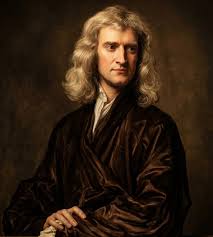
Let me ask you something. What if I told you that the man who gave us the laws of motion, invented calculus, and revolutionised our understanding of light — also spent roughly 14 years in a self-imposed exile, locked in his room, obsessively trying to create a mythical stone that could turn lead into gold and make humans immortal?
That’s Isaac Newton. Not the sanitised textbook version with an apple falling on his head, but the actual human being — complicated, brilliant, emotionally fragile, occasionally vindictive, and endlessly, restlessly curious about things that science hadn’t even named yet.
I’ve spent a lot of time reading about Newton, and honestly? The real story is so much stranger and more interesting than anything in a physics syllabus. So let’s do this properly. Let’s talk about who Isaac Newton actually was.
Born Into Loss : Isaac Newton’s Childhood
Isaac Newton entered the world on January 4, 1643, in Woolsthorpe, Lincolnshire — and right from the start, life wasn’t particularly kind to him. His father, also named Isaac Newton, died three months before he was born. His mother, Hannah, raised him alone for the first three years of his life.
Then she remarried. And left.
Hannah moved in with her new husband — a wealthy clergyman named Barnabas Smith — and left three-year-old Isaac with his maternal grandparents. She had three more children with Smith and didn’t return to raise Isaac Newton until he was about ten, when Smith died.
I think it’s worth sitting with that for a moment. Three years old, father already gone, mother essentially gone too. If you’re looking for an explanation for why Isaac Newton grew into a person who struggled to trust others, who worked in fierce isolation, and who took criticism so personally that it sent him spiralling — the childhood is a pretty good place to start.
The Threat That’s Still in a Museum
Here’s a detail that tends to stop people mid-conversation: Isaac Newton’s notebook from his early years, now held at the Fitzwilliam Museum in Cambridge, contains a list of sins he wrote in code. Among them? A confession that he had threatened to burn his mother and stepfather — along with their house — while they slept.
He was a child when he wrote it. It almost certainly wasn’t a genuine plan, more the violent fantasy of a lonely, furious kid who felt completely abandoned. But the fact that it existed, that he wrote it down and felt enough guilt to record it as a sin, tells you a lot about the intensity of feeling that ran through this person from a very early age.
The Cambridge Years and the Plague That Changed Everything
Isaac Newton arrived at Trinity College, Cambridge in 1661 as a sizar — essentially a scholarship student who had to perform menial tasks for wealthier students in exchange for his education. Not exactly a glamorous start.
But Cambridge transformed him. He devoured the works of Aristotle, Galileo, Kepler, Descartes, and every mathematician and natural philosopher he could get his hands on. His notebooks from this period show a mind that doesn’t just absorb ideas — it immediately starts arguing with them, testing them, pushing past them.
Then came 1665. The Great Plague swept through England, Cambridge closed, and Newton — at 22 — was sent home to Woolsthorpe for what turned out to be 18 months of enforced isolation.
Those 18 months changed human history.
What Actually Happened With the Apple
Here’s what didn’t happen: an apple did not fall on Isaac Newton’s head, he didn’t shout “Eureka,” and the concept of gravity didn’t just materialise in his mind fully formed.
What actually happened was more interesting. Sitting in his garden at Woolsthorpe, watching an apple fall from a tree (whether it actually hit him is debatable and probably irrelevant), Newton began to wonder: what if the force pulling the apple downward was the same force keeping the Moon in its orbit around the Earth?
To test this idea, he ran a thought experiment. He imagined a cannon on top of an impossibly high mountain, firing cannonballs horizontally at increasing speeds. At low speed, the ball curves down and hits the ground. Increase the speed enough, and the curvature of the ball’s path would match the curvature of the Earth — meaning the ball would keep falling without ever landing. It would orbit.
Just like the Moon.
“If I have seen further, it is by standing on the shoulders of giants.” — Isaac Newton
This was the seed of what would eventually become his theory of universal gravitation — the idea that every object in the universe attracts every other object with a force proportional to their masses and inversely proportional to the square of the distance between them.
The Annus Mirabilis : Isaac Newton’s Year of Miracles
The 18 months Isaac Newton spent at home during the plague are now referred to by historians as his annus mirabilis — his year of miracles. And the name is entirely earned.
During that period, working largely alone, Isaac Newton made advances that would have been remarkable for an entire career, let alone a single stretch of isolation:
| Discovery / Invention | What It Means | Impact Today |
|---|---|---|
| Calculus | A new branch of mathematics dealing with rates of change and accumulation | Used in engineering, physics, economics, computer science — virtually every technical field |
| Theory of Gravity | Mathematical framework for how masses attract each other | Enables satellite orbits, space missions — including Chandrayaan and Mangalyaan |
| Optics — Nature of Light | White light is composed of seven colours, not a pure substance | Foundation of spectroscopy, photography, optical engineering |
| Generalised Binomial Theorem | Extended algebraic expansion to fractional and negative exponents | Used extensively in probability theory and statistics |
Just to be clear — he was 22 to 23 years old during most of this. He hadn’t even finished his MA yet.
Isaac Newton’s Secret War With Robert Hooke
Here’s where the story takes a turn that feels almost Shakespearean.
When Isaac Newton returned to Cambridge after the plague years, he eventually joined the Royal Society — England’s prestigious gathering of natural philosophers and scientists. It was here that he made his first major public scientific presentation: his work on the nature of light.
Until Isaac Newton, the scientific consensus was that white light was a pure, unmodified substance. Coloured light was thought to be white light that had been somehow “corrupted.” Newton’s experiments with prisms showed this was completely wrong — white light is a mixture of all colours, and a prism separates them out rather than creating them.
It was a genuine bombshell. And it delighted almost no one at the Royal Society.
Enter Robert Hooke
Robert Hooke was the Society’s experimental curator and a brilliant scientist in his own right — the man who first described cells under a microscope and whose name you’ll recognise from Hooke’s Law of elasticity. He was also, by most accounts, extremely competitive and not particularly gracious about younger scientists stealing his thunder.
Hooke challenged Isaac Newton’s findings publicly, insisting his own (incorrect) wave theory of light was superior. What followed was a sustained, bitter written argument that dragged on for years and left Isaac Newton seething.
Isaac Newton, remember, was a person who struggled deeply with criticism from childhood. This wasn’t just professional disagreement — to him, it felt like a personal attack on the first time he’d ever put himself out there. And his response was to withdraw. Completely.
He published almost nothing for the next 14 to 15 years.
The 14 Lost Years: Newton, the Bible, and Alchemy
This is the part that history lessons tend to skip over — and it’s arguably the most revealing part of who Isaac Newton actually was.
Between roughly 1678 and 1684, Isaac Newton essentially disappeared from the public scientific record. He wasn’t idle. He was locked in his rooms at Cambridge, reading obsessively. But what he was reading wasn’t physics.
He was reading the Bible. And he was practising alchemy.
Isaac Newton the Theologian
Newton’s religious views were, for his time and position, dangerously heterodox. He worked as the Lucasian Professor of Mathematics at Cambridge — a professorship that required him to be an ordained minister of the Church of England. But privately, Newton had come to believe that the doctrine of the Trinity — Father, Son, and Holy Ghost as three persons of one God — was a fabrication inserted into Christian theology in the 4th century for political reasons.
He was, in other words, a closet Unitarian in a Church of England professorship, writing secret treatises arguing that Christ was not equal to God the Father. If this had come to light, it would have destroyed his career. He kept it hidden for his entire life.
Isaac Newton the Alchemist
Equally surprising — Isaac Newton was deeply, seriously committed to alchemy. Not as a metaphor or a hobby. He conducted hundreds of chemical experiments, kept meticulous laboratory notes (now held at Cambridge University Library), and spent enormous amounts of time and money pursuing what the alchemical tradition called the Philosopher’s Stone.
The Philosopher’s Stone was believed to be a substance that could transmute base metals like lead into gold. More significantly, alchemists believed that a powder derived from the Stone — dissolved in water and consumed — could grant eternal life.
Isaac Newton wrote over a million words on alchemy. He read every alchemical text he could find in Latin, Greek, and Hebrew. He corresponded with other alchemists under coded pseudonyms. Whether he ever believed he was genuinely close to a breakthrough isn’t entirely clear — but he certainly didn’t treat it as nonsense. He treated it as a serious research programme.
Beginner’s Guide: Understanding Isaac Newton’s Three Major Contributions
If you’re coming to Isaac Newton’s science fresh, here’s the simplest way to understand what he actually did:
- Calculus: Mathematics was stuck. You could describe where things were, but not how fast they were changing at any given moment. Newton (and independently, Leibniz) invented a new mathematical language — calculus — that could describe rates of change and accumulation. Every engineering calculation, economic model, and scientific formula involving change over time uses it.
- Universal Gravitation: Newton showed that the same force pulling an apple to the ground also keeps the Moon in orbit and governs the movement of planets around the Sun. He gave this force a mathematical formula: F = Gm₁m₂/r². Nasa still uses Newton’s equations for most space missions today — including India’s Chandrayaan and Mangalyaan programmes.
- Optics: Newton proved that white light is not pure but is composed of all the colours of the spectrum. He did this with a glass prism, allowing sunlight to pass through it and separating it into red, orange, yellow, green, blue, indigo, and violet. The experiment is one of the most elegant in the history of science.
Halley’s Comet and the Return of Newton’s Genius
The story of how Newton finally published his masterwork is one of the best “friend rescues you from yourself” stories in the history of science.
In 1684, Newton’s old friend Edmond Halley — yes, the Halley of Halley’s Comet — knocked on his door in Cambridge. Halley had been trying to figure out why planetary orbits are elliptical. He knew the answer must involve gravity, but the mathematics were beyond him and everyone else at the Royal Society.
Newton told him, almost offhandedly, that he’d worked it out years ago. Halley was astonished. He asked to see the proof. Newton rummaged through his papers and couldn’t find it — but promised to redo the calculation and send it to him.
What followed is one of the most productive writing bursts in scientific history. Newton didn’t just send Halley a letter. He wrote a book. Then he wrote a bigger book. Then he wrote the Principia.
What Pushed Newton Back to Science
There was also an astronomical trigger. In late 1680, a spectacular comet appeared in the skies over Cambridge and caused a sensation across Europe. It disappeared behind the Sun, then a second comet appeared in early 1681 moving in the opposite direction.
Newton suspected — correctly — that these were the same comet, its path bent by the Sun’s gravity. It was the first real-world demonstration that gravity was universal: not just a property of Earth, but a force acting between all celestial bodies. This conviction drove him back to his physics with renewed urgency.
The Principia: Newton’s Greatest Achievement
Published in 1687, Philosophiæ Naturalis Principia Mathematica — usually just called the Principia — is one of the most important books ever written. It laid out Newton’s three laws of motion and the law of universal gravitation, backed by rigorous mathematical proofs and applied to everything from falling objects to planetary orbits to the shape of the Earth.
Here’s a quick summary of Newton’s Three Laws, because they’re worth knowing:
- First Law (Inertia): An object at rest stays at rest, and an object in motion stays in motion, unless acted on by an external force. This is why you need to wear a seatbelt.
- Second Law (F=ma): Force equals mass times acceleration. The heavier the object and the faster you want it to accelerate, the more force you need. This is why rockets need enormous engines.
- Third Law (Action-Reaction): For every action there is an equal and opposite reaction. This is literally how rockets work — they push gas backward, so the gas pushes the rocket forward.
It was a fitting irony that Halley — the man who’d dragged Newton back to physics — personally funded the publication of the Principia, because the Royal Society had spent its publishing budget on a book about the history of fish.
Science, everyone.
Isaac Newton’s Life: A Timeline
Was Isaac Newton on the Autism Spectrum? What the Royal Society Said
This is a question that’s been discussed seriously in the medical and historical literature, and it deserves a careful answer rather than a dismissive one.
Researchers associated with the Royal Society have formally suggested that Newton’s behavioural patterns closely match what we’d now recognise as Asperger syndrome (a form of autism spectrum disorder). The evidence cited includes:
- Extreme social difficulty: Newton had few genuine friendships throughout his life. He could be cold, dismissive, and entirely absorbed in his own thinking in social settings.
- Intense, narrowly focused interests: When Newton became interested in something — mathematics, alchemy, theology — he pursued it with a completeness that excluded almost everything else, including basic self-care.
- Repetitive behavioural patterns: His daily routines were rigid and methodical. His note-taking was obsessive and systematic to a degree unusual even for academics of his era.
- Inability to handle criticism: The shutdown triggered by Hooke’s challenge was total and years-long. This kind of catastrophic response to criticism is recognised as a feature of some presentations of ASD.
- Very limited romantic or social relationships: Newton almost certainly died a virgin. He had no documented romantic attachments of any kind across his 84-year life.
It’s important to note that retrospective diagnosis is always imperfect. We can’t put Newton in a consultation room. But the discussion isn’t fringe speculation — it’s been taken seriously by historians of science and psychologists alike. And if accurate, it adds another layer of remarkable humanity to a person who’s often flattened into a marble statue.
Pro Tips for Studying Newton’s Life and Science
- Read his letters, not just his papers. Newton’s correspondence — available through the Newton Project at Oxford — reveals the emotional texture behind the formal discoveries. His letters to Halley, Leibniz, and Hooke are extraordinary documents.
- Don’t compartmentalise his interests. It’s tempting to treat “Newton the scientist” and “Newton the alchemist-theologian” as two different people. They weren’t. His approach to alchemy and to physics was often the same: meticulous experiment, obsessive note-taking, relentless theorising. Understanding this makes both halves of his life more comprehensible.
- Visit Woolsthorpe Manor if you can. It’s now a National Trust property in Lincolnshire and open to visitors. The actual apple tree (a descendant, at least) is still in the garden. Standing in the room where he worked during the plague years is something genuinely affecting.
- Read the Principia in translation with a companion guide. The mathematics is dense but the structure is elegant. The Cambridge companion to Newton is a good starting guide.
- Pay attention to the Leibniz controversy. Newton and Gottfried Wilhelm Leibniz both independently invented calculus. The bitter priority dispute between their supporters is one of the ugliest episodes in the history of mathematics — and Newton handled it with all the grace you’d expect from someone with his history of taking criticism badly.
Newton’s Legacy: What He Actually Gave the World
It’s worth ending with the scale of what Newton’s work made possible — because it’s genuinely staggering.
Newton’s equations of motion and gravitation are the foundation on which every space programme in human history has been built. When NASA calculates the trajectory for a Mars probe, they use Newton. When ISRO planned the Chandrayaan and Mangalyaan missions — two of the most cost-effective space missions ever executed — the orbital mechanics ran on Newton’s laws. When GPS satellites maintain their positions to within centimetres, it’s Newton’s equations (adjusted for relativistic effects Einstein later added) doing the heavy lifting.
Calculus, which he invented in those 18 months at home during a pandemic, is now the mathematical language of physics, engineering, economics, biology, and computer science. It’s how we model fluid dynamics and how Netflix optimises its recommendation algorithm. The reach of that 22-year-old’s work from a farmhouse in Lincolnshire is almost literally everywhere.
Common Mistakes People Make When Thinking About Newton
- Taking the apple story too literally. The apple may well have existed — Newton himself mentioned it in old age. But it was a prompt for thinking, not a revelation. The actual work took years of mathematical development after that moment.
- Treating his alchemy as an embarrassing aberration. Newton didn’t think alchemy was irrational. In the 17th century, it sat alongside chemistry as a serious inquiry into the nature of matter. Judging him by 21st-century categories misses the point.
- Overlooking the Leibniz calculus controversy. Newton and Leibniz independently invented calculus — Leibniz’s notation (the one we actually use today) came later but was arguably more elegant. Newton spent years of his later life trying to destroy Leibniz’s reputation over it. It wasn’t his finest hour.
- Ignoring his 30 years at the Royal Mint. After the Principia, Newton became Warden and then Master of the Royal Mint — and was surprisingly good at it. He personally oversaw the recoinage of England’s currency and prosecuted counterfeiters with the same obsessive thoroughness he applied to everything else.
- Underestimating the loneliness. Newton’s emotional isolation wasn’t incidental to his work — it was the condition in which his work was produced. Understanding that makes both the achievements and the eccentricities make more sense.
Frequently Asked Questions About Isaac Newton
Probably not on his head, no. The story comes from Newton himself, recounted in old age, and refers to watching an apple fall from a tree in his garden at Woolsthorpe. Whether it physically struck him is unlikely and essentially irrelevant. What matters is that the observation prompted a question: why does the apple fall toward the Earth rather than any other direction? That question led, eventually, to the theory of universal gravitation. Newton never claimed the apple gave him the answer — just that it triggered the right question.
Yes, extensively. Newton wrote over a million words on alchemical subjects — more, arguably, than he wrote on physics. His laboratory notebooks, now held at Cambridge University Library and the Smithsonian, document hundreds of chemical experiments. He was particularly interested in the Philosopher’s Stone — the mythical substance said to transmute metals and confer immortality. Whether he believed he was genuinely close to success is unclear, but he took it entirely seriously as a research pursuit.
Newton developed the core ideas of calculus during his plague-year isolation in 1665–66. But he didn’t publish them for decades, largely out of fear of criticism and controversy. He’d seen what public exposure did — the Robert Hooke debacle over his light experiments had left deep scars. He circulated calculus privately among colleagues but withheld formal publication until Leibniz independently developed it. This led to the bitter priority dispute that occupied much of Newton’s later years.
Deeply complicated. Newton was privately a Unitarian — he believed in one God but rejected the doctrine of the Trinity, which he considered a 4th-century corruption of original Christianity. This was heretical by the standards of the Church of England, which he was technically required to serve as Lucasian Professor at Cambridge. He kept his theological views secret throughout his life, writing extensively on biblical prophecy and the history of religion, but never publishing his heterodox conclusions.
Newton died on March 31, 1727, at the age of 84, from a bladder stone — a genuinely painful and historically ironic end for the man who’d spent years searching for a stone that could grant immortality. In his final weeks he refused painkillers (likely opium-based medicines common at the time) on principle. He died in his sleep, reportedly in considerable pain. He was buried in Westminster Abbey, where his monument remains today.
It’s been seriously proposed. Researchers — including a Cambridge team associated with the Royal Society — have noted that Newton’s social difficulties, repetitive behaviours, intense single-subject focus, and inability to process criticism align with what’s now recognised as autism spectrum disorder. Retrospective diagnosis always carries caveats, and we can’t know definitively. But the suggestion isn’t fringe speculation; it’s a genuine attempt to understand an extraordinary person more completely rather than less.
So What Do We Actually Make of Isaac Newton?
I’ve been turning this question over for a while now, and here’s where I’ve landed: Newton was not a marble statue. He was a person — profoundly gifted, profoundly damaged by his early life, capable of extraordinary generosity of mind and extraordinary pettiness in equal measure.
He revolutionised human understanding of the physical universe. He also spent 14 years trying to make a magic immortality stone. Both of those things are true, and both of them are interesting, and pretending one of them didn’t happen doesn’t make him more impressive — it just makes him less real.
The lesson I keep coming back to is a simple one: human beings contain multitudes. The same person who gives the world calculus can also be a lonely, angry child who threatened to burn his mother’s house down. The same rigorous empirical mind that produced the Principia can also fill notebooks with alchemical symbols and biblical codes.
If you want to understand Isaac Newton properly, here’s where I’d start:
- Read James Gleick’s biography Isaac Newton — it’s short, beautifully written, and doesn’t flinch from the complicated parts
- Explore the Newton Project at Oxford for primary sources including his letters and theological writings
- Look up his alchemical notebooks — they’re genuinely fascinating documents regardless of what you think of alchemy
- And next time you’re in London, visit his grave in Westminster Abbey and think about the apple, the prism, the plague year, the philosopher’s stone, and the bladder stone
It’s a life that contains enough material for a dozen biographies. We’ve barely scratched the surface here. Explore our other science history features or check out the Newton Project for the deep dive.
Meet OpenClaw : The Self-Hosted AI Assistant That Never Clocks Out
Google Antigravity: The Free AI Agent Quietly Revolutionizing Social Media Content Creation