Physics History • Relativity • Science Thinking
Albert Einstein: The Childish Question That Rewrote the Laws of Physics
A 16-year-old gets thrown out of class for asking the wrong question. Ten years later, that question breaks 200 years of scientific consensus.
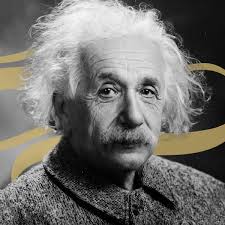
Picture this. It’s 1894. A 16-year-old boy is sitting at the back of a classroom in Germany, clearly distracted, clearly not paying attention in the way his teacher expects. He raises his hand and asks a question.
The teacher doesn’t answer. Instead, he throws the boy out of the class.
That boy was Albert Einstein. And the question that got him ejected — “How would the world look if I could run at the speed of light?” — turned out to be one of the most important questions anyone has ever asked. Within ten years, that question would collapse 200 years of scientific consensus and produce the most famous equation in human history.
I’ve spent a lot of time thinking about why this story matters beyond its drama. Because here’s the thing: Einstein’s journey from that classroom ejection to the General Theory of Relativity isn’t really a story about genius. It’s a story about the power of asking a question all the way to the end — even when everyone around you thinks it’s not worth asking.
So let’s walk through it together. What did Albert Einstein actually figure out, how did he figure it out, and what can we learn from the way he thought?
The Three Theories That Set the Stage
Before we can understand Einstein, we need to understand the scientific world he was born into. And that means going back to Newton.
Most people know Isaac Newton for gravity — the apple, the laws of motion, the Principia. But Newton actually gave the world three major theories, and two of them are less famous for a reason that’ll become clear:
- Theory of Gravity: Any two objects with mass attract each other. The force depends on their masses and the distance between them. This one held up pretty well for 200 years.
- Corpuscular Theory of Light: Light travels as a stream of tiny particles — “corpuscles.” Newton was wrong about this, as we’ll see shortly.
- Theory of Relativity: Yes, Newton had a relativity theory too. According to him, speed is relative. If you’re on a train doing 100 km/h and someone runs toward you at 10 km/h, you perceive them as moving at 110 km/h. Motion depends on the observer’s frame of reference.
On the surface, gravity, light, and motion seem completely unrelated to each other. But here’s what’s remarkable: these three separate theories were eventually going to collide, contradict each other, and in the process, force an entirely new understanding of the universe. Einstein’s job was to figure out what that new understanding actually was.
The Experiment That Failed Perfectly
Newton’s particle theory of light ran into its first serious challenge in 1678, when Dutch physicist Christiaan Huygens argued that light behaved more like a wave than a particle. His reasoning: when light passes from one medium to another — say, from air into glass — it bends. Waves do that. Particles don’t.
Problem was, Huygens had no experimental proof. And in science, without proof, you’ve just got an opinion. So nobody accepted his theory for the next 100 years.
Then, in 1801, British physicist Thomas Young ran his famous double-slit experiment. He split a beam of light into two by passing it through two narrow slits, then projected the result onto a screen.
What he saw was an interference pattern — alternating bands of light and dark, exactly what you’d expect from two overlapping waves, not two streams of particles. Newton’s particle theory was wrong. Light was a wave.
But Waves Need Something to Travel Through
Here’s where it gets interesting. Every wave we know travels through a medium — sound through air, ocean waves through water. If light is a wave, what does it travel through in the vacuum of space?
Scientists of the time invented an answer: the Luminiferous Ether. An invisible, undetectable medium that filled all of space, through which light waves propagated. Nobody had ever observed it. Nobody could prove it existed. But without it, the wave theory of light had a gaping logical hole.
So in 1887, two American physicists — Albert Michelson and Edward Morley — designed an elegant experiment to prove the ether existed. Their logic was simple: if ether flows through space in one direction, then light travelling in that direction should travel slightly faster, and light travelling against it should travel slightly slower. Measure that speed difference, and you’ve proved the ether is real.
“The most important result of Michelson and Morley’s experiment was that it gave no result at all — and that failure changed everything.” — paraphrased from multiple physics historians
They performed the experiment. Carefully. Repeatedly. With increasing precision. And found absolutely nothing. The speed of light was identical in every direction. There was no speed difference. The ether didn’t exist.
This is now known as one of the most “successfully failed” experiments in history — it didn’t prove what it set out to prove, but what it disproved was just as important. Two crucial things were now established:
- There is no Luminiferous Ether
- The speed of light is constant — the same in all directions, regardless of the observer’s motion
And that second point was going to create a catastrophic paradox. Enter Albert Einstein.
Albert Einstein’s Paradox and the Train Thought Experiment
By 1905, Einstein had been sitting with his childhood question for nearly a decade. What does the world look like if you travel at the speed of light?
He now had a specific version of the problem that was driving him mad. Newton said speed is relative — if I’m on a train doing 300 km/h and throw a ball forward at 100 km/h, someone standing on the platform sees the ball at 400 km/h. Relative speeds add up.
So: if I’m sitting on a beam of light, and another beam of light comes toward me, Newton says I should perceive it moving at double the speed of light. Right?
But Michelson and Morley had just proved the speed of light is constant. It doesn’t add up. It doesn’t change based on the observer. If it did, it wouldn’t be constant.
So which is right? Newton’s relative speeds, or the constant speed of light? They can’t both be true at once. This is the paradox Albert Einstein was staring at.
The Thought Experiment That Broke Time
To cut through this, Einstein did what he did best: he ran a thought experiment. He imagined a train travelling at close to the speed of light, with a lamp at each end. Both lamps flash simultaneously.
Now consider two observers:
- Observer A is standing on the platform, stationary. They see both lamps flash at exactly the same moment.
- Observer B is sitting in the middle of the moving train. For them, the train is moving toward the front lamp and away from the back one. So the light from the front lamp reaches them first — before the light from the back.
Both observers are right within their own frame of reference. The speed of light hasn’t changed. What’s changed is when they perceive the events happening.
Einstein asked himself: if the speed of light can’t change, but the timing of events does change based on the observer’s motion — what if it’s time itself that’s changing?
That’s where the Special Theory of Relativity was born.
Special Theory of Relativity: What It Actually Means
Special Relativity, published in 1905, contains one of the most mind-bending conclusions in all of physics: the faster you move through space, the slower you move through time.
This isn’t a metaphor. It’s a measurable, experimentally verified fact. Here’s the cleanest way I’ve found to think about it:
Imagine that every object in the universe has a fixed “speed budget” — a total quantity of movement it can do. When you’re sitting still, you’re using all of that budget on time: you’re moving through time as fast as possible. The moment you start moving through space, you’re diverting some of that budget away from time. The faster you move through space, the slower you move through time.
- At everyday speeds, the effect is so tiny it’s immeasurable
- At a significant fraction of the speed of light, it becomes detectable
- At the speed of light, time would stop completely
This isn’t science fiction. We verify it constantly — atomic clocks on GPS satellites tick slightly differently from clocks on Earth, and the GPS system needs to correct for this effect or your phone’s navigation would drift by kilometres per day. Albert Einstein’s 1905 thought experiment about trains is why your maps app works correctly.
Beginner’s Guide: Understanding Einstein’s Two Theories of Relativity
There are two different theories here, and they confuse people constantly. Here’s the simplest possible breakdown:
- Special Relativity (1905): Deals with objects moving at constant speeds. Key insight: the speed of light is constant for everyone, which means time and space are flexible. Time passes more slowly for fast-moving objects. The famous equation E=mc² came out of this.
- General Relativity (1915): Deals with acceleration and gravity. Key insight: gravity isn’t a force in the Newtonian sense — it’s the curvature of space-time caused by mass. Massive objects (planets, stars, black holes) create dips or curves in the space-time fabric, and other objects follow the curved paths around them.
The unusual thing? Usually in science, the “general” version of a theory comes first (broad strokes) and the “special” version comes later (specific cases). Einstein did it backwards — he built the special case first, then spent ten years figuring out the general version.
The Ten-Year Gap: From Special to General Relativity
Einstein published Special Relativity in 1905. But he wasn’t satisfied. The theory worked perfectly for objects moving at constant speed. It fell apart the moment you introduced acceleration — or gravity.
And Newton’s gravity was bothering Einstein for the same reason it had quietly bothered physicists for 200 years: Newton could tell you that gravity attracts objects toward each other, and he could calculate exactly how strongly. But he couldn’t tell you why. What was actually happening? What was the mechanism? Newton himself acknowledged this — he famously wrote “I feign no hypotheses” on the subject of what gravity actually was.
Einstein’s breakthrough came from a deceptively simple question he asked himself: what’s the difference between being pulled downward by gravity and being pushed upward by acceleration?
The answer, he realised, was: nothing. They feel identical. A person in a sealed elevator being pulled up by a rocket can’t distinguish that experience from being in a stationary elevator on Earth. This insight — the Equivalence Principle — became the seed of General Relativity.
Space-Time Fabric: The Most Important Metaphor in Modern Physics
To explain gravity without invoking a mysterious pulling force, Einstein imagined space and time as a single four-dimensional fabric — space-time. Think of it as a stretched rubber sheet.
Place a heavy ball on the sheet. It creates a depression, a curve in the fabric. Now roll a smaller ball across the sheet. It doesn’t travel in a straight line — it follows the curved surface created by the heavier ball. From our three-dimensional perspective, it looks like the smaller ball is being “attracted” to the larger one. In reality, it’s just following the geometry of a curved surface.
That’s gravity, according to Albert Einstein. Not a force. A geometry. Massive objects curve space-time, and other objects follow those curves.
This also explains why time passes more slowly near massive objects — a clock on the surface of Earth runs slightly slower than a clock in orbit. The denser the space-time curvature around you, the more slowly time flows. This has been measured. It’s real. It’s called gravitational time dilation.
Newton vs Einstein: Where They Agree, Where They Differ
| Question | Newton’s Answer | Einstein’s Answer |
|---|---|---|
| What is gravity? | A force of attraction between masses | The curvature of space-time caused by mass |
| Is time constant? | Yes — time flows the same everywhere | No — time is relative to speed and gravity |
| Does light bend near a star? | Barely, and only if light has mass | Yes — space itself curves, so light follows curved paths |
| Can speed exceed light? | In principle, yes | No — the speed of light is an absolute limit |
| Useful for everyday physics? | Perfectly accurate at normal speeds | Needed for GPS, particle physics, space exploration |
| Black holes, Big Bang? | Not predicted | Predicted (though Einstein resisted some implications) |
The Mercury Problem: How Einstein Proved General Relativity Was Right
Here’s a wonderful irony in the history of physics. For 200 years, Newton’s gravitational equations predicted the orbits of every planet in the solar system with extraordinary accuracy. Mercury, Venus, Earth, Mars — the maths matched the observations perfectly.
Except Mercury.
Astronomers had noticed that Mercury’s orbit didn’t quite behave as Newton’s equations predicted. The orbit was slowly rotating — precessing — at a specific rate that Newton’s maths couldn’t account for. It was a tiny discrepancy: about 43 arc-seconds per century. But it was persistent, reproducible, and stubbornly unexplained for over 200 years.
Many astronomers assumed there must be an undiscovered planet between Mercury and the Sun, pulling Mercury slightly off course. They even named this hypothetical planet: Vulcan. Decades of searching turned up nothing.
When Albert Einstein applied the equations of his newly completed General Theory of Relativity to Mercury’s orbit in 1915, his calculations matched the observed precession exactly. Not approximately. Exactly. Mercury was doing what it did because it was the planet closest to the most massive object in the solar system — the Sun — and therefore the most affected by the curvature of space-time that the Sun created.
Einstein, by some accounts, was so overwhelmed when he saw his calculation match the observed data that his heart pounded and he felt physically shaken. This was mathematical confirmation that his decade of work was right.
Eddington’s Eclipse: The Moment the World Believed Einstein
Mathematical proof is one thing. Experimental proof in the real world is another. Einstein’s General Relativity made a specific, testable prediction: gravity should bend light. Not slightly and only if light has mass (as Newton might have weakly suggested), but measurably — because massive objects literally curve the space through which light travels.
This prediction meant that stars visible near the edge of the Sun during a solar eclipse should appear slightly displaced from their actual positions. Their light, bending as it passed near the massive Sun, would arrive at a slightly different angle than geometry would predict.
In May 1919, British physicist Arthur Eddington led two expeditions to measure exactly this — one to the island of Príncipe off the west coast of Africa, one to Brazil — to photograph stars near the Sun during a total solar eclipse. The results confirmed Einstein’s predictions with remarkable precision. The stars were displaced exactly where General Relativity said they’d be.
The announcement made front pages across the world. The New York Times headline read: “Lights All Askew in the Heavens.” Albert Einstein, overnight, became the most famous scientist on Earth.
Einstein’s Key Concepts: A Quick Reference
Moving clocks run slower. The faster you travel, the slower time passes for you relative to a stationary observer.
Energy and mass are interchangeable. A tiny amount of mass contains an enormous amount of energy (c² is a very large number).
Massive objects curve the fabric of space-time. Objects follow these curves — which is what we experience as gravity.
Light bends around massive objects. This is now used by astronomers to study distant galaxies hidden behind closer massive ones.
Pro Tips for Really Understanding Relativity
- Start with the thought experiments, not the maths. Einstein himself said his greatest tool was visual imagination. The train, the elevator, the twin paradox — understanding these pictures first makes the equations make sense later, not the other way around.
- Don’t try to “visualise” four-dimensional space-time. You can’t, and neither could Einstein. The rubber sheet analogy is an imperfect two-dimensional representation of something genuinely beyond visual intuition. Use it as a scaffold, not a complete picture.
- Read Einstein’s own popular science writing. His book Relativity: The Special and General Theory, written for non-physicists, is clearer than most modern explanations. It’s available free through Internet Archive.
- Pay attention to where Relativity shows up in daily technology. GPS satellite corrections. Particle accelerators. Nuclear energy. Medical PET scans. Relativity isn’t abstract — it’s running in the background of modern civilisation.
- Learn the distinction between Special and General Relativity before going deeper. Mixing them up is the most common source of confusion. Special = constant motion, no gravity. General = acceleration, gravity, curved space-time.
What Einstein Got Wrong (And Why That Matters)
Einstein’s General Theory of Relativity is extraordinary. But it’s not complete — and Einstein knew it. In fact, Einstein himself spent the last 30 years of his life searching for a “unified field theory” that would reconcile General Relativity with quantum mechanics. He never found it. Nobody has.
Here’s the problem. General Relativity describes the universe at large scales beautifully — planets, stars, galaxies, black holes, the expansion of the universe. Quantum mechanics describes the universe at tiny scales — atoms, photons, subatomic particles. Both theories work. Both are experimentally verified to extraordinary precision.
But they’re mathematically incompatible. Put them together and they produce nonsense. This is the deepest unsolved problem in physics today.
There are also specific phenomena that Einstein’s theory can’t currently predict:
- What happened before the Big Bang? General Relativity breaks down at the singularity point — the conditions at the very first instant of the universe’s existence.
- What happens inside a black hole? At the centre of a black hole is another singularity where the maths of General Relativity produces infinities — which is a sign that the theory is being pushed beyond its valid range.
- Dark energy: Einstein actually added a “cosmological constant” to his equations to allow for a static universe, then called it his “greatest blunder” when Hubble showed the universe was expanding. The constant turns out to be real — it represents the mysterious dark energy driving the universe’s accelerating expansion — but we still don’t know what it is.
Common Mistakes People Make When Thinking About Einstein
- Thinking Einstein “disproved” Newton. He didn’t. Newton’s equations remain accurate for the vast majority of situations at ordinary speeds and gravitational fields. Engineers still use them. Einstein extended Newton’s framework into domains where it didn’t work — he didn’t invalidate it where it did.
- Confusing E=mc² with nuclear weapons. The equation establishes the equivalence of mass and energy. Nuclear weapons exploit this, but so does every other form of energy — burning wood, metabolism, starlight. The equation isn’t about destruction; it’s about the fundamental nature of matter and energy.
- Assuming Einstein was always a top student. He wasn’t. He did well in subjects he found interesting and badly in those he didn’t. He failed his first entrance exam to the ETH Zürich. The “Einstein failed maths” story is a myth, but he was genuinely difficult in conventional academic settings.
- Treating relativity as meaning “everything is relative.” The theory is partly about what doesn’t change — the speed of light, the laws of physics — regardless of the observer’s frame of reference. “Relativity” refers to the relative nature of time and space, not a general philosophical statement that all perspectives are equally valid.
- Forgetting that Einstein had serious blind spots. He resisted quantum mechanics for decades (“God does not play dice”), was wrong about whether the universe was static or expanding, and never achieved his unified field theory. Genius isn’t the same as being right about everything.
Frequently Asked Questions About Albert Einstein and Relativity
Special Relativity (1905) establishes two core principles: the laws of physics are the same for everyone moving at constant speed, and the speed of light is the same for everyone regardless of their motion. The surprising consequence is that time and space aren’t fixed — time passes more slowly for moving objects, and distances contract in the direction of motion. At everyday speeds the effect is negligible; near the speed of light, it becomes dramatic. The equation E=mc² — energy equals mass times the speed of light squared — is a direct consequence of this theory.
Special Relativity deals with objects moving at constant speeds and has no account of gravity. General Relativity (1915) extends the theory to include acceleration and gravity. In General Relativity, gravity isn’t a force — it’s the curvature of space-time caused by massive objects. General Relativity predicts phenomena that Special Relativity can’t: the bending of light around stars, the slowing of time near massive objects, the existence of black holes, and the expansion of the universe.
Not entirely — and Einstein himself was clear about this. Newton’s gravitational theory works accurately for the vast majority of physical situations: it correctly predicts planetary orbits (except Mercury’s unusual precession), enables space mission calculations, and is used in engineering worldwide. What Einstein showed was that Newton’s theory was a special case — accurate within a certain domain, but incomplete at very high speeds, very strong gravitational fields, and at the scale of the universe. Einstein extended and refined Newton’s framework rather than discarding it.
More than most people realise. GPS satellites experience both time dilation (from their speed, per Special Relativity) and gravitational time dilation (from being farther from Earth’s centre, per General Relativity). Without corrections for both effects, GPS coordinates would drift by roughly 10 kilometres per day. Particle accelerators and nuclear reactors rely on E=mc². Medical PET scans use positron-electron annihilation, a quantum process enabled by relativistic physics. The lasers in your phone camera have a design influenced by Einstein’s work on stimulated emission of radiation.
General Relativity can’t be reconciled with quantum mechanics — the two most successful theories in physics are mathematically incompatible at the deepest level. The theory also breaks down at singularities — the centre of black holes and the first instant of the Big Bang — producing mathematical infinities that indicate the theory’s valid range has been exceeded. Dark energy (the force accelerating the universe’s expansion) isn’t well explained by General Relativity. These gaps are the frontier of modern theoretical physics.
This is more complicated than the popular mythology suggests. Einstein didn’t “fail school” — that’s a myth based on a misunderstanding of the Swiss grading system. He was an excellent student in mathematics and physics from an early age. But he was genuinely difficult in conventional educational settings: he questioned his teachers, resisted rote memorisation, and was more interested in thinking through problems than in performing academically. He failed his first entrance exam to the ETH Zürich (at 15, two years younger than the typical applicant). His approach to learning — driven by deep conceptual curiosity rather than institutional compliance — is probably the most interesting thing about his education.
What Einstein’s Story Actually Teaches Us
I keep coming back to that classroom in 1894. A teacher throws a student out for asking a question that sounds naive. And that student spends the next decade turning the question over, following it wherever it leads, refusing to accept “that’s not a useful question” as an answer.
Albert Einstein’s greatest gift wasn’t raw mathematical power — plenty of his contemporaries were more technically accomplished. It was his willingness to follow a question all the way to the end, even when the end was uncomfortable and the journey took a decade. Even when the answer required dismantling 200 years of established consensus.
There’s also something important in the way his theory was built: not from scratch, but by identifying the cracks in what already existed. Newton’s theories weren’t wrong — they were incomplete. Einstein found the missing pieces by asking what assumptions Newton had made without realising he was making them. What if time isn’t constant? What if space itself can curve? What if gravity isn’t a force but a geometry?
Those questions are available to anyone willing to ask them.
If this has sparked your curiosity about Einstein and relativity, here’s where I’d suggest starting:
- Read Einstein’s own popular explanation — Relativity: The Special and the General Theory — freely available at archive.org. It’s genuinely accessible.
- Watch the double-slit experiment explained visually — it’s the most important experiment in modern physics and takes about 10 minutes to understand properly.
- Look up how GPS satellites correct for relativistic effects — it makes the abstraction suddenly very concrete.
- Then ask yourself: what question are you treating as too naive to pursue? Explore more science history features on this blog to find inspiration.
The universe is weirder than Newton imagined. Albert Einstein showed us exactly how weird. And there are questions out there right now — about quantum gravity, about dark energy, about what lies beyond the event horizon — that are waiting for the next person willing to follow them all the way to the end.
Tech Career in : Which Role Should You Actually Pick as a Fresher?

Apple MacBook Neo Review: Is Apple’s Most Affordable MacBook Actually Worth It?

Force Your Brain to Crave Hard Work — And Finally Stop Being Lazy