The Marketing Career Nobody Tells You the Truth About
Salaries, specialisations, ROI of degrees, and why a dropout from Gwalior might be doing better than your IIM-A batchmate.
That’s not a motivational poster. That’s the uncomfortable reality of the marketing career landscape in India right now. And if you’re someone who’s considering a path in sales and marketing — whether you’re 18 or 30 — this is probably the most honest thing you’ll read about it.
I want to take you through everything: the economics, the specialisations, the college ROI, the side gigs, and where AI is about to flip the entire table. Let’s go.
Wait — Is the Marketing Industry Even Growing?
Short answer: yes. Long answer: it’s growing AND simultaneously blowing up from the inside.
India’s digital marketing industry is worth ₹60,000 crore — and still, companies say they can’t find people with the right skills. That’s a bizarre paradox if you think about it. A massive market, a skills gap, and yet thousands of marketing grads sitting without jobs they actually want.
On 23rd October 2025, Salesforce’s CEO dropped a bombshell: they wouldn’t be hiring any marketing professionals this year. Their AI was doing it all — campaign creation, copywriting, execution. WPP, the world’s biggest creative advertising agency, laid off 40% of its creative team. And McKinsey’s latest projections say 73% of entry-level marketing roles will vanish by the end of 2026.
So what’s the play here? Is a marketing career worth pursuing? Or is it a sinking ship?
Here’s the thing — the old version of marketing is being disrupted. But the new version? It’s one of the most exciting, well-paying, and flexible career paths available today. You just need to know which lane to get into.
How Much Does It Actually Cost to Get Into Marketing?
This is where most conversations stop being honest. Marketing isn’t like engineering or medicine — there’s no single defined gate you have to pass through. The range of entry points is wild.
I personally know people who built their entire marketing career through YouTube, without paying a single rupee. I also know people who spent ₹30–40 lakhs on top-tier MBAs and ended up in the same starting role.
Option 1: The DIY Route
Google’s Digital Garage, HubSpot Academy, Facebook Blueprint, Meta’s Certified Digital Marketing Associate programme — all free. Your only investment is time and maybe ₹500 for internet.
The catch? You need serious discipline. About 92% of people who try this route take 8+ months and still don’t execute with the depth needed to stand out. Without a structured environment, most people wander and end up at some random agency doing random work.
Option 2: Certification Programmes
These range from ₹10,000 to ₹5 lakh — Udemy, Coursera, Simply Learn, Digital Vidya, NIIT, even IIMs are offering executive programmes now. Do they work? Honestly, about 40–50% of people who complete these land the job they wanted. The ones who don’t? They completed the course but skipped the portfolio, the cold emails, the internships. They waited for the placement cell to do the work for them.
Option 3: BBA in Marketing
A 3-year full-time degree. IITM’s BBA in Digital Marketing is around ₹12–13 lakh (₹7–8 lakh at their Mohali campus). VIT, Symbiosis, Christ — these are popular options. But here’s the uncomfortable truth: most BBA graduates start at ₹3–5 lakh. That’s a lot of time and money for a modest starting salary.
Option 4: MBA
The big gamble. Parents mortgaging jewellery. Loans stacking up. CAT, MAT, XAT, GMAT — everyone’s preparing for something. My honest opinion: if you’re not getting into a top-10 institution in India, the ROI simply doesn’t hold up. The IIMs (A, B, C), ISB, FMS Delhi, XLRI, MDI, SP Jain — those are the colleges where the network alone justifies the cost. Everywhere else? Reconsider.
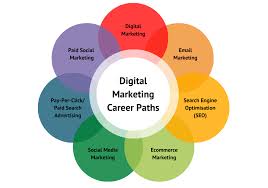
Marketing Career Specialisations (And What They Actually Pay)
Here’s what most people get wrong: they think “marketing” is one job. It’s not. It’s a whole ecosystem of very different roles, and the one you pick determines your trajectory more than your college does.
| Specialisation | Starting Salary | 5-Year Potential | Quantifiable? |
|---|---|---|---|
| Performance Marketing | ₹6–12 LPA | ₹15–20 LPA | ✅ Very High |
| Growth Marketing | ₹8–15 LPA | ₹25–35 LPA | ✅ High |
| SEO Specialist | ₹4–8 LPA | ₹10–15 LPA | ⚠️ Indirect |
| SEM Specialist | ₹5–10 LPA | ₹14–20 LPA | ✅ Moderate-High |
| Content Marketing | ₹4–8 LPA | ₹12–20 LPA | ⚠️ Indirect |
| Social Media Marketing | ₹2.5–4 LPA | ₹15–25 LPA | ⚠️ Mixed |
| Traditional Marketing | ₹3–6 LPA | ₹8–14 LPA | ❌ Very Low |
Performance Marketing: The King of the Food Chain
These are the people managing Google Ads, Facebook Ads, Instagram Ads — at scale. Their lives revolve around ROAS (Return on Ad Spend). You spend ₹1, how much comes back? ₹1.5? ₹2? ₹3? Because everything is so quantifiable, these people are very, very valued. Starting salary: ₹6–12 LPA. With 3 years of experience, you’re looking at ₹15–20 lakh easily.
Growth Marketing: Startups’ Favourite
This is a relatively newer role — barely 10 years old as a defined specialisation. Growth marketers don’t just run ads. They look at analytics, product, creatives, and the full funnel — and figure out how to put a company on a growth trajectory. Starting salary ₹8–15 LPA, mostly at startups. By year five, ₹25–35 lakh is achievable. But heads up — the burnout rate is insanely high. This is one of the most intense jobs in the industry.
SEO vs SEM: Two Different Worlds
SEO (Search Engine Optimisation) is about ranking your content organically on Google. SEM (Search Engine Marketing) is about paying to appear at the top. The big difference? SEM shows results in minutes. SEO can take 6–9 months before you see a single ranking move. That delay makes it harder to attribute revenue directly — which is why SEM professionals command higher salaries than pure SEO specialists.
Content Marketing: The Long Game
Think of brands like Zomato (their hilarious notifications, Instagram presence, Twitter banter) or Zerodha (Varsity, their free stock market education platform). They’re not running ads — they’re building trust through content. The challenge is that this takes time and isn’t always directly tied to revenue. But in today’s world, every brand needs it, and the people who truly understand it — not just “posting on Instagram” — earn really well.
Social Media: The Most Misunderstood Role
There’s a huge gap here. Most people who call themselves “social media managers” are just creating Canva posts and uploading them. The ones who truly understand algorithms, audience psychology, engagement mechanics, and data — they can earn ₹15–25 lakh. But most just end up doing the former and wondering why their career isn’t growing.
The Real ROI of Marketing Education
Alright, let’s get into actual numbers. Because a marketing career decision isn’t just about passion — it’s about investment and return.
| Education Path | Investment | Starting Salary | 10-Year Income | Net Profit |
|---|---|---|---|---|
| Top IIM MBA | ₹30 lakh | ₹24 LPA | ~₹1.8 Cr | ~₹1.5 Cr ✅ |
| MICA / Specialised College | ₹12–15 lakh | ₹19–21 LPA | ~₹1.2–1.4 Cr | ~₹1 Cr ✅ |
| Mid-tier MBA | ₹12 lakh | ₹6–8 LPA | ~₹60–65 lakh | ~₹50 lakh ⚠️ |
| BBA Marketing | ₹8 lakh | ₹3.5–4 LPA | ~₹42–45 lakh | ~₹35 lakh ❌ |
| Digital Marketing Course | ₹1 lakh | ₹4 LPA | ~₹60 lakh | ~₹59 lakh ✅ |
| Self-Taught (Free) | ₹0 | ₹3–3.5 LPA | ~₹1–1.5 Cr | ~₹1–1.5 Cr ✅ (High Risk) |
The pattern is clear: either go to a genuinely top institution, or teach yourself. Everything in between has a questionable ROI. That’s uncomfortable, but it’s the truth. And comparing this against CA, engineering, or MBBS? Marketing education actually has one of the worst returns on investment — unless you’re at the extremes.
Real Story
I want to tell you about Shaurya — he’s on my team and leads our YouTube strategy. He’s one of India’s top YouTube consultants today. Works with big brands on their entire channel strategy. Earns seven figures. Has a corpus of ₹50 lakh. Bought his dad a BMW as a retirement gift. He’s 25 years old. He built all of this in four years — not through any college, not through any certification. Through application, iteration, and obsession with understanding how YouTube works.
His story isn’t a fluke. I have so many cases like his in my own team — people who are absolutely killing it in content creation, marketing strategy, and YouTube consulting. Not as creators. As people who help brands create content.
Location Matters More Than People Think
Here’s a factor almost nobody talks about when discussing a marketing career: where you work changes everything — not just your salary, but your actual take-home and quality of life.
- Mumbai: Advertising capital. Average marketing salary ₹8–12 LPA. But ₹35,000 goes straight to rent. Savings potential? Painfully low.
- Delhi NCR: Startup marketing hub. ₹6–15 LPA, but 2-hour commutes and expensive PGs eat into it.
- Bangalore: Every second person calls themselves a “growth hacker.” Average ₹8–14 LPA. Cost of living is lower than Mumbai but rising fast.
- Hyderabad, Chennai, Pune: Starting to get exciting. Salaries slightly lower, but living expenses are significantly lower. Work-life balance is better. Quality of life wins.
- Tier 2 & Tier 3 cities: This is where the most interesting disruption is happening. People in Jaipur, Kochi, Surat, Indore — they’re not even working for Indian companies. They’re handling digital marketing for international businesses, earning in dollars, spending in rupees. A kid sitting in Gwalior earning ₹5 lakh a month — and his parents have no idea what he actually does.
The geographic arbitrage opportunity in digital marketing is genuinely one of the most underrated financial moves available right now.
Side Gigs That Can Become Full-Time Incomes
One of the best things about a marketing career in the digital age is how well it pairs with side income. Because digital marketing is location-independent and scalable, you can build real revenue streams alongside a regular job.
Instagram Marketing for Local Businesses Abroad
Reach out to restaurant owners in the US, beauty parlours in New Zealand, tattoo artists in the Middle East, small businesses in Canada and Australia. Tell them: “You don’t have an Instagram page, no Google My Business, no Facebook profile, no Google Maps presence. We’ll build all of that for you — $50/month or $500/year.” Sign 20–30 such clients. Most of the work is automated. That’s ₹1–2 lakh per month from a laptop.
Facebook Ads for Small Businesses
Small local businesses have the budget, the need for customers, but zero clue how to run ads. You can target their exact audience — by age, gender, location, interest. Help them get 100 customers a month. They’ll happily pay you for it every single month.
Content Writing with Domain Expertise
Forget the 50-paise-per-word content mills. Today, everyone’s using AI to write — which means everything sounds the same. If you combine genuine domain knowledge (finance, health, travel, tech) with AI tools to polish your work, you sound human in a sea of robotic text. That commands real premium pricing.
WhatsApp Marketing Consulting
As WhatsApp opens up more for businesses, the demand for consultants who understand automation, broadcast lists, and customer journeys is skyrocketing. My own startup (Web Veda) runs its entire student support — refunds, login issues, technical queries — through an automated WhatsApp system. Someone built that for us, and we pay them well for it.
YouTube Channel Consulting
Five years ago, this job title didn’t even exist. Today, brands need people who understand YouTube strategy — growth, SEO, scripting, thumbnail psychology, analytics. It’s a genuine career path that pays extremely well.
Personal Branding as a Service
Thousands of founders, doctors, lawyers, and executives want to build a personal brand on LinkedIn, YouTube, or Instagram. Most have no clue where to start. If you can package this as a service — content strategy, ghostwriting, growth — you have a premium offer that clients will pay for monthly.
Pro Tips for a Successful Marketing Career
- Build a portfolio before you job-hunt. Run a real campaign — even for a local friend’s business, even for free. Results beat certificates every time.
- Learn one paid ads platform deeply. Facebook/Meta Ads or Google Ads — go deep on one before spreading yourself thin across both.
- Make your work quantifiable. Always frame your achievements in numbers: “Reduced CPC by 32%” or “Grew Instagram following by 8,000 in 60 days.”
- Stay close to AI tools. Your ability to prompt, iterate, and produce quality output with AI is now a core marketing skill — not a bonus.
- Pick your city strategically. If you’re early in your career, a Tier 2 city with international clients gives you a massive savings advantage over Mumbai or Bangalore.
- Specialise early, not late. The marketing generalist is becoming less valuable. A performance marketer who can prove ROAS is irreplaceable.
Common Mistakes That Stall Marketing Careers
- Treating certifications as the end, not the start. The certificate gets you in the room. Your portfolio gets you the job.
- Choosing a mid-tier MBA for marketing. The ROI just doesn’t work out unless you’re at a top-10 institution.
- Going into email marketing or traditional media without a strong reason. Both are declining or stagnant — unless you’re at a truly exceptional brand or agency.
- Measuring social media success only by follower counts. Engagement rate, conversions, and attributed revenue matter infinitely more.
- Ignoring the data side. Marketing isn’t just creative. If you’re afraid of Excel, Google Analytics, or attribution reports, you’re leaving money on the table.
- Waiting for the “perfect opportunity.” Start a mock campaign today. Run a real ad with ₹500. Learn by doing, not by watching.
Beginner’s Guide: How to Start a Marketing Career from Zero
You don’t need a degree to start. But you need a plan. Here’s what I’d do if I were starting from scratch today:
Month 1–2: Build the Foundation
- Complete Google Digital Garage (free, certified)
- Complete Meta Blueprint for Facebook & Instagram Ads (free)
- Watch 50+ hours of YouTube tutorials on performance marketing and SEO
- Set up your own small blog or Instagram page as a learning sandbox
Month 3–4: Get Hands-On
- Offer to run a free or low-cost campaign for a local business (restaurant, tutor, boutique)
- Spend ₹500–₹2,000 of your own money running a real Facebook/Instagram ad
- Document everything: what you did, what worked, what failed, and the numbers
Month 5–6: Build Your Portfolio & Start Outreach
- Create a simple portfolio page (you can use a free Notion page or Canva website)
- Include 2–3 case studies with real results and screenshots
- Start cold emailing small businesses and agencies with your work
- Apply for internships — even unpaid ones at good agencies are valuable
Month 7 Onwards: Go Paid
- Land your first paid client or internship
- Start building in one specialisation (performance, content, or growth)
- Keep learning — algorithms change, platforms evolve, stay curious
This path costs almost nothing but time. And it puts you ahead of most BBA graduates in terms of real-world readiness.
AI and the Marketing Career: Friend or Enemy?
Let’s address the elephant in the room. AI is already displacing entry-level marketing jobs. Salesforce’s announcement wasn’t just a headline — it’s a signal of what’s coming. WPP cutting 40% of creative staff isn’t a blip. It’s a direction.
But here’s what AI can’t do — at least not yet. It can’t build genuine relationships with clients. It can’t understand the cultural context of why a local Mumbai restaurant’s audience behaves differently than a Bangalore tech crowd. It can’t develop the strategic instinct that comes from running 200 failed campaigns and learning exactly why they failed.
The marketing professionals who will thrive are those who use AI as a multiplier, not those who compete against it. Your job isn’t to write copy anymore — it’s to direct AI to write great copy, then layer it with strategy, cultural nuance, and human insight.
The people who will be replaced are those doing repetitive, templated, low-skill marketing tasks. The people who will thrive are those who understand data deeply, can think strategically, and can use AI tools to execute at 10x speed.
Should You Build a Marketing Career?
Honestly? Only if certain things are true about you.
You’ll likely thrive in a marketing career if:
- You love data — and aren’t intimidated by numbers, spreadsheets, and attribution models
- You have genuine curiosity about what makes people tick — empathy, psychology, behaviour
- You can be creative while staying results-focused (not art for art’s sake)
- You’re self-driven — you can read an article, apply it, test it, iterate, without someone holding your hand
- You find the internet genuinely fascinating, not just as a user but as a platform to understand and leverage
It’s probably not the right path if:
- You’re uncomfortable with ambiguity and prefer clearly defined outcomes
- You dislike data and see marketing purely as “creative” work
- You need someone to structure your learning for you at every step
- You’re only considering it because “nothing else seems to fit”
Marketing done badly is one of the most frustrating and low-paying career paths out there. Marketing done brilliantly? It’s one of the most creative, free, high-earning, and globally relevant skills you can own.
Frequently Asked Questions
Is a marketing career still worth it in the age of AI?
Yes — but the nature of the role is changing fast. Entry-level, repetitive tasks are being automated. Strategic, data-driven, and AI-augmented marketing roles are growing. The key is to position yourself as someone who uses AI as a tool, not someone who competes with it. A marketer who can combine human insight with AI execution will be more valuable than ever.
Do I need an MBA to build a successful marketing career in India?
Not at all. An MBA from a top institution (IIMs, ISB, FMS) can accelerate your trajectory significantly. But mid-tier MBA programmes have a questionable ROI for marketing. Many of the highest-earning digital marketers in India today are self-taught or completed affordable certifications. Your portfolio and real results matter far more than your degree in most digital marketing roles.
What is the highest-paying specialisation within a marketing career?
Performance marketing and growth marketing consistently top the charts. Performance marketers managing Google and Meta Ads at scale can earn ₹15–20 LPA with just 3 years of experience. Growth marketers at well-funded startups can reach ₹25–35 LPA by year five. These roles pay well because their impact is directly measurable in revenue terms.
Can I earn dollars working in digital marketing from a Tier 2 city in India?
Absolutely — and this is one of the most underrated opportunities right now. Many digital marketers in cities like Indore, Jaipur, and Surat work with US, Canadian, Australian, and UK clients remotely. They earn in dollars and spend in rupees — which creates an extraordinary financial advantage. If you can manage Instagram, run Facebook ads, or consult on WhatsApp marketing for international small businesses, you can build a serious income from anywhere.
How long does it take to get a job after a digital marketing certification?
It varies enormously. If you complete a course and start building a portfolio immediately — running real campaigns, doing internships, cold emailing agencies — you could land a role in 3–6 months. If you wait for a placement cell to do the work for you, it could take much longer (or not happen at all). The certification opens the door; your hustle and real-world results get you through it.
What skills should I learn first to start a marketing career in 2025?
Start with Meta Ads (Facebook/Instagram) and Google Ads — these form the backbone of performance marketing. Add basic analytics skills (Google Analytics 4, Meta Business Suite). Then layer in content marketing fundamentals and an understanding of AI writing tools. This combination makes you immediately hireable and gives you the foundation to specialise further based on what excites you most.
The Bottom Line: Your Marketing Career Action Plan
Marketing is one of the most democratised career fields that’s ever existed. You don’t need a top pedigree. You don’t need lakhs of rupees in education spend. What you need is skill, application, and the willingness to put in work that’s actually measurable.
Here’s what I’d tell a younger version of myself — or anyone reading this right now:
- Start learning today. Not next month when the semester ends. Google’s free courses are literally a search away.
- Run a real campaign before your first interview. Even ₹500 spent on a real ad gives you more credibility than any certificate.
- Specialise with intention. Performance marketing and growth marketing have the best financial outlook right now. Go deep on one.
- Think globally, earn globally. Your laptop can serve clients in 20 countries. Don’t limit yourself to your pin code.
- Use AI, don’t fear it. The marketers who understand how to direct AI tools will replace those who don’t — not the other way around.
- Track everything. Build the habit of measuring your own impact. This skill will compound massively over a career.
The world of marketing has never been more exciting — and never more unforgiving of mediocrity. The good news is that the bar to stand out has never been lower if you’re willing to actually do the work.
That 23-year-old in Indore? He’s not special. He’s just someone who started, stayed consistent, and found real clients. You can do the same.
Shambhala, Mahabharat & the Coming of Kalki : The Ancient Story That Refuses to Stay Hidden

Surya Mandir Konark : The Floating Idol, the Magnetic Magnet & 120 Years of Sealed Secrets

Chhatrapati Shivaji Maharaj: The Real History Most Textbooks Won’t Tell You