OLED vs Mini LED in 2026 :
Which Should You Actually Buy?
The display war has never been closer — or more confusing. Here’s the honest breakdown you actually need before spending your money.
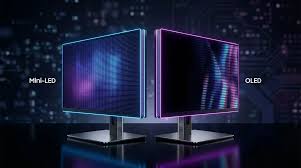
If you’ve ever found yourself in that exact spot — squinting at competing panels, drowning in jargon, wondering what OLED vs Mini LED actually means for your real life — this guide is for you. Not the you who reads display white papers for fun (hi, niche crowd), but the you who just wants a stunning screen without buyer’s remorse.
In 2026, both technologies have matured enormously. Mini LED has fixed most of its early problems. OLED has tackled burn-in anxiety head-on. Prices on both have dropped to the point where the choice is genuinely competitive. So let’s dig into what actually mattersA visual comparison of OLED and Mini LED panels under identical content — contrast and black levels are immediately apparent.
First, Let’s Actually Understand What These Are
Before we argue over which is better, let’s make sure we’re speaking the same language. Display tech has a way of burying the real story under a mountain of acronyms.
What is OLED?
OLED stands for Organic Light-Emitting Diode. Here’s the key thing: every single pixel produces its own light. There’s no backlight. When a pixel needs to be black, it simply turns off. Completely. Zero light output. This is why OLED blacks look so impossibly deep — because they literally are nothing.
This pixel-level control gives OLED its signature look: infinite contrast ratios, razor-sharp HDR, and colors that pop without feeling artificial. It’s the reason cinematographers and color-grading professionals have been using OLED reference monitors for years.
What is Mini LED?
Mini LED is a backlight technology, not a fundamentally new type of display. It uses thousands of tiny LED zones — far smaller than traditional LEDs — placed behind an LCD panel. These zones are grouped into “dimming zones,” and the display can independently control brightness in different areas of the screen.
Think of it as giving an LCD panel a much smarter brain. A standard LED TV might have a few dozen dimming zones. A good Mini LED panel in 2026? Thousands. The result is dramatically better contrast than old-school LCDs, though still not quite at the OLED level.
Mini LED got genuinely impressive in 2025. OLED got genuinely affordable in 2024. Which means right now, in 2026, the decision has never been harder — or more interesting.
The Honest Head-to-Head: OLED vs Mini LED
| Feature | OLED | Mini LED |
|---|---|---|
| Black Levels | ✦ Perfect (pixel off) | Near-perfect (some blooming) |
| Contrast Ratio | ✦ Infinite (theoretical) | Up to ~20,000:1 (local dimming) |
| Peak Brightness | 800–3000 nits (varies) | ✦ 2000–6000+ nits |
| Color Volume | Excellent (wide gamut) | ✦ Excellent (better at high brightness) |
| Motion Handling | ✦ Near-instantaneous response | Excellent but slightly behind |
| Burn-in Risk | Low but real (esp. static UI) | ✦ None |
| Outdoor / Bright Room | Struggles vs bright ambient | ✦ Excellent visibility |
| Longevity | Degrades over ~7–10 years | ✦ More stable over time |
| Haloing / Blooming | ✦ None | Possible (less in 2026 models) |
| Price per inch | Higher (improving) | ✦ Generally lower |
| Form factor options | ✦ Flexible, rollable, transparent | Traditional rigid panels only |
Tables are neat, but they flatten nuance. Let’s get into the parts that actually affect your daily life.
Each OLED pixel contains red, green, and blue sub-pixels made of organic compounds that emit light when electricity passes through them.
Where OLED Still Wins — And It’s Not Close
Contrast and Cinema Experience
There’s no beating pixel-level dimming for movie watching. When you’re watching a space film and the camera pans across a starfield, OLED delivers stars that float in actual darkness. On a Mini LED panel — even a great one with 5,000+ dimming zones — there’s a faint glow around those bright points. It’s subtle in 2026 models, but it’s there if you look.
I’ve watched Dune on both technologies back to back. On OLED, the desert scenes feel like you’re looking through a window. On Mini LED, it’s still gorgeous, but you’re slightly more aware that it’s a screen. That’s the contrast story in a nutshell.
Response Time for Gaming
If you’re a competitive gamer, the response time gap matters more than anything else on this list. OLED panels in 2026 routinely hit 0.03–0.1ms gray-to-gray response times. That’s not just fast — it’s effectively instantaneous from a human perception standpoint. Mini LED panels are excellent, often hitting 1–4ms, but in fast-paced games like shooters or fighting games, pixel transitions can occasionally create faint ghosting.
For casual gaming? Mini LED is totally fine. For high-level competitive play? OLED gives you a genuine edge.
Viewing Angles
OLED panels maintain color accuracy and contrast at extreme angles. Useful if you’ve got a living room where people watch TV from the sides, or if you use your laptop with someone sitting next to you. Mini LED (being LCD-based) still has some color shift at steep angles, though IPS-based Mini LED panels have significantly reduced this issue compared to older VA-type backlights.
Where Mini LED Is Quietly Winning the Argument
Brightness, Especially in 2026
Here’s the dirty secret OLED fans don’t love to talk about: OLED still can’t touch Mini LED when it comes to sustained peak brightness. OLED panels have gotten brighter — the latest QD-OLED and W-OLED panels from major manufacturers push 2,000–3,000 nits in peak HDR — but Mini LED panels routinely hit 4,000–6,000+ nits on high-end models.
Why does this matter? Two reasons: HDR realism (brighter highlights look more “real”) and usability in bright rooms. If your TV is near a window or your office has overhead fluorescent lighting, Mini LED will simply look better to the naked eye in everyday use.
Burn-in : OLED’s Lingering Reputation Problem
Manufacturers have worked hard to minimize OLED burn-in, and honestly, for TV use, it’s much less of an issue than it was five years ago. But for monitors — especially ones used for productivity with static elements like taskbars, static app windows, and navigation bars — burn-in is a real consideration.
My personal laptop from 2023 has a subtle, barely visible ghost of the macOS menu bar burned into the top of the display. It took three years, but it happened. Mini LED doesn’t have this problem. For a monitor you’ll use 8–10 hours a day with consistent UI elements, that’s not nothing.
Price at Larger Sizes
Need a 75″ or 85″ screen? OLED at those sizes is expensive. Even in 2026, a large-format OLED TV from a premium brand costs significantly more than a comparably specced Mini LED option. If screen real estate is your priority and budget matters, Mini LED gives you more inches for your dollar.
Modern Mini LED panels in 2026 use up to 10,000+ independent dimming zones, dramatically reducing the “halo” effect that plagued earlier generations.
The Use Case Guide: Who Should Buy What
Stop thinking in abstract specs. Think about how you actually use your screen.
You should probably choose OLED if…
- You watch a lot of movies and TV in a dark or dim room — cinema content is where OLED shines brightest (literally and figuratively).
- You’re a competitive gamer who cares about every millisecond of response time.
- You work in creative fields — video editing, photo retouching, graphic design — where color accuracy and contrast are non-negotiable.
- You want a thin, flexible, or premium form factor: OLED is the technology enabling foldable phones, rollable TVs, and ultra-thin laptops.
- You’re buying a smartphone. Virtually all flagship phones use OLED for good reason — the viewing experience in a handheld form factor is unmatched.
You should probably choose Mini LED if…
- You watch content in a bright room with lots of natural or artificial light — Mini LED’s higher sustained brightness wins here.
- You’re buying a large TV (75″–98″) and budget is a consideration.
- You use your monitor all day for productivity and worry about burn-in from static interface elements.
- You want longevity — Mini LED panels degrade more predictably and slowly than OLED’s organic compounds.
- You game casually but also consume a lot of HDR content at high brightness — the best of both worlds in one panel type.
A Quick Story From Someone Who’s Been in Your Shoes
A colleague of mine — a photographer and part-time streamer — agonized over this exact decision for two months last year. She was building a new editing workstation and couldn’t decide between a 32″ OLED and a 32″ Mini LED monitor.
Her use case: color grading photos for 6–8 hours a day, occasional gaming in the evenings, and streaming setup with a static overlay HUD. The verdict? She went Mini LED.
Not because it’s better in absolute terms — she knows OLED has the edge in pure contrast. But because she couldn’t stomach the idea of a static webcam frame and streaming HUD slowly etching itself into an OLED panel. Six months in, she has zero regrets. The Mini LED’s HDR performance is stunning for her editorial work, and she sleeps well knowing her investment isn’t quietly degrading pixel by pixel.
The moral: your use case is the deciding vote, every time.
What’s New in 2026: The Technology Has Moved
It wouldn’t be a proper 2026 guide without acknowledging what’s changed. Both technologies have made meaningful jumps in the last 18 months.
OLED Updates
- Tandem OLED stacking two OLED layers for doubled brightness without sacrificing black levels — hitting mainstream laptop panels this year.
- Blue OLED lifespan improvements from multiple manufacturers have significantly extended panel longevity, addressing one of the organic compound degradation concerns.
- 4K OLED monitors under $600 are now real products, not pipe dreams.
- Print-head-deposited OLED manufacturing has pushed yields higher and costs lower than ever.
Mini LED Updates
- Zone counts have exploded — entry-level 2026 Mini LED TVs now ship with 2,000–4,000 zones; premium models push past 10,000.
- AI-driven local dimming algorithms have gotten dramatically better at predicting and eliminating blooming before it happens.
- High-end Mini LED monitors now offer VESA DisplayHDR 2000 certification, a previously OLED-adjacent spec.
- Micro LED — the next generation — is still expensive but is starting to appear in ultra-premium installations, putting pressure on both technologies to keep innovating.
Completely new to display technology? Here’s the 60-second version:
- OLED = pixels light themselves up individually → perfect blacks, incredible contrast, can burn in over years.
- Mini LED = a much-improved LCD with thousands of tiny background lights → very bright, longer-lasting, no burn-in risk.
- For a dark home theater: lean OLED. For a bright living room or work monitor: lean Mini LED.
- Both are dramatically better than the “LED TV” you bought five years ago — that was just standard LCD with a basic backlight.
- Don’t let anyone sell you on specs alone. Ask yourself: Where will this screen live, and what will I watch on it?
If you want to go deeper, the Display Technology Guide for Beginners on our site covers resolution, refresh rate, and color gamut in the same plain-English style.
- OLED owners: Enable pixel refresh cycles and OLED Care features in your display settings. Modern firmware handles this automatically at scheduled times, but make sure it’s turned on.
- Mini LED owners: Experiment with local dimming intensity settings. “High” isn’t always best — for content with lots of small bright objects on dark backgrounds (star fields, candles), “Medium” often reduces visible blooming more than cranking it to max.
- Both: Calibrate your display. Factory settings are optimized for showrooms, not your living room. A proper calibration (even a free one using tools like DisplayCAL) can transform the picture quality.
- Both: Pay attention to HDR format support. Dolby Vision and HDR10+ are different formats — check whether your streaming services and devices support what your TV supports before you buy.
- OLED monitor users: Use screensaver settings and automatic brightness limiters for static desktop use. Set a 10-minute screen timeout. Your panel will thank you in 2031.
- Judging in-store brightness alone. Showroom Mini LEDs are cranked to maximum brightness. Ask to see both displays running the same calibrated SDR content at a realistic home brightness level (100–200 nits). The story changes dramatically.
- Ignoring dimming zone count for Mini LED. A “Mini LED TV” at $400 might have 200 dimming zones. A proper Mini LED TV at $900 might have 3,000. These are categorically different products that happen to share a name.
- Dismissing burn-in risk entirely for OLED. It’s reduced, not eliminated. If your use case involves hours of static content daily (trading terminal, always-on dashboard, first-person shooter HUDs), the risk is real over a multi-year ownership horizon.
- Prioritizing refresh rate over response time. A 144Hz Mini LED panel and a 144Hz OLED panel don’t feel the same in motion. OLED’s response time advantage makes 144Hz feel smoother than 144Hz on LCD, full stop.
- Forgetting the room. I’ve seen people buy an OLED TV for a sun-drenched living room and then complain that it looks washed out. Check the ambient light in your actual viewing environment. It matters more than almost any spec.
FAQ: Your Questions, Answered Honestly
Is OLED burn-in still a real concern in 2026?
For TV use with varied content, it’s much less of a concern than it was five years ago. Modern OLED TVs have sophisticated pixel refresh algorithms, automatic brightness management, and logo detection features that significantly extend panel life. For monitors used with static desktop UIs for 8+ hours daily, it remains a legitimate consideration — not a dealbreaker, but something to manage actively with the right settings. If you’re paranoid about it, Mini LED removes the concern entirely.
Which is better for gaming — OLED or Mini LED?
For competitive gaming where response time is paramount, OLED wins on pure performance. For HDR gaming in a bright room where you want maximum visual spectacle, Mini LED’s higher peak brightness can actually make HDR environments feel more immersive. Most gamers will be delighted with either; competitive esports players will get a measurable advantage from OLED’s near-zero response times.
Is Mini LED just an LCD TV with marketing spin?
It’s understandable to be skeptical — “Mini LED” sounds like it could be a buzzword. But the technology genuinely delivers. A top-tier Mini LED panel from 2025–2026 with 5,000+ dimming zones performs so close to OLED in most viewing scenarios that the gap has genuinely closed for the average viewer. It’s a substantial improvement over traditional LED LCD, not just a rebrand.
Which lasts longer — OLED or Mini LED?
Mini LED, in straightforward terms. The organic compounds in OLED panels degrade over time — blue sub-pixels historically degrade faster than red and green, which can cause color shift after many years. Most OLED TVs and monitors are rated for 30,000–100,000 hours, which is plenty for typical use, but Mini LED panels (being inorganic LED-based) have a more stable long-term degradation profile. For a display you plan to keep for 10+ years, Mini LED has the edge on longevity.
What about Micro LED — should I wait for that instead?
Micro LED is the genuine next frontier: it offers OLED-like per-pixel control with LED-like brightness and longevity. But in 2026, consumer Micro LED products are still extremely limited and expensive — we’re talking niche ultra-premium products, not mainstream competition. Unless your budget is truly unconstrained, it’s not a realistic option right now. Keep an eye on it for 2028–2030, but don’t wait for it today.
Can you tell the difference between OLED and Mini LED in regular use?
Honestly? In very bright, static daytime content, many people can’t reliably distinguish them. The difference becomes most obvious in dark content with high contrast — a night scene, a starfield, the opening credits of a film. If you watch a lot of sports in a bright room, the difference may favor Mini LED. If you watch a lot of dark dramas and films in a dim room, you’ll notice OLED’s blacks are in a different league. Content type and room conditions determine how meaningful the difference actually is for your eyes.
So, Which Should You Actually Buy?
Here’s the honest answer: in 2026, you can’t go wrong with either. Both technologies have hit a level of maturity where a well-chosen purchase will make you happy for years. But if you need a decision framework, here it is:
- Dark room cinephile or competitive gamer? Buy OLED. The contrast and response time are genuinely unmatched and you’ll feel the difference every single time you use it.
- Bright room, large screen, or productivity-heavy use? Buy Mini LED. You’ll get better brightness, zero burn-in anxiety, and a display that punches well above its price point.
- Smartphone or laptop? OLED is almost certainly already what you want — it dominates these form factors for good reason.
- Still can’t decide? Look up the specific models you’re considering, check independent panel measurements from sites like RTINGS, and see how they score in the scenarios you care about most. The best display is the one that fits your life — not the one with the most impressive spec sheet.
The display wars are good for consumers right now. Both camps are fighting hard, prices are falling, and the technology on both sides has never been more capable. Whatever you choose, your eyes are in for a treat.
Isaac Newton : The Brilliant, Troubled, and Utterly Fascinating Man Behind the Science

Kailash Mandir at Ellora: The Temple Carved from a Single Mountain That Still Has Engineers Baffled

Parvat Kailash : The Unsolved Mysteries of the World’s Most Sacred Mountain

[…] OLED vs Mini LED in 2026 : Which Should You Actually Buy ? […]