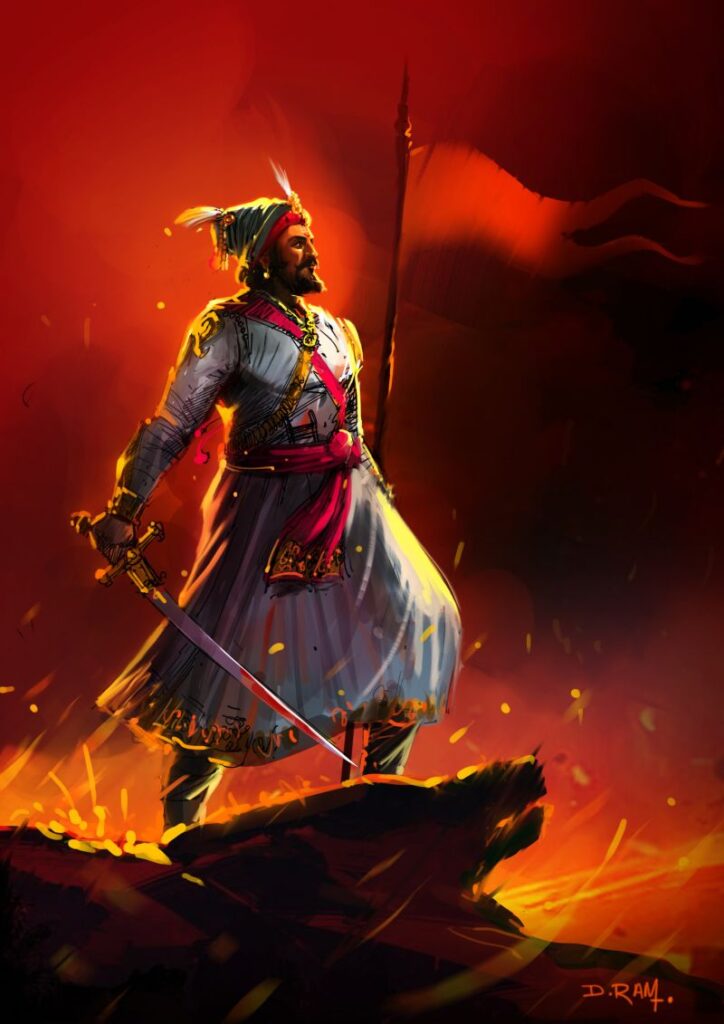
India · History · Science · Power
The Nuclear Story of India:
From a Dream to a Detonation the World Didn’t See Coming
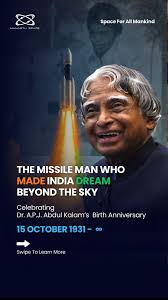
“Peace is not just a choice. It’s a capability. And India chose to build that capability quietly, brilliantly, and against all odds.”
History & Science
🇮🇳 India
Pokhran test site, Rajasthan, India
Operation Smiling Buddha (1974) and Operation Shakti (1998) — the two moments India announced itself to the world
Here’s something that genuinely bothers me — and maybe it’ll bother you too once I say it out loud. Most of us grew up reading a version of history that fits neatly into two lines of a textbook. We memorized dates, circled answers in exam papers, and moved on. But the actual story — the one with real fear, real genius, real political backroom pressure, and real sacrifice — was sitting right there, mostly untold.
The nuclear story of India is one of those stories. It’s not just about bombs and tests. It’s about a newly independent country with no money, no food security, and barely any infrastructure daring to dream of energy independence. It’s about scientists who knew they might be killed for what they were building, and built it anyway. It’s about prime ministers from opposing parties handing each other a baton — quietly, gracefully — because the country came first.
And honestly? It’s a story that mirrors what’s happening in the world right now. History has this uncomfortable habit of rhyming with itself. If you’re paying attention, you’ll see it.
Homi Bhabha
Operation Shakti
APJ Abdul Kalam
Pokhran Test
India Nuclear Power
Raja Ramanna
Indian Science History
- Why This Story Still Matters Today
- Homi Bhabha: The Architect of a Nation’s Nuclear Dream
- Beginner Guide: How Nuclear Energy Actually Works
- The Complete Nuclear Timeline of India
- Operation Smiling Buddha — The Detonation That Shook the World
- The Suspicious Deaths That Haunt History
- APJ Abdul Kalam and the Missile That Completed the Circle
- Operation Shakti 1998 — How India Outsmarted the World
- Pro Tips: How to Read Indian History More Critically
- Common Mistakes People Make When Studying India’s Nuclear Journey
- FAQs
- Conclusion
01 Why the Nuclear Story of India Still Matters Right Now
There’s a pattern in world politics that keeps showing up, generation after generation. A powerful country — the kind that considers itself the global sheriff — decides which other nations are “allowed” to have certain technologies. It puts pressure on them, cuts off resources, threatens sanctions, and when all that fails, things get darker.
If you’ve been following global headlines recently, you’ve probably noticed this playbook being used again — different target, same pressure tactics. And that’s exactly why understanding India’s nuclear journey isn’t just a history lesson. It’s a warning sign, a blueprint, and honestly, one of the most inspiring “David vs Goliath” stories ever told.
“History is written by the victors. But sometimes, if you’re quiet enough and smart enough, you get to rewrite it.”
— The philosophy behind how India built its nuclear program
India was told — firmly and repeatedly — that it should never, under any circumstances, become a nuclear power. The same country that used nuclear weapons on civilians, the only country in history to have done so, was dictating the rules of nuclear ownership to everyone else. India didn’t just ignore that pressure. It outmaneuvered it.
02 Homi Bhabha: The Architect Who Dreamed in Atoms
Before we get to the explosions, we need to meet the man who started it all. And to understand Homi Jehangir Bhabha, you need to forget the typical scientist stereotype entirely.
Bhabha wasn’t hunched over dusty equations in a dim basement. He was from one of India’s most prominent Parsi families — wealthy, well-connected, and deeply cultured. He performed Shakespeare on stage. He played cricket with governors and aristocrats. He painted. He was every bit the Renaissance figure that the word “polymath” was invented for.
Dr. Homi Jehangir Bhabha, founder of India’s nuclear program
Bhabha studied physics at Cambridge and had a vision for India that most couldn’t see yet
He’d gone to Cambridge to study physics — a field that, in the early-to-mid 20th century, was fundamentally changing what humanity understood about matter, energy, and reality itself. He was brilliant in the European academic circles, rubbing shoulders with the best scientific minds of his generation.
And then World War II started. He came back to India to visit his family, and couldn’t return to Europe. What looked like a detour turned into a destiny.
The Spark That Changed Everything
In India, Bhabha connected with the legendary C.V. Raman — the Nobel Prize-winning physicist who proved that India had world-class scientific brains, just chronically underfunded. That meeting shifted something in Bhabha. He realized the problem wasn’t talent. India had plenty of that. What it lacked was infrastructure, funding, and a vision to channel all that potential.
So he went to J.R.D. Tata — yes, that Tata — and pitched the idea of a fundamental research institute. The Tata Institute of Fundamental Research (TIFR) was born in 1945. This was before independence. Bhabha was already playing the long game.
His vision wasn’t primarily about destruction. His plan was actually built around a three-stage nuclear energy program designed to power India for literally thousands of years using something India had in abundance — thorium. India’s entire coastline is among the most thorium-rich regions on earth. Bhabha saw a path to complete energy independence. The bomb came later, as a necessity, not a first choice.
03 Beginner Guide: How Nuclear Energy Actually Works (In Plain English)
Before we can appreciate what India built, you need to understand what’s actually happening when a nuclear reaction takes place. Don’t worry — I’m not going to lose you in physics equations. Think of it as a story about transformation.
Mass and Energy Are the Same Thing
Most of us were taught in school that “matter can neither be created nor destroyed.” That’s actually incomplete. The more precise truth, thanks to Einstein’s famous E=mc², is that matter and energy are interconvertible forms of the same thing.
When you split a heavy atom like Uranium-235, it breaks into two smaller atoms. Here’s the wild part: the combined mass of those two new atoms is actually slightly less than the original atom. That missing mass didn’t disappear — it became energy. And because of the enormous value of c² (the speed of light squared), even a tiny bit of missing mass releases a staggering amount of energy.
That’s what makes nuclear reactions so different from chemical ones. Burning coal converts chemical bonds. Splitting atoms converts mass itself. The energy difference is on the order of millions.
Why Uranium-235? And What’s a Chain Reaction?
Uranium-235 is a naturally occurring isotope that, when struck by a neutron, splits — releasing two smaller atoms plus extra neutrons. Those neutrons can go on to split other U-235 atoms, which release more neutrons, which split more atoms… and so on, exponentially. That’s a chain reaction.
In a reactor, you control that chain reaction to produce heat → steam → electricity. In a bomb, you let it go uncontrolled in a fraction of a millisecond. That’s the difference between a power plant and Hiroshima.
India’s Three-Stage Thorium Vision
Bhabha’s genius was recognizing that India couldn’t bet on uranium forever. Instead, he designed a three-stage program:
- Stage 1: Use natural uranium in pressurized heavy water reactors to generate power and produce plutonium as a byproduct.
- Stage 2: Use that plutonium in fast breeder reactors that also convert thorium into uranium-233.
- Stage 3: Run thorium-uranium reactors at massive scale — enough to power India essentially indefinitely.
India has already achieved Stage 2. Stage 3 is in progress. The man drafted this blueprint in the 1950s. Let that sink in.
04 India’s Nuclear Journey — A Timeline You Need to Know
| Year | Event | Significance | Key Figure |
|---|---|---|---|
| 1945 | TIFR Founded | India’s first world-class science institution, funded by Tata | Homi Bhabha |
| 1954 | Atomic Energy Commission established | Nuclear research becomes state-backed; Bhabha leads it | Nehru + Bhabha |
| 1962 | China-India War | India’s idealist foreign policy shattered; security concerns escalate | Nehru |
| 1964 | China tests its nuclear bomb | Bhabha announces India can build one in 18 months if authorized | Bhabha + Shastri |
| 1966 | Shastri and Bhabha both die | Program’s political power and scientific leader lost within 13 days | — |
| 1974 | Operation Smiling Buddha | India’s first successful underground nuclear test at Pokhran | Indira Gandhi + Raja Ramanna |
| 1995 | Test detected and aborted | American satellites caught India’s preparations; program halted under pressure | Narasimha Rao |
| 1998 | Operation Shakti | Five tests. India officially announces itself as a nuclear weapons state | Vajpayee + Kalam |
05 Operation Smiling Buddha — The Day India Changed the World
By the early 1970s, the pieces were quietly falling into place. Indira Gandhi had taken over as Prime Minister — a leader who had a very different worldview from her father Nehru. Where Nehru was the idealist who believed in the essential goodness of nations, Indira was a pragmatist who’d already stared down an American nuclear aircraft carrier when the USS Enterprise was sent into the Bay of Bengal to intimidate India during the 1971 Bangladesh Liberation War.
Her response to that provocation? She accelerated the nuclear program.
Dr. Raja Ramanna had by then become the scientific backbone of the effort. He and his team worked in an atmosphere of deliberate secrecy. The whole world assumed that after Bhabha’s death, India’s nuclear ambitions had quietly died too. That was exactly what India wanted them to think.
Image placeholder — Pokhran, Rajasthan desert, May 1974
Underground. Silent. Successful. India called it “a peaceful nuclear explosion.” The world called it a game-changer.
On May 18, 1974, in the Thar Desert near Pokhran, a device was detonated about 107 meters underground. The code name was Smiling Buddha — a name that perfectly captured the calm, almost philosophical confidence of the moment. Indira Gandhi announced to the world that India had conducted “a peaceful nuclear explosion.”
The global reaction was predictable. Sanctions, condemnations, technology embargoes. Canada, which had supplied the CIRUS reactor used in the process, felt betrayed and pulled out. The United States tightened the screws on nuclear technology exports.
But India had done the thing. And now the world had to deal with it.
06 The Deaths That Haunt the Nuclear Story of India
Here’s where the story gets darker. And more human.
In January 1966, something extraordinary — and deeply suspicious — happened. Within just 13 days, both of the two men who were most critical to India becoming a nuclear weapons state were gone.
January 11, 1966: Prime Minister Lal Bahadur Shastri — who had authorized the nuclear weapons program and was the political will behind it — died in Tashkent, USSR, after signing the Tashkent Agreement with Pakistan. He’d reportedly had a heart attack. He was in a foreign country. An Indian Prime Minister dying on foreign soil. The personal chef who made his last meal reportedly fled to Pakistan. A parliamentary committee investigated decades later and found inconsistencies. No definitive conclusion was ever reached.
January 24, 1966: Homi Bhabha was on an Air India flight from Mumbai to Geneva. The plane — Boeing 707, Flight 101 — crashed into Mont Blanc, the highest peak in the Alps. The investigation revealed that air traffic controllers had warned the pilots not to descend until they had cleared the mountain range. The crew acknowledged the warning. And then descended anyway. No black box has ever been recovered.
A book called Conversations with the Crow by journalist Robert Crowley contains claims — unverified — that a CIA operative directly claimed responsibility for orchestrating the crash. Whether you believe that or not, the timing is difficult to dismiss as pure coincidence.
Even if you set aside all the speculation and take both deaths at face value as tragic accidents, the effect was the same: India’s nuclear program had lost its political protector and its scientific visionary in less than two weeks.
The world exhaled. They thought it was over.
They were wrong. Because Bhabha had done something that outlasts any individual — he had built a bench of talent. He had mentored the next generation. He had ensured that the knowledge, the plan, and the passion were distributed across enough minds that no single assassination, accident, or act of sabotage could stop what had been set in motion.
“A scientist is not just a person. A scientist is a thought — an idea that can be carried forward by others.”
— The philosophy that saved India’s nuclear program
07 APJ Abdul Kalam and the Arrow That Carries the Arrowhead
After 1974, India had the bomb. But having a bomb and being able to use it are two entirely different things. A nuclear warhead sitting in a warehouse is not a deterrent. It needs to be deliverable — precisely, reliably, and at a range that makes it a credible threat to any potential aggressor.
That’s where A.P.J. Abdul Kalam enters the story. And his entry, like Bhabha’s, starts with an interesting twist of fate.
The Rejection That Built a Legend
Kalam wanted to join the Indian Air Force. He applied, went through the process, and didn’t make it. The reasons vary depending on who’s telling the story — some say height requirements, others cite the selection rankings. Whatever the reason, the Air Force’s loss became the nation’s gain in a way that borders on the poetic.
Kalam instead went into aerospace engineering, joined ISRO (the Indian Space Research Organisation), worked on satellite launch vehicles, and eventually moved to DRDO (Defence Research and Development Organisation), where he would lead India’s Integrated Guided Missile Development Programme.
The man understood rockets, missiles, propulsion, guidance systems, military requirements, and scientific principles — all at the same time. He was the complete package. And when India needed someone to develop a delivery system for its nuclear warhead, there was only one name that made sense.
08 Operation Shakti 1998 — How India Fooled the World’s Satellites
By the time P.V. Narasimha Rao became Prime Minister in the early 1990s, the nuclear program had been stalled for years under international pressure and sanctions. Rao knew it was time to complete what Indira Gandhi had started in 1974. He authorized preparation for a second test series.
But the world had gotten smarter. After 1974, the United States had specifically positioned satellites over India to monitor for any unusual activity near Pokhran. And in 1995, those satellites caught exactly what they were looking for — trucks, scientists, increased movement in the desert. The US immediately warned India to stand down. Rao quietly called it off. The window had closed.
PM Vajpayee visits Pokhran after Operation Shakti, May 1998
Three years of careful planning. Scientists working in shifts timed to satellite passes. Five simultaneous detonations.
But before leaving office, Rao did something remarkable. He wrote a personal note — and handed it to Atal Bihari Vajpayee. The two men were from opposite political parties, ideological rivals in almost every sense. And Rao handed Vajpayee a note that essentially said: meet Abdul Kalam, and complete what we started.
Vajpayee later said publicly — and this is one of the most graceful political statements in Indian history — “I merely detonated it. It was Narasimha Rao who built it.”
That kind of political maturity, that kind of country-first thinking across party lines, is so rare it almost sounds like fiction. But it happened.
The Satellite Deception
For the 1998 tests, Kalam and his team did something that combined science with pure operational genius. They studied the orbital patterns of American KH-11 spy satellites. They knew exactly when those satellites would be passing over Pokhran, and they scheduled all their most visible activities — equipment movements, personnel arrivals, excavation work — during the blind spots between passes.
Scientists wore army uniforms so they’d look like routine military personnel to any aerial observation. Work that could be done at night, was done at night. The whole operation moved with the kind of disciplined patience that the 1995 attempt had lacked.
On May 11, 1998, India detonated three devices simultaneously. Two more followed on May 13. The series was called Operation Shakti — “shakti” meaning power or energy in Sanskrit. The world’s intelligence agencies were caught completely off-guard. The CIA was reportedly embarrassed at the failure of their surveillance. India had done in secret what the world had spent decades trying to prevent.
A Story of Passing the Baton
What strikes me most about the entire nuclear story of India isn’t the science, as breathtaking as it is. It’s the human thread running through it — a thread of people who were willing to invest in something they knew they might not live to see completed.
Bhabha started it knowing it would take decades. He built TIFR, mentored Raja Ramanna, created institutions and talent pipelines. When he died, the baton went to Ramanna. When sanctions came after 1974, they held on. When the 1995 attempt failed, Narasimha Rao handed the baton across party lines to Vajpayee. Vajpayee handed it to Kalam. And five devices detonated simultaneously in the Rajasthan desert told the world: we finished what we started.
That’s not just history. That’s a lesson in how a civilization sustains itself — through vision that outlives individuals, through institutions that outlive leaders, and through the quiet conviction that what you’re doing matters even if you won’t see the ending.
09 Pro Tips: How to Read Indian History More Critically
- Look for the political context first. No scientific achievement happens in a vacuum. Every major Indian scientific milestone had a political enabler or blocker. Understand who was in power and what pressures they faced.
- Read primary sources and memoirs. Books like Wings of Fire (Kalam’s autobiography) and the documentary records around TIFR and BARC give you texture that textbooks strip out.
- Watch Rocket Boys (SonyLIV). It’s one of the most thoughtfully researched portrayals of Bhabha and Sarabhai ever put on screen. It’s not perfect history, but it’s a remarkable starting point.
- Follow the money and the sanctions. Every time India made a breakthrough, sanctions followed. Tracking what those sanctions targeted tells you exactly what the world was most afraid of India achieving.
- Separate leaders from their eras. Leaders like Nehru, Shastri, and Indira Gandhi made decisions inside specific historical constraints. Judging a 1950s decision by 2026 standards is almost always unfair and unproductive.
- Understand the thorium angle. Most people focus on the weapons dimension of India’s nuclear story and completely miss the energy independence dimension — which was actually the original and longer-term goal.
10 Common Mistakes People Make When Studying India’s Nuclear Journey
- Treating the nuclear program as purely a weapons story. Bhabha’s original vision was energy independence through thorium. The weapons component was a strategic response to China’s 1964 test and Pakistan’s later capabilities — not the founding motivation.
- Ignoring the role of institutional building. TIFR, BARC, ISRO, and DRDO were all part of the same vision. India didn’t build a bomb in isolation — it built an entire scientific ecosystem first.
- Dismissing the CIA conspiracy claims entirely — or believing them completely. The truth about Bhabha’s death is genuinely unknown. Healthy skepticism in both directions is the right stance.
- Crediting Operation Shakti only to Vajpayee. Vajpayee himself told the world that Narasimha Rao had done the foundational work. History, and popular perception, often gets this wrong.
- Forgetting about Raja Ramanna. He’s arguably the most underrecognized figure in this entire story. His work between Bhabha’s death and the 1974 test is the chapter most people skip entirely.
- Viewing India’s nuclear tests as aggression. India has a No First Use policy. The nuclear program was — and remains — a deterrence tool, not an offensive one. The framing matters.
11 FAQs About the Nuclear Story of India
Q 01
Homi Bhabha is rightly called the father of India’s nuclear program. He conceived the vision, built the institutions, designed the three-stage thorium strategy, and set everything in motion from the 1940s onward. Kalam came in much later — and brilliantly so — to solve the delivery system problem. Think of it this way: Bhabha built the arrowhead, Kalam built the arrow. Both are equally critical, but Bhabha laid the foundation decades before Kalam entered the picture.
Q 02
It was a careful diplomatic framing. India, at the time, was signatory to various international treaties that restricted nuclear weapons development but had carve-outs for peaceful applications like mining and engineering. By calling it a “peaceful nuclear explosion,” India tried to stay within the technical letter of those agreements while still demonstrating its capability. Whether the world accepted that framing is another matter — most didn’t. But it gave India some political cover for the immediate aftermath, which is when the international pressure was fiercest.
Q 03
Several reasons layered on top of each other. First, there was enormous international pressure and economic sanctions after 1974. Second, India needed time to develop the delivery systems — having a device is meaningless without a missile. Third, as revealed by the 1995 incident, American surveillance had gotten significantly better after Smiling Buddha, making it far harder to prepare tests without detection. The 24-year gap wasn’t stagnation — it was development happening under the radar. Kalam and his team were quietly building and testing missile systems throughout this period.
Q 04
Methodically and brilliantly. Kalam’s team meticulously studied the orbital patterns of the KH-11 reconnaissance satellites and created a schedule where all visible activity happened during blind spots — gaps between satellite passes. Scientists wore military uniforms to look indistinguishable from routine army personnel. The most sensitive work was done at night or underground. After the embarrassing 1995 detection, India had learned exactly what mistakes not to repeat. The CIA’s failure to detect the 1998 preparations was considered one of the most significant US intelligence failures of that decade.
Q 05
India’s No First Use (NFU) policy, formally adopted after the 1998 tests, commits India to never using nuclear weapons first in any conflict — only as a retaliatory second strike if India itself is attacked with nuclear, chemical, or biological weapons. It’s been a cornerstone of India’s nuclear doctrine. There have been periodic debates within strategic circles about whether to amend or abandon NFU, but as of now, it remains official policy. It’s also worth noting that India has signed the Comprehensive Nuclear Test Ban Treaty but not ratified it, and is not a signatory to the Non-Proliferation Treaty.
Q 06
Officially, it was a tragic accident. Air India Flight 101 crashed into Mont Blanc on January 24, 1966, and all 117 people on board were killed. The official investigation pointed to a miscommunication between the crew and air traffic control. However, the book Conversations with the Crow by journalist Robert Crowley contains claims — not independently verified — from a supposed CIA operative who claimed the agency was responsible. The complete absence of a black box (never recovered from that crash site) means we may never have definitive answers. Given the extraordinarily suspicious timing — 13 days after Prime Minister Shastri’s death — the question continues to be debated seriously by historians, not just conspiracy theorists.
Q 07
India does not officially declare its nuclear arsenal size. Estimates from organizations like the Stockholm International Peace Research Institute (SIPRI) and the Bulletin of the Atomic Scientists put India’s arsenal at roughly 160–172 warheads as of the mid-2020s, making it the sixth-largest nuclear arsenal globally. This is substantially smaller than the United States (roughly 5,500 total warheads, including reserves) or Russia. But in terms of deterrence, quantity beyond a certain threshold is less important than reliable delivery systems — and India’s Agni missile series, developed largely by Kalam’s teams, provides that credibility across all ranges.
12 Conclusion: What the Nuclear Story of India Teaches Us All
Let me bring this back to where we started — the uncomfortable feeling that there’s a history we weren’t fully taught, and a present that keeps echoing it.
The nuclear story of India is fundamentally about a nation that refused to accept someone else’s definition of its ceiling. It’s about scientists who worked in the shadow of threats and surveillance. It’s about leaders who could hand a baton across party lines when the country’s future was at stake. It’s about a man who studied the orbits of spy satellites and timed his most important work to slip through their blind spots.
But more than anything, it’s a story about institutional memory. Bhabha planted seeds he never saw grow. And those seeds fed a harvest that India is still living on today — in the form of energy security, strategic deterrence, and a self-confidence in science and technology that has produced ISRO’s lunar missions, indigenous aircraft carriers, and a pharmaceutical sector that vaccinated the world during a pandemic.
- Dig past the two-line textbook version of any important historical event. The real story is almost always richer, stranger, and more instructive.
- Watch Rocket Boys (SonyLIV) as your next binge — it’s one of the best portrayals of this era on Indian screen.
- Read Kalam’s Wings of Fire if you haven’t. It’s short, it’s deeply human, and it’ll change how you think about institutions and individual responsibility.
- Think about the thorium dimension. India’s clean energy future is partly built on work that started in the 1950s. That’s the kind of long-horizon thinking worth understanding.
- Notice when this pattern repeats today — powerful nations applying pressure on developing ones to prevent certain technological capabilities. The names change. The dynamic doesn’t.
History isn’t something that happened to other people in another time. It’s the story of decisions made by real humans, under real pressure, with incomplete information — and how those decisions created the world you wake up in today.
India’s nuclear journey is a masterclass in playing the long game. And in a world that increasingly rewards short-term noise, that’s a lesson worth sitting with.
Want to Go Deeper on India’s Hidden History?
Explore more untold stories from India’s scientific and political journey — the kind that didn’t fit into two lines of a textbook.
Surya Mandir Konark : The Floating Idol, the Magnetic Magnet & 120 Years of Sealed Secrets
Chhatrapati Shivaji Maharaj: The Real History Most Textbooks Won’t Tell You
Chhatrapati Sambhaji Maharaj : The Fearless Lion Who Defied an Empire