Nuclear Energy
India’s Oppenheimer Breeder Moment : How a 70-Year Plan Finally Lit Up the Control Room at Kalpakkam
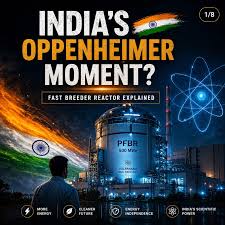
The inside story of the prototype fast breeder reactor — a project more ambitious, more complicated, and more consequential than most people realise
Picture this. It’s 8:25 PM on a warm April evening. Seventy kilometres south of Chennai, inside a control room buzzing with quiet tension, a group of scientists have been waiting — some of them for decades — for a single set of numbers to change on a screen.
And then they do.
India’s Prototype Fast Breeder Reactor (PFBR) at Kalpakkam had just achieved criticality. If you’ve seen Christopher Nolan’s film, you know the weight the word “critical” carries around nuclear physicists. In movies, it means something’s about to blow. In real nuclear engineering, it means something beautiful just happened — a chain reaction is now sustaining itself, without any external push. Think of it like a campfire that no longer needs a match.
This moment — what many nuclear engineers are now calling India’s own Oppenheimer breeder milestone — didn’t happen overnight. It took more than 70 years of planning, two decades of construction, and billions of rupees. And it came at a time when every other major nation had quietly given up on the same technology.
So why did India keep going? And what does this mean for the next 500 years of Indian energy? Let’s dig in — this story is genuinely worth knowing.
What Exactly Is a “Breeder Reactor” — and Why Should You Care?
Before we get into the history, let’s make sure we’re on the same page about what a breeder reactor actually does. Because this bit is what makes the whole story click.
Most nuclear reactors work by splitting uranium atoms to produce heat, which turns water into steam, which spins turbines, which generates electricity. Pretty standard stuff. The problem is that only about 1% of naturally occurring uranium — the U-235 variety — is actually good at splitting. The rest, U-238, just sits there being… inert.
A fast breeder reactor is different. It doesn’t just burn fuel — it creates fuel while it runs. Specifically, it takes that useless U-238 and the element thorium, and through a series of neutron collisions, transforms them into new fissile materials that can be used to generate more power. It breeds new fuel from what was previously considered waste. Hence: breeder.
Think of it this way: a regular nuclear reactor is like a car that uses petrol. A fast breeder reactor is like a car that uses petrol, but also makes its own petrol while you drive. That’s not science fiction — that’s what just switched on in Tamil Nadu.
For India specifically, the breeder reactor isn’t just a nice-to-have. It’s an existential energy strategy. India holds about 25% of the world’s total thorium reserves — the largest stockpile on Earth. But thorium alone can’t power a reactor. You need to convert it first. And that conversion happens inside a fast breeder reactor.
This is why some analysts have started calling this India’s own “Oppenheimer breeder” achievement — not because of any weapons connection, but because of the sheer scale of what was designed, the decades-long scientific effort, and the moment of realisation when it all came together in one room.
The Man Who Saw 70 Years Ahead: Homi J. Bhabha’s Grand Plan
Every great infrastructure story has a visionary at its centre. For the Indian space programme, it was Vikram Sarabhai. For India’s nuclear future, it was Homi Jehangir Bhabha.
Bhabha came back to India in 1939, initially just for a holiday from his research at Cambridge. World War II changed those plans. Stuck in India, he looked around at a country that was about to win independence but had almost no scientific infrastructure. Instead of lamenting the situation, he started writing letters.
One of those letters went to J.R.D. Tata — the industrialist — in 1943, making the case that India needed to build world-class research institutions. Tata listened. The Tata Institute of Fundamental Research was born.
After independence in 1947, Prime Minister Jawaharlal Nehru gave Bhabha full authority, funding, and remarkable freedom to build India’s atomic future. And Bhabha, after studying the geological surveys of India, identified a problem that others had missed:
- India had very little uranium — only about 2% of global reserves, and much of it low-quality.
- India had an enormous amount of thorium — but thorium can’t directly power a reactor.
- Therefore, India needed a long-term plan to bridge from uranium to thorium.
His answer was the three-stage nuclear programme — a relay race spanning generations, where each stage creates the fuel for the next.
Stage 1: Pressurised Heavy Water Reactors
India would build reactors using natural uranium (no enrichment needed, which meant no begging other countries for technology). These reactors would produce electricity — but more importantly, they’d produce plutonium-239 as a byproduct. Plutonium is stage 2’s starter fuel.
Stage 2: Fast Breeder Reactors
Using plutonium from stage 1, these reactors would run on a core of plutonium surrounded by uranium-238 and thorium. The neutrons produced would convert those surrounding materials into more plutonium and — crucially — uranium-233. That U-233 is stage 3’s fuel.
Stage 3: Thorium Reactors
Using U-233 from stage 2, India would fire up reactors that run on a mixture of U-233 and thorium — self-sustaining, essentially unlimited in fuel source. Stage 3 could theoretically power India for hundreds of years using just the thorium sitting on the country’s coastlines.
Stage 1 is done. India has 24 pressurised heavy water reactors running today. Stage 2 just crossed its most critical threshold. Stage 3 is still decades away. But the relay race is on track.
| Stage | Reactor Type | Primary Fuel | Key Output | Status |
|---|---|---|---|---|
| Stage 1 | Pressurised Heavy Water Reactor | Natural Uranium | Electricity + Plutonium | Complete (24 reactors) |
| Stage 2 | Fast Breeder Reactor (PFBR) | Plutonium + U-238 + Thorium | Electricity + Uranium-233 | Criticality achieved (2026) |
| Stage 3 | Advanced Heavy Water / Thorium Reactor | U-233 + Thorium | Electricity (centuries of it) | ~20–30 years away |
Why Every Other Country Gave Up — And Why India Didn’t
Here’s what makes India’s achievement so remarkable: virtually every other nation that tried to build a fast breeder reactor eventually walked away from it.
The United States shut down its breeder programme. Germany followed. France’s Superphénix — once the world’s largest fast breeder — was closed after years of stops and starts. Japan’s story is the most dramatic of all.
Japan’s Monju Disaster: A Cautionary Tale
Japan spent enormous resources building its own fast breeder reactor called Monju. Construction started in 1985. It achieved criticality in 1994. Things were looking promising.
Then, in December 1995, a temperature alarm went off. A small thermocouple — an instrument used to measure temperature — had a design flaw. After thousands of hours of operation, the sodium flowing past it at high speed caused it to crack. About 650 kilograms of liquid sodium started leaking.
Now, here’s the thing about liquid sodium that makes nuclear engineers lose sleep: if it touches air, it catches fire. If it touches water, it explodes. So a sodium leak inside a reactor facility is about as serious as it sounds.
But the physical accident wasn’t the worst part. Plant operators tried to conceal the footage. When that cover-up became public, the Japanese population turned against nuclear energy in general — not just Monju. Protests erupted. The programme was strangled by public mistrust.
In its entire operational life, Monju produced electricity for less than one hour. The cost? The equivalent of roughly one lakh crore rupees.
India’s situation was different. Japan could always fall back on importing uranium from Australia or Canada. India couldn’t. With limited uranium deposits and no reliable access to the global nuclear supply chain (India never signed the Non-Proliferation Treaty), quitting wasn’t really an option. The stakes were existential.
The 22-Year Build: Floods, Physics, and Problems No One Had Solved Before
India broke ground on the PFBR at Kalpakkam in 2004. The target completion date was 2010. The budget was around ₹3,500 crore.
What followed was one of the most gruelling construction journeys in Indian scientific history.
Just a few months after construction began, on December 26, 2004, the Indian Ocean tsunami struck. The Tamil Nadu coastline — where Kalpakkam sits — took a direct hit. The construction site was flooded. Work stopped. Engineers had to go back to the drawing board and figure out how to build a reactor that could also withstand a tsunami-scale event.
That delay was just the beginning. One of the trickiest engineering problems was lowering a massive cylindrical roof — weighing thousands of tonnes — onto a cylindrical vessel with sub-millimetre precision. If the seal was even slightly off, liquid sodium could leak. No one had done this before. There were no manuals to consult, no foreign experts willing to help (India’s non-NPT status meant the global nuclear supply chain was largely closed to it).
Indian engineers had to solve each problem through their own experiments. Failure. Redesign. Try again. And then the next problem would appear.
The deadlines kept shifting: 2010, then 2012, then 2015, then 2017, 2020, 2022, 2024… and finally, 2026. The budget crossed ₹8,000 crore — more than double the original estimate.
But here’s the thing — the private sector was part of this story too. A Hyderabad-based company called MTAR Technologies built the reactor’s grid plate: an 8-metre wide, 89-tonne steel component that sits at the physical centre of the reactor. The precision required? Less than one millimetre. Smaller than the width of a human hair. MTAR built entirely new manufacturing infrastructure to make it happen.
That’s what “Make in India” actually looks like in practice.
Beginner’s Guide: Nuclear Terms Explained Simply
- Criticality: The point where a nuclear chain reaction becomes self-sustaining. Good news in a reactor. The campfire doesn’t need more matches.
- Uranium-235 (U-235): The rare form of uranium that splits easily. Only ~1% of natural uranium is U-235.
- Plutonium-239: Created when U-238 absorbs neutrons. Excellent reactor fuel. India’s stage 1 reactors make this as a byproduct.
- Thorium-232: Abundant in India. Can’t split on its own, but when bombarded with neutrons, becomes U-233, which can.
- Liquid Sodium Cooling: Used in fast breeder reactors because water slows neutrons down. Sodium is dangerous — it burns in air and explodes in water — which is why engineering it safely is so hard.
- Enrichment: The process of increasing U-235 concentration. Only a handful of countries can do it, which is why India deliberately designed reactors that don’t need it.
The Oppenheimer Breeder Comparison — Is It Fair?
You might wonder: why are people comparing this to Oppenheimer? The original Manhattan Project was a weapons programme. India’s PFBR is entirely civilian. So what’s the connection?
It’s not about weapons — it’s about scale of scientific ambition.
The term “Oppenheimer breeder” has started circulating among nuclear policy analysts to describe a class of reactor programmes that:
- Required decades of sustained national commitment
- Involved solving first-of-a-kind engineering problems with no external help
- Were pursued in the face of massive cost overruns and public scepticism
- Had profound long-term strategic implications for national energy security
India’s PFBR fits all four. The country essentially built an entire new category of industrial capability — from the specialised steel manufacturing at MTAR to the sodium handling protocols at IGCAR — from scratch.
Nick Turan, a US-based nuclear engineer, was quoted in international media saying this reactor represents “the ultimate goal of nuclear fission technology” — and that India achieved it without outside help. Former Atomic Energy Commission chief Anil Kakodkar noted that after Russia, India is now the only country operating a fast reactor of this scale.
What Comes Next? The Gap Between Criticality and Actual Power
Now, this is where we need to be honest about what “criticality” does and doesn’t mean.
Criticality is the start of the reactor’s operational story — not the ending. The chain reaction is self-sustaining, yes. But the reactor still needs to go through a careful power ramp-up process before it generates commercial electricity. And that process involves confronting physics that literally no simulation can fully model in advance.
As temperatures rise and power output increases, new variables appear. Materials behave in unexpected ways. The margin for error shrinks. India’s engineers know this — which is why the language from official sources remains measured, not triumphant.
The bigger picture: India’s 2047 goal is 100 gigawatts of nuclear power capacity. Today, the country has less than 8 GW. A single PFBR can produce around 500 MW at full power. To hit 100 GW, India would need roughly 180 such reactors — or more advanced units with higher capacity.
Two more fast breeder reactors have already been approved for Kalpakkam. Private sector participation in the nuclear space — long off-limits in India — is now being actively invited. The policy environment is shifting fast.
The Numbers at a Glance
- Current nuclear capacity: ~8 GW
- Target by 2047: 100 GW
- PFBR capacity: 500 MW (when fully operational)
- Reactors needed to meet target: ~180 FBR-scale units
- India’s thorium reserves: 25% of global total
- Stage 3 timeline: Estimated 20–30 years away
- Countries still operating large fast reactors: Russia and now India
Pro Tips: Understanding India’s Nuclear Strategy
- Don’t confuse criticality with full operation. The reactor achieving criticality is like an engine turning over for the first time — not the same as driving at highway speed. Power ramp-up takes months or years.
- The NPT matters here. India not signing the Nuclear Non-Proliferation Treaty cuts it off from the global nuclear supply chain. This is a double-edged sword — it means India can’t easily buy components or know-how, but it also means India has built genuine indigenous capability.
- Thorium isn’t magic. Stage 3 — the purely thorium-based reactor cycle — is still an enormous engineering challenge. Don’t expect it by 2030. The PFBR getting to criticality makes stage 3 possible, not imminent.
- Follow MTAR Technologies. The private sector’s role in precision nuclear manufacturing is going to grow significantly. Companies like MTAR are doing work that only a handful of firms globally can match.
- Watch Kalpakkam closely. With two more FBRs approved for the same site, this small town in Tamil Nadu is becoming India’s nuclear manufacturing heartland. The next decade of decisions there will shape India’s energy story.
Common Mistakes People Make When Discussing This Topic
- Treating “criticality” as the finish line. It isn’t. It’s an important milestone, but commercial power generation is still ahead — and harder.
- Assuming this solves India’s energy crisis immediately. It doesn’t. India needs coal, solar, wind, hydro, and nuclear all growing simultaneously. The PFBR is part of a very long-term strategy.
- Thinking the Oppenheimer breeder comparison means weapons. The PFBR is a civilian power reactor. The comparison is about the scale and intensity of national scientific effort, not nuclear weaponry.
- Underestimating how hard liquid sodium engineering is. The UK had 40 sodium leaks in its breeder reactors. France had constant shutdowns. The fact that India managed construction without a major sodium incident is itself a significant achievement.
- Assuming other countries’ failure means the technology doesn’t work. Russia’s BN-600 has been running for decades. The failures elsewhere were a mix of technical problems, political backlash, and — crucially — those countries had other options. India didn’t, which gave scientists here a very different kind of motivation.
Bhabha’s Ghost in the Control Room
There’s something almost cinematic about the moment on April 6, 2026, when those numbers changed on the instruments in Kalpakkam.
Dr. Ajit Kumar Mohanty, the Secretary of the Department of Atomic Energy, had spent years working toward this. Around him, scientists who’d spent decades at this site watched the instruments. Some had been part of the project for thirty years. The construction had outlasted careers, political governments, natural disasters, and budget cycles.
Homi Bhabha died on January 24, 1966, when Air India Flight 101 crashed near Mont Blanc in the Swiss Alps. He was 56. He never saw his three-stage plan come alive. He knew he wouldn’t — he’d said so himself when designing the programme.
That kind of long-horizon thinking is vanishingly rare in public life. We tend to elect politicians on four-year cycles and celebrate projects that finish on schedule. Bhabha was designing something that, by his own estimate, wouldn’t be complete in his lifetime. And he built it anyway.
The scientists at Kalpakkam on April 6, 2026, were completing what Bhabha started in 1948. That’s not just a scientific achievement. It’s an extraordinary act of institutional memory — the rare case where a generation of successors actually sees through the vision of their predecessors.
Why This Matters for Global Energy Geopolitics
India’s dependence on imported energy has always been a vulnerability. Oil from Saudi Arabia and Russia. Uranium from Kazakhstan, France, Canada. Every import is a negotiating lever for someone else.
The three-stage plan, if it reaches completion, eliminates that vulnerability — at least for electricity generation. India’s thorium beaches could fuel power generation for centuries without a single import. No OPEC, no uranium cartels, no diplomatic pressure from countries that know they’re sitting on what India needs.
This is the real reason the project survived budget overruns, missed deadlines, and international scepticism. The stakes weren’t just kilowatts. They were sovereignty.
And now that the Oppenheimer breeder moment has arrived — now that India has proved the physics works and the engineering is achievable — the country is inviting private capital into the nuclear sector for the first time. The policy announcement in 2025 signalled that the government knows it can’t build 180 reactors on its own. The ecosystem needs to grow.
Frequently Asked Questions
What is the Oppenheimer breeder reactor, and is it a real term?
The phrase “Oppenheimer breeder” isn’t an official technical term — it’s an analogy used by nuclear policy analysts to describe large-scale, nationally transformative reactor programmes that required the kind of focused scientific effort associated with J. Robert Oppenheimer’s Manhattan Project. Applied to India’s PFBR, it captures the decades of sustained ambition, first-of-a-kind engineering, and strategic importance of the programme. It’s about the spirit of the endeavour, not a weapons connection.
When will the PFBR actually start generating commercial electricity?
Achieving criticality in April 2026 is a crucial milestone, but it’s the beginning of the operational phase, not the end. After criticality, the reactor goes through a careful power ramp-up over months or potentially years, testing systems at progressively higher output levels. Commercial electricity generation is expected to follow, but official timelines from BHAVINI and the Department of Atomic Energy haven’t specified an exact commercial operations date as of mid-2026.
Why didn’t India just use thorium directly in its reactors from the start?
Because thorium-232 doesn’t split on its own when hit by neutrons — it’s not fissile. To use thorium as a fuel, you first need to convert it into uranium-233, which is fissile. That conversion requires bombarding thorium with neutrons inside a reactor running on a different fuel. That’s the whole point of stages 1 and 2: they exist to produce the materials needed to actually use India’s thorium. There’s no shortcut.
Is liquid sodium really that dangerous, and how does India manage it safely?
Yes, liquid sodium is genuinely hazardous — it reacts violently with both air and water. In fast breeder reactors, it’s pumped in quantities of many thousands of litres. India’s IGCAR (Indira Gandhi Centre for Atomic Research) spent decades developing sodium handling protocols, testing systems, and training engineers. The PFBR uses a closed-loop design with multiple barriers between the sodium and the outside environment, and India’s engineers had to develop much of this expertise independently, since international technology transfer was restricted.
What role can private companies play in India’s nuclear expansion?
For most of independent India’s history, the nuclear sector was entirely government-controlled. The 2025 policy announcement began opening the sector to private participation — initially in areas like component manufacturing, services, and potentially reactor construction under strict regulatory oversight. Companies like MTAR Technologies, which built the PFBR’s grid plate, are already part of the supply chain. As the scale of nuclear expansion grows toward India’s 100 GW target by 2047, private investment will be essential.
How does India’s nuclear programme compare to China’s?
China has been expanding its nuclear capacity at a significantly faster rate — it currently has over 55 GW of nuclear capacity and dozens of reactors under construction. China has also been developing its own fast breeder reactor programme. The key difference is that China operates within the global nuclear supply chain (it signed the NPT), giving it access to technology and components India can’t easily obtain. India’s programme is slower but almost entirely indigenous — which means the intellectual capital and capability built here is entirely owned and understood domestically.
What You Can Take Away From All This
The story of India’s PFBR isn’t just a nuclear engineering story. It’s a story about what it takes to pursue a 70-year plan in a world that thinks in four-year election cycles. It’s about scientists who dedicated entire careers to a project they might never see completed. It’s about engineers solving problems with no manuals, no mentors, and no external help.
The Oppenheimer breeder milestone at Kalpakkam is genuinely historic — not because it solves India’s energy problem tomorrow, but because it proves the technology works, it proves Indian capability, and it unlocks the possibility of a future where the country’s electricity doesn’t depend on what happens in Riyadh or Moscow.
Here’s what you can do with this knowledge:
- Follow developments at Kalpakkam — the power ramp-up phase will be the next major story
- Watch how private sector nuclear participation evolves under the 2025 policy framework
- Keep an eye on MTAR Technologies and other precision manufacturing companies building nuclear components
- Look for news on the two additional FBRs approved for Kalpakkam — those approvals tell you a lot about government confidence in the programme
- Pay attention to India–Russia nuclear cooperation, since Russia is India’s closest peer in fast reactor technology
Homi Bhabha started something in 1948 that he knew he wouldn’t live to see. Seventy-eight years later, it’s finally clicking into place. That’s not just science. That’s faith in the future.

Calorimetry Explained: The Science of Heat You Never Knew You Were Using Every Day
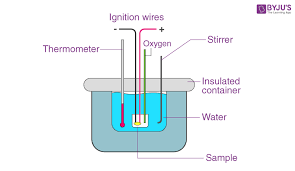
Heat and Temperature : How Energy Moves Between Bodies